



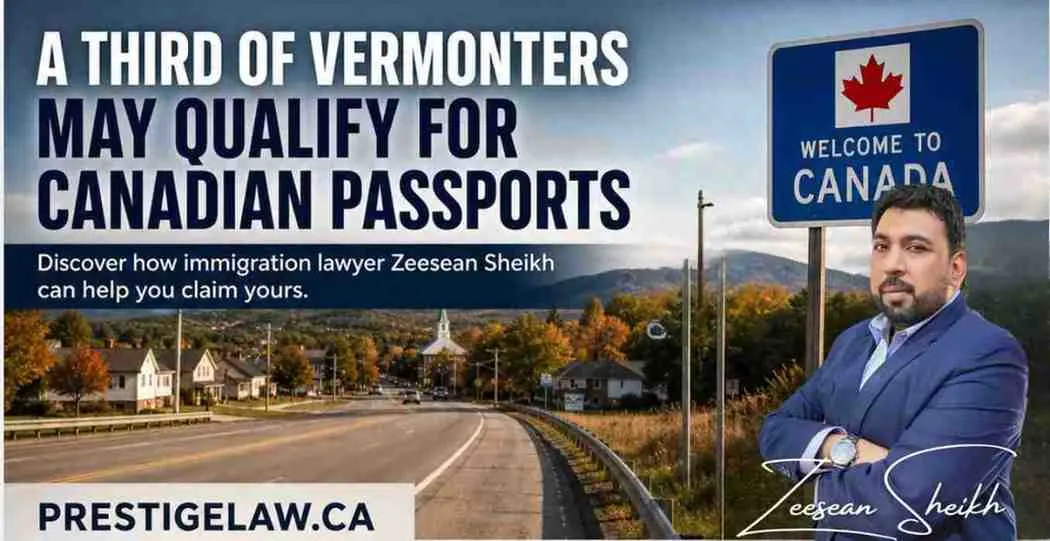
A Third of Vermonters Can Get Canadian Passports in the Wake of the Citizenship Law Changes
The border between Vermont and Canada has always been thin — geographically, culturally, and now, legally. A landmark shift in Canadian citizenship law has quietly opened the door for an estimated one-third of Vermonters to claim Canadian passports, and most of them have no idea this opportunity even exists.
Why Vermont? The Deep-Rooted Canada–Vermont Connection
Vermont shares the longest undefended land border of any U.S. state with the Canadian province of Quebec. For generations, families crossed freely, married across borders, worked in each other’s towns, and built lives that blurred national lines. The result? A dense web of cross-border ancestry that today carries enormous legal weight.
Historically, many Canadians who emigrated to Vermont in the 19th and early 20th centuries — particularly during the waves of French-Canadian migration to New England mill towns — did not formally renounce their Canadian status. Their descendants may have inherited Canadian citizenship without ever knowing it. Now, with Canada’s updated citizenship transmission rules, that inherited status may be fully claimable.
What Changed in Canadian Citizenship Law?
Canada’s Citizenship Act has undergone significant reform in recent years, particularly regarding how citizenship passes from parent to child — and how far back that lineage can reach.
Under the previous framework, citizenship by descent was limited to the first generation born abroad. This meant that if your grandparent was Canadian but your parent was born in the United States, you were ineligible. That rule cut off tens of thousands of potential citizens.
The reforms introduced through Bill C-37 and subsequent legislative updates have expanded and clarified eligibility in several meaningful ways:
- Lost Canadians provisions restored citizenship to individuals who had lost it through outdated legal mechanisms, including women who lost status upon marrying foreign nationals and children born abroad in certain circumstances.
- Second-generation and beyond cases are now being reviewed with updated interpretive frameworks, particularly where citizenship was never formally lost — only assumed to have lapsed.
- Proof of lineage pathways has been broadened, making it easier to document and establish a citizenship claim through birth certificates, census records, church records, and immigration documents.
For Vermonters with Quebec or Ontario-born grandparents or great-grandparents, this is not a technicality — it is a live legal claim worth pursuing.
What Does a Canadian Passport Actually Mean for You?
A Canadian passport is not just a travel document. It is a gateway to an entirely different set of rights, options, and opportunities.
Healthcare: Canada’s universal healthcare system is available to citizens and permanent residents. For many Americans facing high medical costs, this alone can be life-changing.
Work and Study Rights: A Canadian passport grants you the right to live, work, and study anywhere in Canada without requiring any additional permits. It also opens doors in countries that have favourable trade or visa agreements with Canada.
Travel Privileges: Canadian passport holders enjoy visa-free or visa-on-arrival access to over 180 countries — one of the strongest travel documents in the world.
Dual Citizenship: Canada permits dual citizenship. You do not have to give up your American passport to hold a Canadian one. You can be both.
A Safety Net: In uncertain political climates, holding a second citizenship in a stable, democratic country provides peace of mind that money cannot buy.
How to Know If You Qualify
The citizenship claim process begins with one critical step: understanding your lineage. Here are the key questions to ask yourself:
- Were any of your parents, grandparents, or great-grandparents born in Canada?
- Did any Canadian-born ancestor emigrate to the United States without formally renouncing their Canadian citizenship?
- Were you or a parent born outside Canada to a Canadian parent before citizenship transmission rules changed?
- Did a female ancestor lose her Canadian citizenship due to marriage to a non-Canadian national before 1947?
If you answered yes to any of these, you may have a citizenship claim — and the only way to know for certain is to consult a qualified Canadian immigration lawyer who specialises in citizenship by descent.
This is not a DIY process. Canadian citizenship applications require meticulous documentation, legal interpretation of historical statutes, and precise filing procedures. Errors or omissions can lead to delays, rejections, and in some cases, a permanent bar on re-application.
Why You Need an Immigration Lawyer — Not a Consultant
The Canadian citizenship reclamation process is a legal matter, not a paperwork exercise. Immigration consultants are not lawyers. They cannot provide legal advice, represent you before the courts, or interpret the law on your behalf.
A qualified immigration lawyer can:
- Assess your personal eligibility based on your family history.
- Identify which legal provision applies to your specific claim.
- Gather and authenticate the historical documents required.
- Prepare and submit your application in compliance with current IRCC (Immigration, Refugees and Citizenship Canada) standards.
- Represent you if your application is questioned or challenged.
- Advise on dual citizenship implications under both Canadian and U.S. law.
Attempting to navigate this process without legal counsel is one of the most common — and costly — mistakes people make.
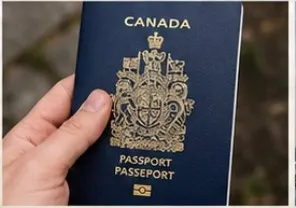
Meet Zeesean Sheikh — Canadian Immigration Lawyer
If you are a Vermonter exploring a Canadian citizenship claim, Zeesean Sheikh is a trusted name in Canadian immigration law. Practising with integrity and precision, Mr Sheikh brings deep expertise in citizenship by descent, lost Canadian citizenship cases, and cross-border immigration matters.
His firm, Prestige Law, is dedicated to helping individuals and families understand and act on their legal rights — including citizenship claims that many people do not even know they are entitled to pursue.
At Prestige Law, every case begins with a thorough legal consultation. Mr Sheikh takes the time to understand your family history, evaluate your documentation, and provide a clear, honest assessment of your eligibility — before you invest a single dollar in the application process.
Office Locations:
📍 Richmond Hill: 100–100 Mural Street, ON
📍 Toronto (North York): 55 Town Centre Court, Suite 700, ON
📞 Telephone: +1 (647) 925-2222
🌐 Website: prestigelaw.ca
The Documentation You Will Likely Need
Every citizenship claim is unique, but most cases require some combination of the following:
- Birth certificates — yours, your parents’, and your Canadian-born ancestor’s
- Marriage certificates — particularly if a female ancestor’s citizenship was affected by marriage
- Naturalisation records — documenting whether your ancestor ever became a U.S. citizen and when
- Census records — Canadian federal census records are available and can confirm residence and birthplace
- Church or baptismal records — especially useful for pre-20th-century births in Quebec
- Immigration and border crossing records — available through Library and Archives Canada
- Passports or travel documents — any historical Canadian travel documents held by family members
Many of these records exist in archives and can be retrieved by an experienced legal team. Mr Sheikh’s office can guide you through this process systematically.
How Long Does a Canadian Citizenship Claim Take?
Processing times vary depending on the complexity of the claim and current IRCC volumes. Straightforward citizenship certificate applications can take anywhere from several months to over a year. Complex cases — particularly those involving lost citizenship restoration or multi-generational lineage — may take longer and could involve additional legal steps.
The most important thing you can do right now is begin. The sooner you start compiling documentation and seeking legal advice, the better positioned you will be.
Vermont and Canada: A Future Built on History
There is something profound about the idea that thousands of Vermonters carry a legal right to Canadian citizenship within their family trees — a right that has been dormant for decades, waiting to be claimed. It is a reminder that borders are often more recent than the ties that cross them.
Canada’s citizenship law changes are not about politics. They are about correcting historical oversights and acknowledging the real, lived connections that have always existed between these two nations. For Vermont families with Canadian roots, this is a rare and genuine opportunity.
If you believe you may qualify, do not wait. These claims require professional guidance, careful preparation, and time. The right move is to speak with a qualified Canadian immigration lawyer who can assess your situation and give you a clear path forward.
Reach out to Zeesean Sheikh at Prestige Law today. 🌐 prestigelaw.ca
Frequently Asked Questions (FAQs)
Q: Can I hold both a Canadian and an American passport? Yes. Canada allows dual citizenship, and the United States does not require you to renounce foreign citizenship. You can legally hold both passports simultaneously.
Q: My grandmother was born in Quebec but moved to Vermont in the 1950s. Am I eligible? You may be. Eligibility depends on whether your grandmother retained her Canadian citizenship and how citizenship passed to your parent and then to you. A legal consultation is the best way to determine your specific eligibility.
Q: Do I need to move to Canada to claim citizenship? No. Canadian citizenship by descent does not require you to live in Canada. However, if you want to access certain benefits like healthcare, you would need to establish residency.
Q: What is a “Lost Canadian” and does it apply to me? A “Lost Canadian” is someone who held Canadian citizenship but lost it due to outdated provisions in the law — such as women who lost status upon marrying a non-Canadian before 1947, or children born abroad whose citizenship lapsed. Canada has worked to restore these rights through legislation, and many families are now eligible to reclaim what was lost.
Q: Can I apply for Canadian citizenship on behalf of my children? Yes. If you successfully claim Canadian citizenship, your minor children may also be eligible to be registered as citizens, depending on when and where they were born.
Q: Is this process expensive? The cost depends on the complexity of your case, the documents required, and legal fees. Prestige Law offers consultations so you can understand the scope before committing to the full process.
Q: What if my application is rejected? An experienced immigration lawyer can review the grounds for refusal, advise on an appeal or reconsideration, and help you understand your options. This is another reason why having legal representation from the outset is so valuable.
Q: How do I get started? Contact Zeesean Sheikh at Prestige Law. You can reach the firm by visiting prestigelaw.ca or calling the office directly to schedule a consultation.
Your Canadian Citizenship May Already Be Yours
The law does not care whether you know about your rights. It simply offers them. For an estimated one in three Vermonters, Canadian citizenship may already exist within their lineage — waiting for the right legal guidance to bring it forward.
Do not leave this opportunity on the table. Speak with a qualified Canadian immigration lawyer, trace your roots, and find out whether a Canadian passport is already within your reach.
Prestige Law | Zeesean Sheikh — Canadian Immigration Lawyer
🌐 prestigelaw.ca
📍 Richmond Hill: 100–100 Mural Street, ON
📍 Toronto (North York): 55 Town Centre Court, Suite 700, ON
📞 +1 (647) 925-2222
Canadian passports. Canadian passports. Canadian passports. Canadian passports. Canadian passports. Canadian passports. Canadian passports. Canadian passports. Canadian passports. Canadian passports. Canadian passports.Canadian passports. Canadian passports. Canadian passports. Canadian passports. Canadian passports. Canadian passports. Canadian passports. Canadian passports. Canadian passports.