



IRCC’s Total Application Backlog Drops to Lowest Level Since July 2025

Bringing your adult child to Canada as a permanent resident is one of the most meaningful steps a parent can take. Canada’s Family Class sponsorship program allows Canadian citizens and permanent residents to reunite with their loved ones, including, in certain circumstances, adult children who no longer qualify under the dependent child definition.
Whether your son or daughter aged out of the dependent child category during processing, or you are exploring alternative immigration pathways, understanding exactly how the sponsorship system works is critical before you file. This comprehensive guide, prepared by the immigration legal team at Prestige Law in Richmond Hill and Toronto, explains every aspect of sponsoring an adult child for Canadian permanent residence, from eligibility rules to common mistakes, processing timelines, and the legal support you need to maximise your chances of approval.How to Sponsor Adult Children for Canadian PR
Understanding Canadian Family Class Sponsorship
Canada’s Immigration and Refugee Protection Act (IRPA) and the Immigration and Refugee Protection Regulations (IRPR) establish the legal framework for sponsoring family members. Immigration, Refugees and Citizenship Canada (IRCC) administers these sponsorship applications under the Family Class and the Spouse or Common-Law Partners in Canada Class.
The Family Class includes spouses, common-law partners, conjugal partners, dependent children, parents, grandparents, and, in exceptional cases, other relatives. Adult children, however, occupy a nuanced position in Canadian immigration law, and many families are surprised to learn the rules differ significantly from what they may have expected.
Who Qualifies as a Dependent Child Under IRCC Rules?
Under current IRCC regulations, a dependent child must meet two criteria simultaneously:
- The child must be under the age of 22 at the time the sponsorship application is submitted.
- The child must not be a spouse or common-law partner.
An exception exists for children aged 22 or older who have depended substantially on their parents’ financial support since before age 22 and who are unable to be financially self-supporting due to a physical or mental condition.
If your child is 22 years of age or older and does not meet the exception for medical or physical dependency, they cannot be sponsored directly as a dependent child under the Family Class. This is the foundational challenge that many Canadian families face.
Can You Sponsor an Adult Child for Canadian Permanent Residence?
The direct answer is that sponsoring an adult child who does not meet the dependent child definition is not possible through the traditional Family Class sponsorship route under IRCC’s standard rules. However, this does not mean your adult child has no pathway to Canadian permanent residence. There are several legally viable alternatives, and an experienced immigration lawyer can help you identify the most appropriate route based on your child’s unique profile.
The Age Lock-In Rule
One important protection in Canadian immigration law is the age lock-in rule. Under IRPR Section 2, a child’s age is locked in at the date IRCC receives a complete sponsorship application, not the date a decision is made. This means that if your child was under 22 when you submitted your application but turned 22 during processing, they generally retain their status as a dependent child.
This rule provides meaningful protection for families dealing with lengthy processing times, which are common given IRCC’s current backlogs. It is essential, however, that the application is complete and properly submitted to trigger this protection.
Alternative Immigration Pathways for Adult Children
When direct Family Class sponsorship is not available for an adult child, the following pathways are worth exploring seriously:
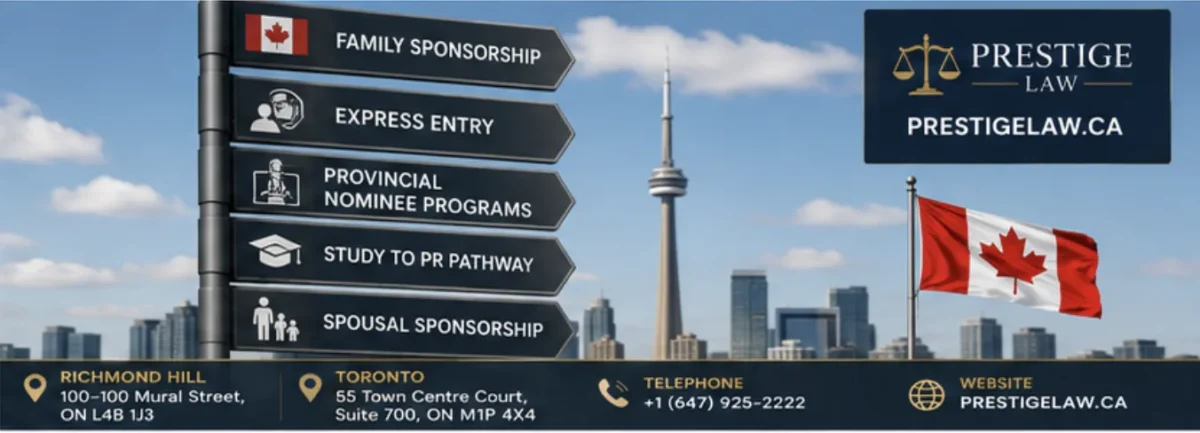
- Express Entry (Federal Skilled Worker, Canadian Experience Class, or Federal Skilled Trades Program): If your adult child has relevant education, work experience, and language ability, they may qualify independently through Express Entry. A high Comprehensive Ranking System (CRS) score significantly improves their chances.
- Provincial Nominee Programs (PNPs): Many provinces have streams targeting young workers, international graduates, or semi-skilled workers. Ontario, British Columbia, Alberta, and Quebec all operate provincial programs that can lead to permanent residence.
- Study Permit to Permanent Residence Pathway: If your adult child enrols in a Canadian college or university, they may obtain a Post-Graduation Work Permit (PGWP) after graduation, gain Canadian work experience, and qualify for permanent residence through Express Entry or a PNP.
- Spousal Sponsorship: If your adult child is married to or in a common-law relationship with a Canadian citizen or permanent resident, they may be sponsored by their spouse. This is a distinct sponsorship arrangement from the parent-child family class.
- Humanitarian and Compassionate (H&C) Grounds: In exceptional circumstances involving hardship or compelling personal circumstances, an H&C application under Section 25 of IRPA may be submitted. These applications are assessed on a case-by-case basis and require strong supporting documentation.
- Orphan Sponsorship Exception: A sibling, nephew, niece, or grandchild who is under 18 and an orphan may be sponsored under the Family Class in certain circumstances, which is a narrow but available option for specific family situations.
Sponsorship Eligibility: Requirements for the Sponsor
Even when sponsoring an eligible family member, the sponsor must meet IRCC’s own strict eligibility criteria. Failing to meet sponsorship requirements will result in an application refusal regardless of the sponsored person’s admissibility.
Who Can Be a Sponsor?
- You must be a Canadian citizen or a permanent resident of Canada.
- You must be at least 18 years of age.
- You must reside in Canada or, if you are a Canadian citizen living abroad, you must commit to returning to Canada when your family member becomes a permanent resident.
- You must not be subject to a removal order or a sponsorship ban.
- You must not be incarcerated or under a conditional sentence.
- You must not be bankrupt or in default of any previous sponsorship undertaking.
- You must not have been convicted of certain violent offences, sexual offences, or offences against family members, depending on the nature and timing of the conviction.
Financial Requirements for Sponsors
Canada does not impose a minimum income requirement for sponsoring a spouse, common-law partner, or dependent child, unlike the sponsorship of parents and grandparents, which requires meeting the Low Income Cut-Off (LICO) plus 30 per cent threshold.
However, you must demonstrate that you can provide for your sponsored family members’ basic needs. When you sign the undertaking, you are committing to financially support your sponsored family member and repay any social assistance they receive during the undertaking period.
For dependent children, the undertaking period is 10 years or until the child turns 25, whichever comes first. If a child is 16 or 17 years old at the time of sponsorship, the undertaking runs for 10 years.
Step-by-Step Guide: How to Submit a Family Class Sponsorship Application
If your adult child qualifies as a dependent child under IRCC’s rules, or if you are sponsoring another eligible family member, the following steps outline the application process in detail.
Step 1: Confirm Eligibility
Before investing time and resources into an application, confirm both your eligibility as a sponsor and your child’s eligibility as a sponsored person. An immigration lawyer can provide a thorough eligibility assessment based on your specific situation.
Step 2: Gather Supporting Documents
IRCC requires extensive documentation to support a sponsorship application. Typical documents include:
- Proof of your Canadian citizenship or permanent resident status (passport, citizenship certificate, PR card).
- Birth certificates establishing the parent-child relationship.
- Proof of the child’s current status, identity, and civil status (passport, national identity card).
- Financial documents (notice of assessment, employment letters, pay stubs) if required.
- Police clearance certificates for each country where the sponsored person has lived for six months or more since the age of 18.
- Medical examination results from an IRCC-designated physician.
- Completed and signed undertaking forms.
Step 3: Complete the Application Forms
IRCC requires specific forms for the sponsorship application and the permanent residence application. These include the Application to Sponsor, Sponsorship Agreement and Undertaking (IMM 1344), the Application for Permanent Residence (IMM 0008 series), the Additional Dependants/Declaration form (IMM 0008DEP), and various background and declaration forms. Every form must be signed correctly, fully completed, and consistent with the supporting documents.
Step 4: Pay the Required Fees
Sponsorship applications involve several fee components. As of the most recent IRCC schedule, fees include the sponsorship application processing fee, the permanent residence application fee, the Right of Permanent Residence Fee (RPRF), and biometrics collection fees. Fees are subject to change, and it is important to confirm the current fee schedule directly on the IRCC website before submitting.
Step 5: Submit Your Application
Family Class applications for spouses, common-law partners, and children are submitted online through the IRCC secure account portal. Supporting documents are uploaded digitally. Incomplete applications will be returned without processing, so a thorough document checklist review before submission is essential.
Step 6: Biometrics and Medical Examination
After submission, IRCC will issue a biometrics request. Your child must attend a Service Canada location or a Visa Application Centre (VAC) abroad to complete biometrics collection. A medical examination from an IRCC-designated physician is also required and must be completed at the appropriate time in the process.
Step 7: Attend an Interview if Required
Not all family class applications require a personal interview. However, IRCC officers have the discretion to request one if they need additional clarification regarding the genuineness of the relationship or other aspects of the application.
Step 8: Receive a Decision
Once IRCC has reviewed the complete application, it will issue a decision. If approved, your child will receive a Confirmation of Permanent Residence (COPR) document and, if applicable, a permanent resident visa for travel to Canada. They will need to arrive in Canada before the COPR’s expiry date.
Processing Times for Family Class Sponsorship Applications
IRCC publishes service standard processing times for family class sponsorship applications. Actual timelines can vary significantly based on the volume of applications, completeness of the file, complexity of the case, and the country from which the application originates.
As a general reference, sponsorship applications for spouses and dependent children where the applicant is outside Canada typically take between 11 and 24 months under current IRCC service standards. Applications that involve additional complexity, such as applications from certain countries with high fraud rates or applications requiring additional security screening, may take considerably longer.
Working with an immigration lawyer ensures that your application is complete and correct from the outset, reducing the risk of delays caused by requests for additional information or procedural errors.
Common Reasons Family Class Sponsorship Applications Are Refused
Understanding why applications are refused can help you prepare a stronger file and avoid preventable errors.
- The sponsor does not meet the financial requirements or is in default of a prior sponsorship undertaking.
- The sponsored child is found inadmissible due to criminality, security concerns, or medical inadmissibility.
- The application is incomplete or contains inconsistencies between the forms and supporting documents.
- The child does not meet the definition of a dependent child at the time of application.
- Failure to disclose all required information on the forms, including previous immigration history or criminal record.
- Missing or expired police clearance certificates or medical examination results.
- The sponsor is subject to a ban due to a previous sponsorship default or a criminal conviction.
If your application has been refused or you have received a procedural fairness letter, it is critical to seek legal advice immediately. Zeesean Sheikh and the team at Prestige Law have extensive experience responding to IRCC refusals and fairness letters.
Humanitarian and Compassionate Applications for Adult Children
For families where direct Family Class sponsorship is not available, a Humanitarian and Compassionate (H&C) application under Section 25 of the Immigration and Refugee Protection Act may provide a viable alternative. H&C applications allow individuals to apply for permanent residence in Canada from within Canada or from abroad by demonstrating that their circumstances justify an exemption from standard immigration requirements.
IRCC officers consider factors such as:
- The best interests of any children directly affected by the decision.
- The degree of establishment in Canada or ties to Canada.
- Hardship that would result from having to apply for permanent residence from outside Canada through normal channels.
- Compelling personal circumstances, including family unity considerations.
H&C applications are discretionary and carry no guarantee of approval. A well-documented, carefully constructed H&C application prepared by an experienced immigration lawyer significantly improves the likelihood of a positive outcome.
Sponsoring an Adult Child: The Role of an Immigration Lawyer
Canadian immigration law is complex, and the rules governing who can be sponsored, when, and under what circumstances change regularly. Attempting to navigate a sponsorship application without professional legal guidance creates unnecessary risk, particularly when you are dealing with the future of your child or family.
Zeesean Sheikh, the lead immigration lawyer at Prestige Law, brings years of focused experience in Canadian family immigration law. The legal team provides comprehensive services, including:
- Eligibility assessments for sponsors and sponsored persons.
- Strategic advice on alternative pathways when direct sponsorship is not available.
- Preparation and review of all IRCC application forms and supporting documents.
- Representation and response in cases involving IRCC procedural fairness letters.
- Appeals to the Immigration Appeal Division (IAD) where sponsorship applications have been refused.
- H&C application preparation and submission.
- Legal advice on the age lock-in rule and how to protect your child’s status during processing.
Immigration Appeal Division: Appealing a Refused Sponsorship
If IRCC refuses your family class sponsorship application and your sponsored family member received a visa refusal from a visa officer, you have the right to appeal to the Immigration Appeal Division (IAD) of the Immigration and Refugee Board of Canada (IRB). The appeal must be filed within 30 days of receiving the refusal decision.
At the IAD, the appeal is a full hearing on the merits. The IAD can consider humanitarian and compassionate grounds even if the original refusal was on technical grounds. Winning an IAD appeal requires strong preparation, compelling evidence, and skilled legal advocacy.
Prestige Law’s legal team has experience representing clients before the IAD and understands the procedural and evidentiary standards required for a successful appeal. If your sponsorship application has been refused, do not delay in seeking legal advice.
Key Differences: Dependent Child vs. Adult Child Sponsorship
FactorDependent Child (Under 22)Adult Child (22+)
Direct Family Class Sponsorship: Yes, available. Not directly available (exceptions apply)
Age Requirement: Under 22 at application date. Must use the alternative pathway
Express Entry Pathway can be included as a dependent or an independent application required
Financial Undertaking 10 years or until age 25 , depending on the specific pathway
H&C Application Available in exceptional cases , available based on hardship
IAD Appeal Rights Available on refusal , depending on the pathway
Processing Time (typical) 12 to 24 months , varies by pathway chosen
Frequently Asked Questions
Q: Can I sponsor my adult child who is over 22 years old for Canadian permanent residence?
A: Direct Family Class sponsorship under the dependent child category is not available for adult children over 22 unless they have a physical or mental condition that has caused them to depend substantially on their parents’ financial support since before age 22. However, alternative pathways such as Express Entry, Provincial Nominee Programs, spousal sponsorship (if applicable), and Humanitarian and Compassionate applications may be available depending on your child’s individual circumstances.
Q: My child turned 22 while my sponsorship application was being processed. What happens?
A: Canada’s age lock-in rule generally protects children who age out during processing. As long as IRCC received a complete application while your child was still under 22, their age is locked in at the date of receipt, and they retain dependent child status throughout the application process. The application must be complete and properly submitted to benefit from this protection.
Q: What is the processing time for a dependent child sponsorship application?
A: IRCC’s current service standard for processing a family class application for a dependent child residing outside Canada is typically between 11 and 24 months. Processing times can vary based on the complexity of the case, the country of application, and IRCC’s current workload. Incomplete applications cause delays and should be avoided by working with an experienced immigration lawyer.
Q: What income do I need to sponsor my dependent child?
A: Canada does not impose a minimum income requirement for sponsoring a spouse, common-law partner, or dependent child. Unlike the Parents and Grandparents Program, which requires meeting a specific income threshold, the financial requirement for sponsoring a dependent child is that you be able to provide for their basic needs and not have them depend on social assistance. You will be required to sign an undertaking committing to this obligation.
Q: What happens if my family class sponsorship is refused?
A: If your sponsorship application is refused, you generally have the right to appeal the refusal to the Immigration Appeal Division (IAD) of the Immigration and Refugee Board of Canada. The appeal must be filed within 30 days of the refusal. The IAD hearing is a full review of the file and can also consider humanitarian and compassionate factors. Legal representation from an experienced immigration lawyer significantly improves your prospects at an IAD appeal.
Q: Can my adult child in Canada apply for permanent residence without a sponsor?
A: Yes, if your adult child is already in Canada on a study permit, work permit, or another valid status, they may be eligible to apply for permanent residence independently through Express Entry, a Provincial Nominee Program, or, in some cases, through Humanitarian and Compassionate grounds. The specific pathway available depends on their education, work experience, language scores, and other factors.
Q: Does a criminal record affect my ability to sponsor my child?
A: Yes, a criminal record may affect your eligibility as a sponsor, particularly if you have been convicted of specific violent offences, sexual offences, or offences against a family member within certain time periods. The impact depends on the nature of the offence, when it was committed, and whether a pardon or record suspension has been granted. An immigration lawyer can assess how a criminal record affects your specific sponsorship eligibility.
Q: How can Prestige Law help with my family sponsorship application?
A: Prestige Law, led by immigration lawyer Zeesean Sheikh, provides comprehensive legal support for family class sponsorship applications. This includes eligibility assessments for both sponsor and sponsored persons, preparation and review of all IRCC forms and supporting documents, strategic advice on alternative pathways when direct sponsorship is unavailable, representation before the Immigration Appeal Division, and assistance with Humanitarian and Compassionate applications.
Conclusion: Take the Right Steps to Reunite with Your Adult Child
The pathway to sponsoring an adult child for Canadian permanent residence is not always straightforward, but it is rarely without options. Whether your child qualifies under the dependent child definition, benefits from the age lock-in protection, or requires an alternative immigration pathway, understanding your legal options is the most important first step you can take.
Canadian immigration law is detailed, regularly updated, and unforgiving of errors. A single mistake on an application form, a missed document, or a procedural oversight can result in delays of months or even years, or worse, an outright refusal. Professional legal guidance is not simply a convenience; it is an investment in your family’s future.
Zeesean Sheikh and the dedicated immigration legal team at Prestige Law are committed to helping families navigate Canada’s immigration system with clarity, confidence, and professionalism. With offices in Richmond Hill and Toronto, Prestige Law serves clients across Ontario and internationally.
Contact Prestige Law — Trusted Canadian Immigration Legal Services
Get personalised legal advice on sponsoring your adult child for Canadian permanent residence.
📍 Richmond Hill: 100–100 Mural Street, ON
📍 Toronto: 55 Town Centre Court, Suite 700, ON
📞 Telephone: +1 (647) 925-2222
🌐 Website: prestigelaw.ca
Zeesean Sheikh | Immigration Lawyer | Prestige Law
Disclaimer: This article is intended for general informational purposes only and does not constitute legal advice. Immigration laws and IRCC policies change regularly. For advice specific to your situation, please consult a qualified Canadian immigration lawyer.