




Proof of Canadian Citizenship Processing Time 2026: 35-Month Wait and What Applicants Need to Know
Proof of Canadian Citizenship Processing Time 2026 is a growing concern for applicants. Canadians waiting for citizenship certificates are facing another significant delay. Immigration, Refugees and Citizenship Canada (IRCC) has increased its estimated processing time for proof of Canadian citizenship to 35 months, while approximately 139,200 applicants await decisions.
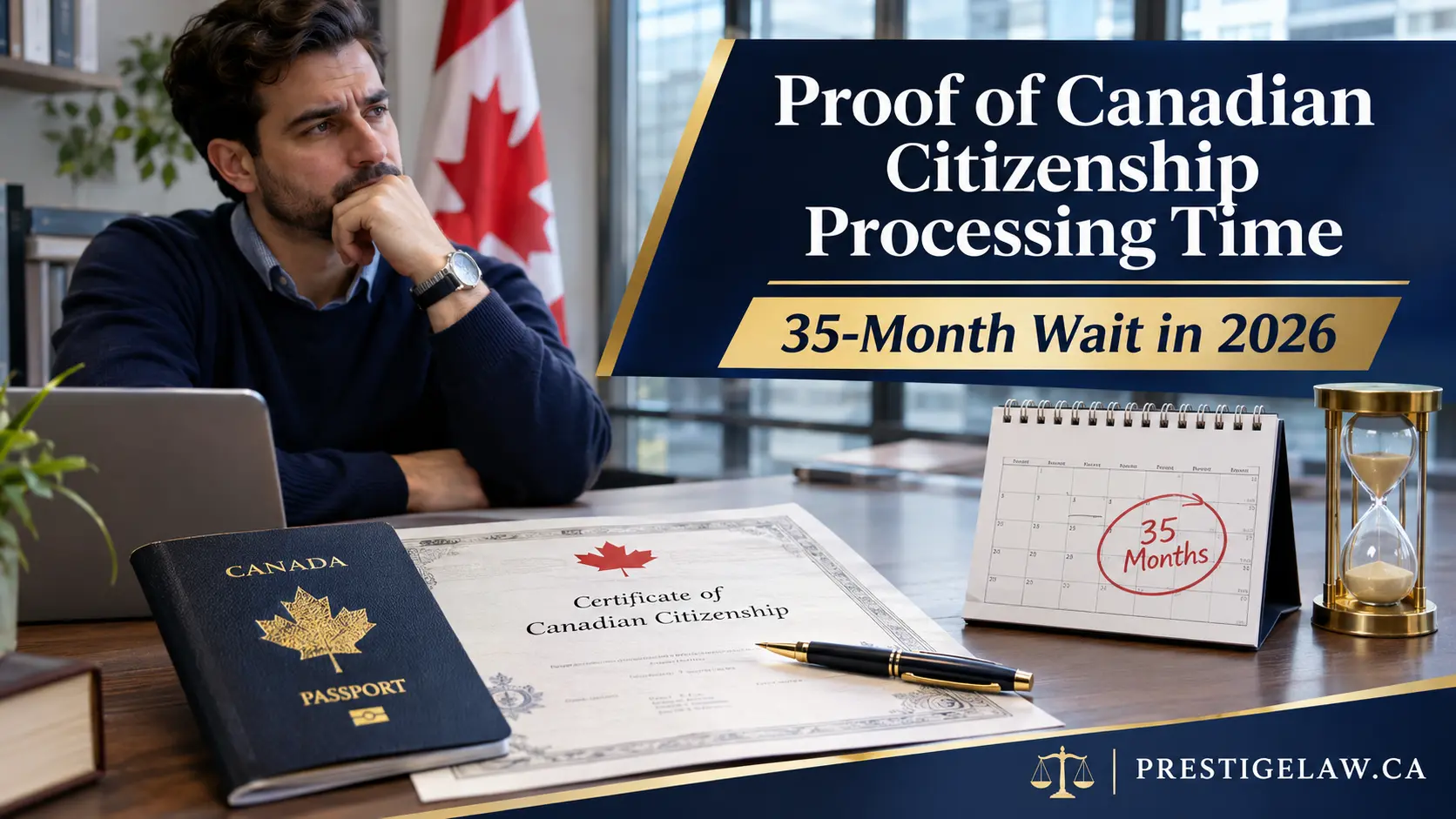
Proof of Canadian Citizenship Processing Time 2026: Latest IRCC Update
On November 17, 2026, IRCC updated its processing time estimates for proof of Canadian citizenship applications. The estimated waiting period increased from 34 months in October to 35 months in November.
At the same time, the number of people waiting for decisions increased from approximately 130,700 to 139,200, representing an increase of about 6.5%.
This development is particularly important for people born outside Canada who may already be Canadian citizens through their parents or earlier generations. Many require a citizenship certificate to formally establish their status.
Proof of Canadian Citizenship Processing Time 2026: Monthly Timeline
The proof of Canadian citizenship processing time 2026 trend shows that the processing estimate has increased considerably throughout the year. The following table illustrates how the published waiting period changed between May and November.
| Month | Estimated Wait | Monthly Increase |
|---|---|---|
| May 2026 | 12 months | 2 months |
| June 2026 | 15 months | 3 months |
| July 2026 | 19 months | 4 months |
| August 2026 | 25 months | 6 months |
| September 2026 | 33 months | 8 months |
| October 2026 | 34 months | 1 month |
| November 2026 | 35 months | 1 month |
Although the monthly increases have moderated since September, the overall trend remains concerning for applicants who need documentary proof of citizenship.
Why Are Canadian Citizenship Certificates Taking So Long?
Several factors may influence processing times, including application inventory, available processing capacity, expected new applications, and the complexity of individual files.
1. Increased Demand Following Citizenship Law Changes
Amendments to Canada's Citizenship Act under Bill C-3 took effect on December 15, 2025. These changes expanded citizenship by descent eligibility for certain people born outside Canada.
As a result, more individuals with Canadian family connections may be eligible to request proof of their citizenship.
2. Growing Application Inventory
IRCC's reported queue reached approximately 139,200 people in November 2026. A larger inventory can create additional pressure on processing resources.
3. Complex Family Documentation
Some citizenship by descent applications require documents spanning multiple generations, including birth certificates, marriage records, legal name changes, and evidence establishing a Canadian ancestor's citizenship.
Missing records or inconsistent information may result in additional requests, delays, or returned applications.
Who Is Affected by the 35-Month Citizenship Wait?
The proof of citizenship process is different from applying to become a Canadian citizen through naturalization. It is generally used by people who already have Canadian citizenship and need official evidence of that status.
Potentially affected individuals include:
- People born abroad to Canadian parents.
- Individuals with Canadian grandparents or earlier ancestors who may qualify under amended citizenship rules.
- People seeking their first Canadian citizenship certificate.
- Canadian citizens requesting replacement citizenship certificates.
- Families seeking documentation before applying for Canadian passports.
Eligibility must be assessed under the applicable Citizenship Act provisions. Having a Canadian ancestor does not automatically establish eligibility in every situation.
How Bill C-3 Changed Canadian Citizenship by Descent
Bill C-3 introduced important amendments affecting citizenship by descent. For certain individuals born before December 15, 2025, the amendments removed the previous first-generation limit on citizenship transmission outside Canada.
This means some individuals who were previously excluded may now qualify for Canadian citizenship through earlier generations of their family.
Different rules can apply to people born or adopted on or after December 15, 2025, including requirements relating to a Canadian parent's substantial connection to Canada.
Because citizenship eligibility can depend on birth dates, adoption, family history, and statutory exceptions, a case-specific legal assessment is important.
Can You Apply for Urgent Citizenship Certificate Processing?
IRCC may consider urgent processing requests where an applicant has a qualifying and documented need. However, urgent processing is discretionary and is not guaranteed.
Depending on the circumstances, relevant situations may include:
- An employment opportunity requiring proof of Canadian citizenship.
- Admission to an educational institution with a time-sensitive requirement.
- Urgent travel relating to a serious illness or death in the family.
- Time-sensitive access to certain benefits, health care, or identification.
Applicants should provide a clear explanation and supporting documents demonstrating the urgency and relevant deadlines.
Visit IRCC's official urgent processing guidance for current requirements.
Does Applying Outside Canada Increase the Waiting Time?
Applicants outside Canada and the United States may face additional mailing and delivery time. IRCC advises allowing approximately three to four additional months for mail in relevant overseas cases.
Applicants should confirm the submission and delivery instructions applicable to their location. The published estimate should not be treated as a guaranteed timeline.
What Should Applicants Do During the 35-Month Wait?
With the proof of Canadian citizenship processing time 2026 estimate at 35 months, applicants can take practical steps to reduce avoidable complications and remain prepared for IRCC requests.
- Check application completeness: Ensure the required forms and supporting documents have been submitted.
- Maintain accurate contact details: Update IRCC when your address, email, or other relevant information changes.
- Monitor application updates: Use the appropriate IRCC application status tools and correspondence channels.
- Preserve family records: Keep copies of citizenship, birth, marriage, and name-change documents.
- Assess urgent processing eligibility: Consider whether documented circumstances meet IRCC's requirements.
- Seek professional advice: Obtain legal guidance if eligibility, documentation, or processing issues become complicated.
Should You Wait Before Applying for Proof of Canadian Citizenship?
Applicants who believe they qualify may wish to prepare their documentation promptly rather than assume processing times will improve in the near future.
However, submitting an incomplete application simply to enter the queue can create avoidable problems. It is generally preferable to confirm eligibility and assemble a complete, accurate application before filing.
A qualified Canadian immigration lawyer can help assess the relevant citizenship provisions and identify documentary issues before submission.
Frequently Asked Questions About Canadian Citizenship Processing Times
How long does proof of Canadian citizenship take in 2026?
As of November 17, 2026, IRCC's published estimate is approximately 35 months. Processing estimates can change and do not guarantee an individual decision date.
Is a citizenship certificate the same as becoming a Canadian citizen?
No. A citizenship certificate provides official proof of existing Canadian citizenship. A citizenship grant is a separate process through which eligible non-citizens become citizens.
Can I qualify for Canadian citizenship through my grandparents?
Possibly. Changes under Bill C-3 expanded eligibility for certain individuals born abroad. Whether you qualify depends on your family history and applicable law.
Can IRCC speed up a citizenship certificate application?
IRCC may consider urgent processing when an applicant provides an eligible reason and supporting evidence. Approval is not automatic.
Can I apply for a Canadian passport while waiting for proof of citizenship?
A citizenship certificate is generally an accepted form of proof for a Canadian passport application. Passport requirements depend on the applicant's circumstances. Applicants should review the official passport document requirements.
Will the 35-month waiting period decrease?
Future processing times are uncertain. IRCC updates its estimates periodically based on application volumes, processing capacity, and other factors.
How Prestige Law Can Help With Canadian Citizenship Matters
Canadian citizenship by descent applications can involve detailed legal eligibility questions and extensive supporting documentation.
Prestige Law provides legal guidance on Canadian immigration and citizenship matters. Individuals concerned about their eligibility, supporting records, or citizenship certificate delays can contact the firm to discuss their circumstances and available options.
Need Guidance on Your Canadian Citizenship Application?
Whether you are exploring citizenship through a Canadian parent or ancestor, preparing supporting documents, or facing application delays, Prestige Law can help you understand the legal requirements and next steps.
Prestige Law
Serving clients in Toronto,
Richmond Hill, and across Ontario.
Official Resources and Further Reading
IRCC — Check Application Processing Times
Government of Canada — Canadian Citizenship
CIC News — November 2026 Processing Update
Disclaimer: This article provides general information and does not constitute legal advice. Processing times and immigration rules may change. Individual circumstances require independent legal assessment.