




Six Online Tools Americans Are Using to Find Ancestry for Canadian Citizenship by Descent
Introduction: Why Thousands of Americans Are Quietly Applying for Canadian Citizenship
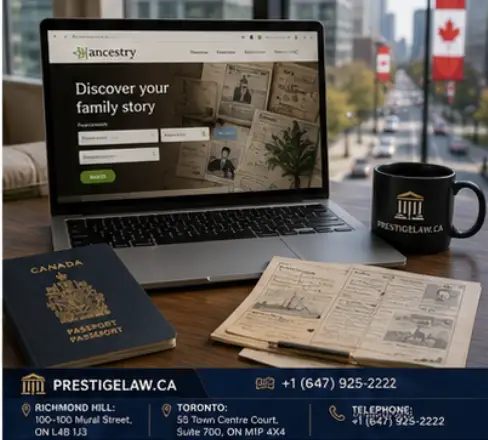
Every year, tens of thousands of Americans quietly discover something remarkable: they may already qualify for Canadian citizenship — not through immigration, not through marriage, but through blood. Canadian citizenship by descent is one of the most underutilised legal pathways in North America, and for many Americans with Canadian-born parents or grandparents, it represents a legitimate, powerful second citizenship that has been sitting unclaimed for decades. Six Tools to Find Ancestry for Canadian Citizenship
The process, however, is not as simple as knowing your grandfather was born in Montreal. Canadian immigration law requires verified, documented proof of your ancestral connection to Canada. That means birth certificates, naturalisation records, census documents, immigration records, and a clear, unbroken paper trail that connects you to a Canadian-born ancestor. Without this documentation, even the most compelling family story will not survive legal scrutiny.
This is where the right online ancestry tools become indispensable. The digital revolution in genealogy has made it possible for ordinary people to unearth documents that once required months of in-person archival research. From digitised government records to DNA matching databases, today’s tools can help you build the evidentiary foundation your citizenship application demands.
In this guide, we explore the six most powerful online tools Americans are using right now to research their Canadian ancestry — and explain why, once you have gathered that evidence, working with an experienced immigration lawyer like Zeesean Sheikh at Prestige Law is the essential next step to turn your ancestry into a legally recognised second citizenship.
Understanding Canadian Citizenship by Descent: The Legal Foundation
Before diving into the tools, it is important to understand what Canadian citizenship by descent actually means under Canadian law, and why documentation is so critical.
Under Canada’s Citizenship Act, a person born outside Canada on or after February 15, 1977, may be a Canadian citizen by descent if at least one of their parents was a Canadian citizen at the time of their birth. However, the law also includes a “first generation limit” — meaning citizenship by descent generally only extends one generation born outside Canada. This makes it critically important to understand exactly where in your family tree the Canadian connection exists, and whether that connection falls within the legally recognised parameters.
For people whose connection goes back to grandparents or great-grandparents, the pathway may still exist but requires careful legal analysis. Cases involving ancestors who were Canadian citizens before they naturalised in another country, or who returned to Canada later in life, involve nuanced interpretations of citizenship law that demand professional guidance.
The foundation of any successful application is evidence. IRCC (Immigration, Refugees and Citizenship Canada) requires original or certified copies of documents, and incomplete applications are routinely returned or denied. This is why your ancestry research is not merely an interesting personal project — it is the legal groundwork for your citizenship claim.
The Six Online Tools Americans Are Using to Trace Canadian Ancestry
1. Ancestry.com — The World’s Largest Genealogical Database
Ancestry.com is the first stop for the vast majority of Americans beginning a Canadian citizenship by descent research journey, and for good reason. With more than 40 billion records indexed across its platform, Ancestry.com holds digitised Canadian census records, immigration passenger lists, naturalisation documents, vital statistics, military records, and church registries that span centuries of Canadian history.
For citizenship research specifically, the most valuable Canadian collections on Ancestry.com include the Canada Census records from 1851 through 1926, which can confirm where an ancestor lived and was born; Library and Archives Canada military records, which document service history and often confirm birthplace and citizenship status; Canadian passenger lists from 1865 to 1935, which track immigration and emigration patterns; and provincial vital statistics records for births, marriages, and deaths across Ontario, Quebec, British Columbia, and other provinces.
Ancestry.com’s hint system, called “ThruLines,” automatically connects your family tree to other users’ trees and suggests record matches, allowing you to build connections quickly. The platform also integrates with its AncestryDNA product, enabling you to cross-reference genetic matches with documentary records for a more complete picture.
What to look for in your Canadian citizenship research: Birth records confirming your ancestor was born in Canada, census entries showing Canadian residence, and naturalisation records that may reveal when and whether your ancestor became a citizen of another country — which has direct implications for your citizenship by descent eligibility.
Subscription note: Full access requires a paid subscription, but the investment is worthwhile given the depth of Canadian records available.
2. FamilySearch.org — The Free Genealogy Giant With Exclusive Canadian Records
FamilySearch is operated by The Church of Jesus Christ of Latter-day Saints and is entirely free to use, making it one of the most democratic and widely used genealogical resources in the world. What makes FamilySearch particularly valuable for Canadian ancestry research is its access to record collections that are not available anywhere else online.
FamilySearch holds digitised records from Canada’s provincial archives, Catholic and Protestant church registries, civil registration records, and vital statistics collections. In Quebec, where Catholic church records date back to the 1600s, FamilySearch provides access to parish records that can trace French-Canadian lineage across hundreds of years. For Americans with Québécois ancestry, this is an irreplaceable resource.
Key Canadian collections on FamilySearch include Quebec Catholic parish registers from 1621 to 1900, Ontario county marriage registers, Nova Scotia vital records, British Columbia birth, marriage, and death registrations, and Métis and Indigenous community records from western Canada.
FamilySearch also offers a collaborative family tree platform called the Family Tree, where millions of users contribute and verify records collectively. While user-submitted data should always be independently verified with primary source documents, the Family Tree can provide valuable leads and clues that direct you to official records.
Why it matters for citizenship applications: FamilySearch can help you find the original church or civil registration documents that IRCC accepts as proof of your ancestor’s Canadian birth — documents that are often the cornerstone of a citizenship by descent application.
3. Library and Archives Canada (LAC) — The Official Government Record Repository
If Ancestry.com and FamilySearch are the commercial and community faces of Canadian genealogy, Library and Archives Canada is the authoritative institutional voice. LAC is the federal government repository that holds the official records of Canada’s national history — and for citizenship by descent applicants, its collections carry unique evidentiary weight.
LAC’s online portal at bac-lac.gc.ca provides searchable access to a remarkable range of record types: the 1901, 1911, 1916, and 1926 Canadian Census records (the 1921 census was recently released); World War I and World War II service records for Canadian veterans; Immigration records including landing records, border crossing documents, and Certificate of Arrival files; Naturalization records from 1915 to 1946, which are especially critical for tracing ancestors who may have changed citizenship status; and passenger lists for ships arriving at Canadian ports from 1865 to 1935.
One of LAC’s most important collections for citizenship by descent research is the Citizenship Registration records. These documents can confirm that an ancestor was registered as a Canadian citizen under historical citizenship laws — powerful evidence for an IRCC application.
Pro tip: LAC also maintains a personnel records research service for military veterans. If your Canadian ancestor served in the Canadian Armed Forces, their service record can be an extraordinarily detailed source of biographical information, including birthplace, next of kin, and pre-war residence.
Accessing LAC records: Many LAC records are freely searchable online. Some require formal access requests, which can be submitted through their online portal. An immigration lawyer can help you identify exactly which records are most relevant and assist in obtaining certified copies.
4. MyHeritage — AI-Powered Genealogy With Deep European and Canadian Collections
MyHeritage has distinguished itself in the genealogy world through its aggressive adoption of artificial intelligence and its strong emphasis on records from Europe and Canada. For Americans whose Canadian ancestry has roots in Ireland, Italy, Eastern Europe, or other immigrant communities that settled in Canada, MyHeritage offers collections and technology that complement what Ancestry.com and FamilySearch provide.
MyHeritage’s proprietary “Smart Matches” technology automatically compares your family tree against billions of records in other users’ trees and in its database, flagging potential connections and record matches. Its “Record Detective” feature cross-references multiple data sources to surface records you might never find through manual searching. The platform also offers a powerful photo enhancement and colourisation tool — while not legally relevant to a citizenship application, it can help you identify relatives in historical photographs and make emotional connections to your Canadian heritage.
From a research standpoint, MyHeritage holds Canadian census records, vital statistics, immigration records, and newspaper archives. Its newspaper archive collection is particularly underrated for genealogical research: birth announcements, obituaries, wedding notices, and local news stories can all provide biographical details that confirm Canadian birth and residency.
MyHeritage also integrates with its DNA testing service, which maintains one of the largest genetic databases outside of Ancestry. If you have already tested with another provider, you can upload your raw DNA data to MyHeritage for free to expand your match network.
Unique value for citizenship research: MyHeritage’s cross-border European-Canadian record collections are especially useful for tracing the full immigration story of ancestors who came from Europe, settled in Canada, and may have later moved to the United States — a common pattern in communities from Nova Scotia, Quebec, and Ontario.
5. Findmypast — The Specialist Platform for British and Canadian Records
Findmypast is a genealogy platform with particular strength in British Isles and Commonwealth records, making it a powerful tool for Americans tracing Canadian ancestry with roots in England, Scotland, Ireland, or Wales. Given that a substantial portion of English-speaking Canada was settled by British immigrants in the 18th and 19th centuries, Findmypast’s collections have direct relevance to many Canadian citizenship by descent cases.
The platform holds an impressive range of Canadian-specific records, including immigration records from the 1800s and early 1900s, Canadian newspaper archives, military records from both World Wars, and provincial vital statistics. Its British collections are also relevant for tracing the period before your ancestor immigrated to Canada — establishing a complete biographical timeline that begins in Britain, passes through Canadian citizenship, and connects to your American family.
Findmypast has invested heavily in partnerships with national and provincial archives in Canada and the United Kingdom, resulting in exclusive digitised collections that are not available on competing platforms. Its search technology allows for flexible name matching, which is particularly useful when ancestors’ names were spelt inconsistently across documents — a common challenge in historical records.
Why Findmypast stands apart: Its focus on Commonwealth genealogy means it holds records that bridge the gap between British origins and Canadian settlement, making it uniquely useful for constructing the full historical narrative that a well-prepared citizenship by descent application often requires.
6. 23andMe and AncestryDNA — Using Genetic Evidence to Support Documentary Research
DNA testing is not a substitute for official documentary records in a Canadian citizenship by descent application — IRCC requires paper documentation, not genetic evidence. However, DNA testing through platforms like 23andMe and AncestryDNA can play a powerful supporting role in your research by helping you identify relatives you did not know existed, connecting you with Canadian cousins who may hold the documents you need, and confirming that your family tree is genealogically accurate before you commit to a legal application.
23andMe’s “Relatives” feature and AncestryDNA’s “DNA Matches” both allow you to connect with genetic relatives and message them directly through the platform. Many citizenship by descent applicants have discovered Canadian cousins through these tools who were able to provide birth certificates, family bibles, and other primary documents that proved the critical Canadian connection.
DNA ethnicity estimates from both platforms can also alert you to Canadian or French-Canadian ancestry you may not have known about. While ethnic percentage estimates are not precise enough to be used as legal evidence, they can prompt you to investigate family lines you had previously overlooked — and that investigation may uncover the documentary proof you need.
The genealogical strategy: Use DNA matches to find living relatives, reach out to connect your family trees, and identify individuals who may have preserved the original Canadian records. Then work with a genealogist and an immigration lawyer to verify and authenticate those records for your IRCC application.
From Ancestry Research to Citizenship Application: The Legal Process
Once you have gathered evidence of your Canadian ancestry, the real work begins. Translating genealogical research into a successful citizenship by descent application requires a precise understanding of Canadian immigration law, meticulous document preparation, and the ability to respond effectively to IRCC requests for additional information.
Here is what the process generally looks like:
Step 1 — Legal Eligibility Assessment: Before investing time and money in a full application, a qualified immigration lawyer reviews your family tree and the evidence you have gathered to assess whether you have a viable claim under the Citizenship Act. This step can save considerable time and expense by identifying eligibility issues early.
Step 2 — Document Collection and Authentication: The lawyer helps you identify exactly which documents IRCC will require, assists in obtaining certified copies from Canadian provincial archives, and advises on translation requirements for documents in languages other than English or French.
Step 3 — Application Preparation: The citizenship by descent application (form CIT 0001 or the relevant form at the time of submission) must be completed accurately and completely. Errors or omissions are among the most common reasons for application delays or refusals.
Step 4 — Submission and Follow-Up: The lawyer submits the application and maintains communication with IRCC, responding to any requests for additional documents or information.
Step 5 — Receiving the Proof of Citizenship: If approved, you receive a certificate confirming your Canadian citizenship — and can then apply for a Canadian passport, giving you the right to live and work in Canada without restriction.
Why Legal Guidance Is Not Optional
Canadian citizenship by descent applications involve complex legal determinations that genealogical research alone cannot resolve. The question of whether your ancestor was a Canadian citizen at the time of your parent’s birth, whether the first-generation limit applies, or whether a historical exception preserves your claim requires statutory interpretation and knowledge of decades of IRCC policy and case law.
Common complications that require professional legal analysis include:
Ancestors who naturalised as American citizens before 1977, which may affect when Canadian citizenship was lost under historical laws. The impact of the 2009 and 2015 legislative amendments to the Citizenship Act, which restored citizenship to certain “Lost Canadians.” Cases involving adoption, surrogacy, or non-marital births under historical laws that treated these cases differently. Situations where an ancestor held dual citizenship or had complex residency patterns that complicate the lineage analysis.
Without expert legal guidance, applicants frequently submit incomplete applications, misidentify the correct form of citizenship claim, or fail to anticipate IRCC objections — resulting in delays, additional costs, and sometimes refusals that could have been avoided.
Meet Zeesean Sheikh — Canadian Immigration Lawyer at Prestige Law
For Americans navigating the Canadian citizenship by descent process, having the right legal partner is everything. Zeesean Sheikh is an experienced Canadian immigration lawyer at Prestige Law, serving clients from across North America who are pursuing citizenship by descent, permanent residency, and other Canadian immigration pathways.
Zeesean Sheikh and the team at Prestige Law bring deep knowledge of Canadian citizenship law, extensive experience preparing and submitting citizenship by descent applications, and a client-focused approach that makes a complex legal process manageable. Whether you are just beginning your ancestry research or have already gathered documents and are ready to apply, Prestige Law provides the strategic guidance and hands-on support your case requires.
Prestige Law — Office Locations:
📍 Richmond Hill: 100–100 Mural Street, Richmond Hill, ON
📍 Toronto: 55 Town Centre Court, Suite 700, Toronto, ON
📞 Telephone: +1 (647) 925-2222 🌐 Website: prestigelaw.ca
Prestige Law offers consultations for individuals and families exploring their eligibility for Canadian citizenship by descent. With offices in both Richmond Hill and Toronto, the firm serves clients locally in the Greater Toronto Area and remotely across the United States and internationally.
Practical Tips for Your Ancestry Research Journey
Before you begin, here are several practical strategies that will make your research more effective and your eventual application stronger:
Start with what you know. Begin with your immediate family and work backwards. Collect every document already in your family’s possession — old passports, birth certificates, naturalisation papers, family bibles, and even old letters or photographs. These primary materials often contain critical clues.
Talk to elderly relatives. Living relatives, especially grandparents, great-aunts, and great-uncles, are often the most valuable genealogical resource available to you. Interview them about family history, ask about Canadian connections, and record those conversations.
Order vital records proactively. Once you identify the province where your Canadian ancestor was born, contact the provincial vital statistics office to request a birth certificate. Many provinces now accept online requests, and certified copies are essential for your IRCC application.
Use multiple platforms in combination. No single genealogy platform holds every relevant record. Use Ancestry.com, FamilySearch, LAC, and MyHeritage in combination, cross-referencing findings across sources to build the most complete and reliable family tree possible.
Verify every fact independently. Family oral histories can be wrong. A record on another user’s family tree may contain errors. Always trace every claim back to a primary source document before including it in a citizenship application.
Consult an immigration lawyer early. Many people wait until they have “finished” their research before consulting a lawyer. In practice, an early consultation can guide your research toward the specific documents that matter most legally, saving significant time and preventing you from pursuing avenues that do not support your claim.
Frequently Asked Questions
What is Canadian citizenship by descent?
Canadian citizenship by descent is a legal pathway through which individuals born outside Canada may be recognised as Canadian citizens based on having a Canadian citizen parent at the time of their birth. Under Canada’s Citizenship Act, citizenship can pass from a Canadian parent to a child born abroad, subject to certain limitations including the first-generation limit enacted in 2009.
Can I qualify for Canadian citizenship through a grandparent?
In most cases, the first-generation limit restricts citizenship by descent to those whose parent — not grandparent — was a Canadian citizen at the time of their birth. However, exceptions and special circumstances exist, including cases affected by the “Lost Canadians” legislative amendments. A qualified immigration lawyer can assess whether your grandparent connection supports a viable claim.
What documents does IRCC require for a citizenship by descent application?
IRCC typically requires your birth certificate, your parent’s birth certificate or proof of Canadian citizenship, marriage certificates where relevant to establishing the family connection, and any naturalisation documents that affect citizenship status. The specific requirements vary by case, and an immigration lawyer can provide a tailored document checklist.
How long does a citizenship by descent application take?
Processing times vary and are subject to change. IRCC publishes current processing time estimates on its website. Applications with complete documentation and no eligibility complications are generally processed faster than those requiring additional review. Your immigration lawyer can advise on realistic timelines for your specific situation.
Is DNA evidence accepted by IRCC as proof of Canadian ancestry?
IRCC does not accept DNA evidence as a substitute for official documentary records. DNA testing can be a valuable genealogical research tool that helps you identify relatives and locate the documentary evidence you need, but the application itself must be supported by official documents such as birth certificates and citizenship records.
Can Americans hold dual Canadian-American citizenship?
Yes. Both Canada and the United States permit dual citizenship. Obtaining Canadian citizenship by descent does not require you to renounce your American citizenship. You can hold both passports simultaneously.
What is the first-generation limit in Canadian citizenship law?
The first-generation limit, introduced through the Citizenship Act amendments that came into force on April 17, 2009, generally restricts citizenship by descent to one generation born outside Canada. A child born outside Canada to a Canadian citizen parent may be a citizen by descent, but that citizenship cannot automatically be passed to the next generation born outside Canada. There are nuances and exceptions to this rule that require legal analysis.
Do I need a lawyer to apply for Canadian citizenship by descent?
You are not legally required to hire a lawyer, but the complexity of Canadian citizenship law, the importance of accurate documentation, and the consequences of a refused or delayed application make professional legal guidance strongly advisable. A qualified immigration lawyer significantly increases the probability of a successful outcome.
What happens if my application is refused?
If IRCC refuses your citizenship by descent application, you have options, including requesting reconsideration or pursuing an appeal through the Federal Court of Canada. An immigration lawyer can assess the grounds for refusal and advise on the best path forward.
How do I get started with Prestige Law?
You can contact Prestige Law by calling +1 (647) 925-2222 or visiting prestigelaw.ca to schedule a consultation. The firm’s lawyers will review your family history, assess your eligibility, and guide you through every step of the process.
Your Canadian Citizenship May Be Closer Than You Think
For millions of Americans with Canadian roots, the path to a second citizenship runs directly through the family tree — and through the digital archives that make that tree visible. The six online tools explored in this guide — Ancestry.com, FamilySearch, Library and Archives Canada, MyHeritage, Findmypast, and DNA testing platforms like 23andMe and AncestryDNA — represent the most powerful resources available to anyone serious about researching a Canadian citizenship-by-descent claim.
Each platform brings something unique to the table. Together, they enable you to reconstruct your family’s Canadian story with the documentary precision that a legal citizenship application demands.
But genealogical research is only the beginning. The difference between a family history and a recognised legal citizenship lies in the hands of a skilled immigration lawyer who knows how to translate that research into a complete, persuasive, and legally sound application.
Zeesean Sheikh and the team at Prestige Law are ready to help you take that step. With offices in Richmond Hill and Toronto and a dedicated focus on Canadian immigration law, Prestige Law combines legal expertise with genuine commitment to client success.
Your Canadian citizenship may be closer than you think. The tools are available. The law supports you. And the right legal partner is waiting.
📍 Richmond Hill: 100–100 Mural Street, Richmond Hill, ON
📍 Toronto: 55 Town Centre Court, Suite 700, Toronto, ON
📞 Telephone: +1 (647) 925-2222
🌐 Website: prestigelaw.ca
This article is provided for informational purposes only and does not constitute legal advice. For advice specific to your circumstances, please consult a qualified Canadian immigration lawyer.