



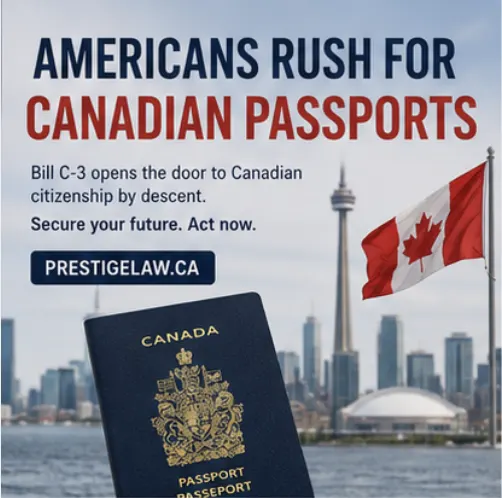
Prince Edward Island Archives Logs Four Years’ Worth of Document Requests in Four Months, as Americans Rush for Canadian Passports
The Historic Surge That Is Rewriting Canadian Immigration
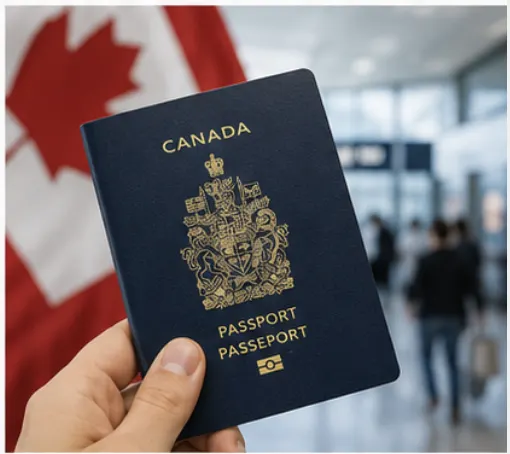
Something extraordinary is happening inside the quiet reading rooms of the Prince Edward Island Public Archives and Records Office. What was once a steady trickle of ancestry researchers and local historians has become a torrent — an overwhelming, unprecedented rush of Americans who are now racing to unlock their Canadian heritage and secure one of the most valuable documents in the world: a Canadian passport. Americans Rush for Canadian Passports
Throughout all of 2025, the PEI Public Archives and Records Office received 585 requests for genealogical documents. In contrast, from January 1 to the end of April 2026 alone, the office received 1,776 requests — and May had already added another 732 on top of that. As one spokesperson for the office stated plainly: “We currently have received four years’ worth of requests in four months.”
This is not a coincidence. It is the direct result of a landmark change in Canadian law — one that has opened the door to Canadian citizenship for millions of Americans who may never have known they were eligible. For anyone navigating this complex and fast-moving process, having an experienced Canadian immigration lawyer on your side is no longer optional. It is essential.
At Prestige Law, Zeesean Sheikh and his team are at the forefront of helping clients across Canada and the United States navigate citizenship by descent applications, document gathering, and the full path to obtaining a Canadian passport. Whether you are in the early stages of tracing your family tree or ready to submit your application, Prestige Law provides the strategic, results-driven legal guidance you need.
What Changed? Understanding Bill C-3 and the End of the First-Generation Limit
To understand why archives across Canada are overwhelmed and why thousands of Americans are suddenly gathering century-old birth certificates and church baptismal records, you need to understand one piece of legislation: Bill C-3.
Bill C-3 took effect on December 15, 2025, eliminating Canada’s first-generation limit on citizenship by descent and opening citizenship up to those who can prove descent from a Canadian ancestor — regardless of how many generations back that connection goes.
Before this law passed, Canadian citizenship by descent was limited to only the first generation born outside Canada. This meant that if your parent was Canadian but you were born in the United States, you could claim Canadian citizenship — but your children could not claim it through you. Millions of families were cut off from their Canadian heritage by this single rule.
The controversial “First-Generation Limit” has now been abolished for anyone born before December 15, 2025. Broad eligibility means it does not matter where you were born, or whether your parents or grandparents ever actually lived in Canada or held Canadian passports. If you have a Canadian ancestor, you very likely qualify.
The implications of this are staggering. The trigger is a single piece of Canadian legislation called Bill C-3 that became law on December 15, 2025. It retroactively erased decades of restrictive citizenship rules and opened the door for potentially millions of Americans with Canadian ancestry to claim dual citizenship. The response has been explosive.
For many Americans, this is not just a legal technicality. It is the discovery of a second identity — and in the current political climate, a genuine insurance policy.
Why Are Americans Moving So Fast?
The surge in citizenship applications is being driven by a combination of legal, practical, and political factors that have converged in a uniquely powerful way.
A Canadian Passport Now Outranks the U.S. Passport
A Canadian passport currently outranks the U.S. passport on the Henley Passport Index, offering more visa-free or visa-on-arrival access around the world. For frequent travellers, business owners, and families with international ties, this alone is a compelling reason to pursue Canadian citizenship.
The Cost Is Remarkably Low
The $75 CAD fee makes this the most affordable second citizenship option available anywhere in the world. When you compare this to the tens of thousands of dollars required to obtain citizenship through investment programs in other countries, the Canadian citizenship-by-descent pathway is extraordinarily accessible.
No Tax Consequences for Non-Residents
Unlike the U.S. system, Canada taxes based on residency, not citizenship. You can hold a Canadian passport without owing Canadian income tax. This removes one of the most significant concerns Americans have when considering dual citizenship.
Real Americans With Real Motivations
A retired technology executive planning travel to Montreal. A California winemaker eyeing Montreal real estate and Commonwealth access to Australia and New Zealand. A North Carolina retiree whose daughter wants to live in Toronto. For many such families, a door has opened.
These are not abstract statistics. They are real people who have recognised a once-in-a-generation opportunity — and who are acting on it before the window narrows.
The Archive Crisis: What Is Happening Across Canada
The Prince Edward Island Archives is not alone in feeling the pressure. Provincial archives from coast to coast are struggling to keep pace with a volume of requests they were never designed to handle.
Prince Edward Island
Staff at the PEI Archives noticed an uptick in requests beginning in October 2025, when the Canadian government introduced interim measures allowing those with Canadian ancestry to apply for a discretionary grant of Canadian citizenship. The spike in requests only grew into the new year. “Coming back from Christmas holidays, we came back to a large amount of requests,” the office said. “It was instant, and requests are only increasing as time goes on.”
The PEI Public Archives and Records Office has seen a 143 per cent increase in requests so far this year. It has implemented an automatic response to emails, stating that the volume of requests is so high that it cannot provide a timeline for when orders will be completed.
Nova Scotia
From January to March of 2026, the Nova Scotia Archives received more than five times the requests it had throughout the entire calendar year of 2024: 1,354 requests, compared to 262 in the whole of the previous year.
New Brunswick and Other Provinces
The Kings County Archives, Charlotte County Archives, and Grand Manan Archives have all seen significant increases. Even genealogists are in high demand as Americans scramble to piece together their family histories.
Quebec
Quebec’s records dating back to 1621 are held by the Bibliothèque et Archives nationales du Québec (BAnQ). In January 2025, the BAnQ office in Montreal received 32 requests; by January 2026, that number had climbed past 1,000 — the vast majority from Americans.
The scale of this surge is unlike anything Canadian archives have experienced in living memory. For Americans caught in this backlog, professional legal assistance is the most effective tool available to accelerate and simplify the process.
How Long Does It Take? Current Processing Times in 2026
Speed matters. Some Americans are going from zero paperwork to Canadian citizenship to a Canadian passport in under three months. However, this is only possible when applications are meticulously prepared with all required documentation from the outset.
For most applicants, the reality is more complex:
As of early 2026, processing times from the U.S. are approximately 10 to 11 months. Nearly 50,000 people are currently waiting for decisions on citizenship certificate applications, a backlog directly attributable to the surge in applications following Bill C-3.
IRCC currently estimates that Proof of Citizenship applications are taking between 11 and 15 months to process, depending on the complexity of the historical documents provided.
These numbers are expected to grow. There is no gate limiting how many proof of citizenship applications can be submitted. With millions potentially eligible, a surge in application inventory could send processing times from months to years.
The message is clear: the best time to apply is now. Every month of delay increases the risk of being caught in a processing backlog that could stretch for years.
What Documents Do You Need? The Paper Trail to Canadian Citizenship
The documentary burden is the single greatest challenge for most Americans pursuing citizenship by descent. Immigration lawyers cited by CBC News note that the biggest barrier for most American applicants is not eligibility but documentation — proving an unbroken chain of descent to a Canadian-born ancestor requires birth certificates, marriage certificates, and sometimes immigration records going back generations.
Here is what you will typically need:
Birth Certificates for Every Generation
Americans need a birth certificate for every person in the generational chain — not just their own, but their parent’s, and their grandparent’s, right back to the Canadian ancestor at the top. Birth certificates are the most clear-cut documentation to prove Canadian ancestry.
Marriage Certificates
Marriage certificates are needed to document name changes and establish the legal connection between generations, particularly when a parent or grandparent changed their surname upon immigration to the United States.
Church and Baptismal Records
For an ancestor born in rural New Brunswick, Prince Edward Island, or a small Quebec parish in the 1880s, the local church register may be the most reliable record available — and in some cases, the only one.
Census Records
For ancestors where civil records are sparse or gaps in the documentary chain need to be explained, census records can provide crucial corroborating evidence. Canadian census records or other historical documents can establish that an ancestor was resident in Canada and transitioned into citizenship in 1947.
Legal Affidavits and Certified Translations
Where documentation gaps exist, legal professionals can prepare chain-of-identity affidavits that help bridge gaps in the record and satisfy IRCC’s requirements. Certified translations are required for any documents not in English or French.
Gathering this documentation is not simply a matter of making phone calls. It requires an understanding of provincial record-keeping systems, the ability to navigate archival backlogs, and knowledge of when alternative documents are acceptable. This is precisely where Zeesean Sheikh and the team at Prestige Law provide immeasurable value to their clients.
The Step-by-Step Process: From Ancestry to Canadian Passport
For those ready to move forward, here is a clear overview of the full process:
Step 1: Confirm Eligibility. Determine whether you have a qualifying Canadian ancestor. Under Bill C-3, any ancestor born in Canada before December 15, 2025, can serve as the basis for your claim, regardless of how many generations back that ancestor lived.
Step 2: Gather Documentation. Collect all birth certificates, marriage certificates, and supporting records for every person in the generational chain connecting you to your Canadian ancestor. This process often takes two to three months and requires requests to multiple provincial archives.
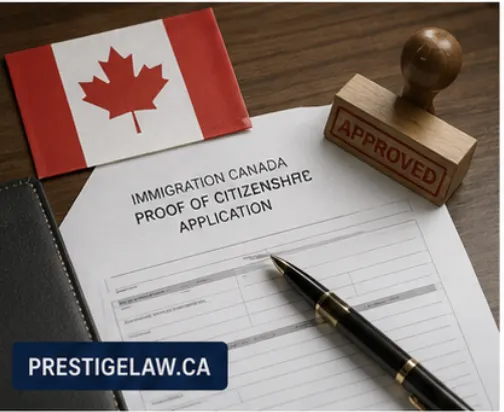
Step 3: Prepare and Submit Your Application: File the paperwork with Immigration, Refugees and Citizenship Canada (IRCC) for a Proof of Citizenship certificate. As of early 2026, the processing time for a Proof of Citizenship application is approximately 11 months.
Step 4: Receive Your Citizenship Certificate. If approved, you will receive a certificate that serves as official proof of Canadian citizenship. You can then use it to apply for a Canadian passport.
Step 5: Apply for Your Canadian Passport. Once your citizenship certificate is in hand, you are eligible to apply immediately for a Canadian passport, granting you the full travel and residency rights of a Canadian citizen.
Do You Need a Lawyer? Why Professional Legal Help Is Critical
Many applicants underestimate the complexity of the citizenship-by-descent process. A single missing document, an improperly certified record, or an error in the genealogical chain can result in delays of many months or outright rejection. At that point, restarting the process means going to the back of a queue that is growing by the day.
Zeesean Sheikh and the legal team at Prestige Law have extensive experience in Canadian immigration and citizenship law. They can:
- Assess your eligibility under Bill C-3 in a confidential consultation
- Advise on which documents are required and where to obtain them
- Liaise with provincial archives and records offices on your behalf
- Prepare and review your complete application package before submission
- Handle complex cases involving missing records, adoptions, or multi-generational chains
- Advise on dual citizenship rules and any implications for your existing U.S. status
- Represent you if complications arise during the IRCC review process
Whether your Canadian ancestor came from Prince Edward Island, Nova Scotia, Quebec, or British Columbia, Prestige Law has the knowledge and dedication to help you succeed.
Acadian Roots: A Unique Canadian Heritage Pathway
The Canadian provinces of New Brunswick, Nova Scotia, and Prince Edward Island have also been seeing a surge from Americans tracing Acadian ancestry, stemming back to the 18th-century displacement of a French-speaking cultural group. Having been forcibly expelled from what is now Eastern Canada by the British government starting in 1755, many Acadians ultimately settled in Louisiana in the years prior to the Louisiana Purchase.
For Americans with Cajun or Acadian heritage — particularly those from Louisiana, Texas, and the Gulf Coast states — this represents a uniquely powerful connection to Canada. If your family has roots in the Acadian diaspora, you may already be a Canadian citizen without knowing it. Zeesean Sheikh and the team at Prestige Law can help you trace this lineage and build the documentation necessary to make your claim.
What Happens If You Wait?
The consequences of delaying your application are significant and growing with each passing month.
The citizenship-by-descent movement is still in its early stages. As awareness of Bill C-3 continues to spread across the United States through media coverage, the volume of applications is expected to grow substantially throughout 2026 and into 2027.
If the current trajectory tells us anything, it is that current processing figures are not a ceiling. For those with a grandparent or great-grandparent born in Canada, the difference between applying now and waiting could mean the difference between a new citizenship certificate and years stuck in processing limbo.
Additionally, provincial archives are already operating beyond capacity. As backlogs at archives grow, the document-gathering phase of the application process — which must precede the submission to IRCC — will also take longer. Every element of the process is becoming more time-consuming as demand increases.
Why Choose Prestige Law for Your Canadian Citizenship Application?
Prestige Law is a trusted Canadian immigration and legal services firm with offices in Richmond Hill and Toronto. Led by Zeesean Sheikh, Prestige Law combines deep legal expertise with a genuine commitment to client success. Every client is treated as an individual with unique circumstances — not a case number in a queue.
At Prestige Law, you will receive:
- Personalised legal advice from an experienced Canadian immigration lawyer
- Transparent guidance on costs, timelines, and realistic expectations
- Proactive communication throughout every stage of your application
- Strategic support if your application encounters complications
- Access to a firm that understands both Canadian and cross-border legal dynamics
Whether you are an American with Canadian grandparents, a dual-heritage family seeking to secure your children’s future, or someone who simply wants the security and opportunity that Canadian citizenship provides, Prestige Law is ready to help you move forward with confidence.
Frequently Asked Questions
Who qualifies for Canadian citizenship by descent under Bill C-3?
Under Bill C-3, which came into effect on December 15, 2025, anyone who can prove descent from a Canadian-born ancestor — regardless of how many generations back — may qualify for Canadian citizenship, provided they were born before December 15, 2025. There is no requirement that your ancestor lived in Canada recently, held a Canadian passport, or even identified as Canadian in their lifetime. What matters is documented proof of the generational chain connecting you to that ancestor.
Do I need to give up my U.S. citizenship to become a Canadian citizen?
No. Both Canada and the United States permit dual citizenship. Obtaining a Canadian citizenship certificate and passport does not require you to renounce your American citizenship. You can hold both passports and exercise the rights of both nationalities.
How long does it take to get a Canadian citizenship certificate in 2026?
IRCC currently estimates that Proof of Citizenship applications are taking between 11 and 15 months to process, depending on the complexity of the historical documents provided. Well-prepared applications with complete documentation tend to be processed more quickly. A Canadian immigration lawyer can help ensure your application is submitted in the strongest possible form.
How much does it cost to apply for Canadian citizenship by descent?
The government filing fee for a Canadian citizenship certificate is CAD $75 per person as of April 2026. Additional costs typically include certified copies of Quebec or provincial birth and marriage records (CAD $25–$50 each) and, where documentation gaps exist, legal fees for chain-of-identity affidavits or submission drafting.
Do I need to pass a citizenship test or take an oath?
If you were born before December 15, 2025, and qualify under Bill C-3, you are automatically a citizen. You do not need to take a test, attend a ceremony, or swear an oath. You simply need to provide documentation proving your lineage.
Can I apply if my Canadian ancestor was born in the 1800s?
Yes. There is no generational cut-off for those born before December 15, 2025. If you can document an unbroken chain of descent from a Canadian-born ancestor — even one born two or three centuries ago — you may qualify under Bill C-3.
What if I cannot find all the documents I need?
This is one of the most common challenges applicants face. Provincial archives are experiencing significant backlogs, and historical records are sometimes incomplete or difficult to locate. A qualified immigration lawyer can advise on alternative documentation options, such as census records, church registers, newspaper records, and legal affidavits, which may be used to fill gaps in the documentary chain.
What is the difference between a citizenship certificate and a Canadian passport?
A citizenship certificate is an official document issued by IRCC confirming that you are a Canadian citizen. It is a prerequisite for obtaining a Canadian passport. Once you receive your citizenship certificate, you can immediately apply for a Canadian passport, which is the travel document you will use to enter and exit Canada and travel internationally.
How can Prestige Law help me with my citizenship application?
Zeesean Sheikh and the team at Prestige Law provide end-to-end legal support for Canadian citizenship by descent applications. This includes eligibility assessments, document gathering strategy, application preparation, review, and submission, as well as ongoing support throughout the IRCC review process. Contact Prestige Law today for a confidential consultation.
Contact Prestige Law Today
If you believe you may have Canadian ancestry and want to understand your eligibility under Bill C-3, do not wait. Processing times are growing, archives are overwhelmed, and the volume of competing applications increases every day. The sooner you begin, the better your position.
Zeesean Sheikh and the dedicated legal team at Prestige Law are ready to guide you through every step of this process — from your first consultation to the moment you hold your Canadian citizenship certificate in your hands.
📍 Richmond Hill: 100–100 Mural Street, ON 📍 Toronto: 55 Town Centre Court, Suite 700, ON 📞 Telephone: +1 (647) 925-2222 🌐 Website: prestigelaw.ca
Prestige Law — Trusted Canadian Immigration and Legal Services. Serving clients in Richmond Hill, Toronto, and across Canada and the United States.