



Canada Increases Flexibility for Refugees Facing Exit Barriers
What You Need to Know Before Your Next Step
Canada has taken a significant and welcome step forward in how it treats refugees and protected persons who encounter obstacles in attempting to leave their country of origin or last habitual residence. The Immigration, Refugees and Citizenship Canada (IRCC) has introduced updated policies and procedural accommodations that give refugee claimants, convention refugees, and protected persons greater flexibility when they face what are formally known as “exit barriers” — circumstances beyond their control that prevent them from safely or legally departing their home country. This development has far-reaching implications for thousands of applicants currently navigating the Canadian immigration system, and understanding exactly how these changes affect your case is essential.$ Canada Increases Flexibility for Refugees
Understanding Exit Barriers in the Canadian Refugee Context
Before exploring how Canada is increasing flexibility for refugees facing exit barriers, it is important to understand what exit barriers are and why they matter in the first place.
An exit barrier is any official, legal, political, or practical obstacle that prevents a refugee or protected person from leaving their country of origin or country of last habitual residence. These barriers are not a reflection of a person’s willingness to cooperate with Canadian immigration procedures — rather, they are external circumstances that the person simply cannot control.
Common Types of Exit Barriers Recognised by IRCC
Exit barriers can take many different forms, and Canadian immigration authorities now recognise a broader and more nuanced range of them than ever before. The most commonly encountered exit barriers include the following:
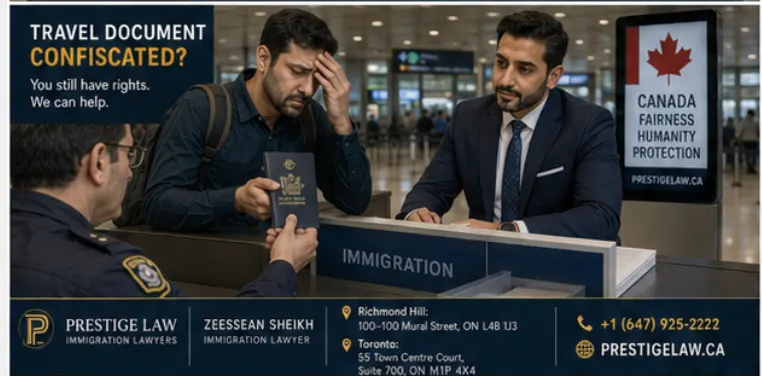
Confiscated or Withheld Travel Documents: Many refugees flee their countries without valid passports, or their passports are confiscated by authorities, employers, traffickers, or abusive partners. Without a valid travel document, legally exiting a country becomes impossible.
Government-Imposed Travel Bans: Some refugees face official travel bans imposed by their country’s government — often as a form of persecution itself. These bans prevent them from obtaining exit visas or border clearance.
Ongoing Armed Conflict or Civil Unrest: In countries experiencing active armed conflict, border crossings may be closed, dangerous, or controlled by non-state actors. Physical access to official exit points may not exist.
Risk of Arrest at the Border: For individuals who fled politically motivated criminal charges, religious minorities facing discrimination, or LGBTQ+ individuals in countries that criminalise their identity, presenting oneself at an official border crossing could result in immediate arrest or worse.
Lack of Government Cooperation: Some countries refuse to issue passports to individuals who have claimed refugee status abroad, treating such claims as acts of betrayal or disloyalty.
Financial Barriers Linked to Persecution: In certain cases, the financial exploitation that accompanies persecution makes it impossible for a person to gather the funds needed to pay exit taxes or border fees required by their country.
Canada’s updated approach acknowledges that penalising refugees for these barriers — circumstances entirely outside their control — would be fundamentally unjust and contrary to the spirit of international refugee law.
Why Canada Has Expanded Flexibility: The Legal and Humanitarian Foundation
Canada’s commitment to protecting refugees is grounded in international law, specifically the 1951 Refugee Convention and its 1967 Protocol, both of which Canada has ratified. These instruments obligate Canada to protect individuals who face persecution based on race, religion, nationality, membership in a particular social group, or political opinion.
The principle of non-refoulement — the cornerstone of refugee law — prohibits Canada from returning a person to a country where they face a serious risk of harm. However, exit barrier policies extend this protection a step further by acknowledging that the administrative requirements of Canadian immigration law must not inadvertently punish refugees for circumstances directly tied to their persecution.
The IRCC’s updated guidelines align Canada more closely with best practices recommended by the United Nations High Commissioner for Refugees (UNHCR) and reflect Canada’s self-stated commitment to being one of the world’s most welcoming, fair, and humane destinations for those fleeing persecution.
Key Policy Changes: How Canada Is Increasing Flexibility for Refugees
1. Relaxed Documentation Requirements for Protected Persons
One of the most impactful changes under the updated IRCC guidelines concerns documentation requirements for protected persons applying for permanent residence. Previously, applicants were expected to provide identity documents from their country of origin, including national passports, birth certificates, and civil status documents.
Under the expanded flexibility framework, IRCC officers are now directed to take a more holistic, evidence-based approach when assessing identity where official documents cannot reasonably be obtained due to exit barriers or the nature of the persecution itself. Alternative documents, statutory declarations, affidavits, community organisation letters, and supporting testimony can now carry greater weight in establishing identity and eligibility.
This is a meaningful change for individuals from countries such as Somalia, Eritrea, Afghanistan, Syria, and others, where government-issued documentation is either inaccessible, unreliable, or actively used as a tool of persecution.
2. Greater Leniency for Refugee Travel Document Applications
Protected persons in Canada who need to travel internationally — for humanitarian purposes, family reunification, or medical treatment — require a Refugee Travel Document (RTD) issued by Canada, since returning to their home country for a passport would expose them to risk. Under the updated policy, IRCC is giving greater consideration to the circumstances surrounding RTD applications, including urgent humanitarian cases.
The new guidelines also provide clearer pathways for protected persons who have exit barriers preventing them from obtaining supporting documents for their RTD application, allowing caseworkers to exercise expanded discretionary authority in deserving cases.
3. Improved Processing Pathways for Permanent Residence Applications
Refugees and protected persons navigating the permanent residence process often face delays tied to document collection. Under the new flexibility measures, IRCC has committed to providing more tailored processing support, including the assignment of specialised officers in complex exit barrier cases, dedicated intake queues for submissions affected by documented exit barriers, and improved communication with applicants about what alternative evidence is acceptable.
This reduces the risk of applications being refused or placed in prolonged limbo simply because an applicant cannot access documents from a country where their life or liberty was at risk.
4. Enhanced Recognition of Digital and Biometric Evidence
Canada is also increasingly accepting digital evidence and biometric information — including phone records, social media activity, digital identity verification, and biometric data collected at the time of a refugee claim — as supplementary proof of identity and history in cases where physical documents are unavailable due to exit barriers.
5. Expanded Humanitarian and Compassionate Consideration
The updated framework reinforces the obligation of IRCC officers to apply a robust humanitarian and compassionate (H&C) analysis in refugee cases involving exit barriers. Where a rigid application of documentary requirements would produce an unjust outcome, officers are now more explicitly directed to consider the totality of a person’s circumstances, including the nature of their persecution, the barriers they face, and the potential consequences of a refusal.
How These Changes Affect Refugee Claimants at the IRB
The Immigration and Refugee Board of Canada (IRB) — the independent tribunal that decides refugee claims — also plays a role in how exit barriers are treated in Canada. The Refugee Protection Division (RPD) and the Refugee Appeal Division (RAD) regularly encounter cases where claimants cannot provide corroborating documentation because of the very conditions that drove them to flee.
The expanded flexibility framework sends a clear signal to the IRB and its members that exit barriers must be weighed carefully and that documentary gaps caused by persecution or exit obstacles must not be used to undermine an otherwise credible refugee claim. This principle has been reinforced through updated jurisprudential guides and member training.
If you have a refugee hearing scheduled and you are concerned about your inability to produce certain documents due to exit barriers, it is critically important that you work with an experienced immigration lawyer before your hearing to properly document and present this aspect of your case.
Who Benefits Most from Canada’s Increased Flexibility for Refugees?
Stateless Persons
Stateless individuals — those who are not considered nationals of any country — face some of the most severe exit barriers imaginable, since they often have no country willing to issue them a travel document of any kind. Canada’s expanded flexibility provides meaningful relief for stateless persons who would otherwise be unable to complete immigration administrative steps that assume the existence of a nationality.
Survivors of Human Trafficking
Human trafficking survivors frequently arrive in Canada without any documentation, as traffickers routinely confiscate identity documents as a means of control. The expanded framework’s recognition of alternative identity evidence is particularly beneficial for this group.
Individuals from Countries in Active Conflict
Citizens of countries such as Sudan, Myanmar, Yemen, Ukraine, and others currently experiencing significant armed conflict or political upheaval often face the complete collapse of civil documentation systems. Canada’s updated approach acknowledges this reality and adapts accordingly.
LGBTQ+ Refugees
In many countries, LGBTQ+ individuals face not only persecution but also the very specific exit barrier of being unable to access any government agency — including those issuing travel documents — without risk of exposure, harassment, arrest, or violence.
Individuals Fleeing Gender-Based Violence
Women and girls fleeing gender-based violence, including forced marriage, female genital mutilation, and domestic violence, frequently flee without documentation and face exit barriers rooted in patriarchal and legal structures that deny them independent access to identity documents.
Practical Steps to Take If You Face Exit Barriers in Your Canadian Immigration Case
If you are a refugee claimant or protected person facing exit barriers that are affecting your Canadian immigration process, there are concrete steps you should take immediately.
Step 1 — Document Everything: Gather and preserve every piece of evidence that demonstrates the nature of your exit barrier. This includes correspondence with your country’s embassy or consulate, or evidence that contact would be dangerous, country condition documentation from UNHCR or human rights organisations, news articles, personal statements, and letters from community members or organisations.
Step 2 — Obtain a Comprehensive Country Conditions Report: Your immigration lawyer can help you compile country condition evidence from authoritative sources — including the UNHCR, Human Rights Watch, Amnesty International, the U.S. State Department, and the UK Home Office — that corroborates the existence and severity of your exit barriers.
Step 3 — Submit a Detailed Statutory Declaration: A statutory declaration is a formal, sworn statement. In the context of exit barriers, your declaration should explain in clear, detailed terms why you cannot access the documents being requested, what efforts you have made, and what risk of harm you would face if you attempted to contact your country’s authorities.
Step 4 — Engage an Experienced Immigration Lawyer Immediately: Navigating exit barrier documentation and the discretionary processes at IRCC requires expertise and strategic thinking. Do not attempt to handle this alone. An experienced refugee and immigration lawyer can identify the specific accommodations available in your case, prepare your submissions strategically, and advocate on your behalf with IRCC or before the IRB.
How Prestige Law Can Help You Navigate These Changes
At Prestige Law, immigration lawyer Zeesean Sheikh brings deep knowledge of Canadian refugee and immigration law, combined with genuine compassion for clients who have survived some of the most difficult circumstances imaginable. Zeesean Sheikh understands that behind every file is a human being — a parent, a child, a survivor — whose future depends on getting the law right.
His practice encompasses the full spectrum of refugee and immigration matters, including refugee claims before the IRB, permanent residence applications for protected persons, applications for Refugee Travel Documents, responses to procedural fairness letters from IRCC, appeals before the Refugee Appeal Division (RAD), and Humanitarian and Compassionate applications.
Prestige Law is conveniently located in the Greater Toronto Area, with offices in both Richmond Hill and Toronto, making expert immigration legal services accessible to refugees and newcomers across the region.
If you or someone you care about is facing exit barriers that are affecting a Canadian immigration matter, do not wait. The earlier you seek legal advice, the more options you will have.
Understanding Canada’s Refugee System: A Quick Reference for Newcomers
For those who are new to Canada’s immigration system, here is a brief overview of the key stages where exit barrier considerations may arise:
Stage 1 — Refugee Claim: Filed with the Immigration and Refugee Board. This is where you tell your story and explain why you need Canada’s protection.
Stage 2 — RPD Hearing: The Refugee Protection Division hears your claim and decides whether you qualify as a Convention refugee or a person in need of protection.
Stage 3 — RAD Appeal: If your claim is refused, you may appeal to the Refugee Appeal Division within 15 days in most cases.
Stage 4 — Protected Person Status: If accepted, you receive protected person status. You can then apply for permanent residence.
Stage 5 — Permanent Residence Application: You apply to IRCC for permanent residence. This is where documentation gaps from exit barriers most commonly arise.
Stage 6 — Permanent Resident Status: Once approved, you gain the right to live and work permanently in Canada, with a pathway to citizenship.
At every stage, the documentation challenges created by exit barriers can arise, and at every stage, having experienced legal representation gives you the best possible chance of success.
The Role of the UNHCR and International Standards in Canada’s Updated Approach
Canada’s policy evolution does not happen in isolation. The UNHCR has long advocated for refugee-receiving countries to adopt a flexible, evidence-based approach to documentation requirements that accounts for the reality of forced displacement. UNHCR guidance notes that refugees frequently arrive without documents, and that this is often a direct consequence of persecution rather than evidence against credibility.
Canada’s updated approach reflects the UNHCR’s Handbook and Guidelines on Procedures and Criteria for Determining Refugee Status, which explicitly recognises that evidentiary standards must be adapted to the realities of persecution and flight. By aligning its policies more closely with these international standards, Canada reinforces its reputation as a global leader in refugee protection.
Frequently Asked Questions About Canada’s Flexibility for Refugees Facing Exit Barriers
What is an exit barrier in Canadian immigration law?
An exit barrier is any legal, political, physical, or practical obstacle that prevents a refugee or protected person from safely or legally leaving their country of origin or country of last habitual residence. Exit barriers are formally recognised by Immigration, Refugees and Citizenship Canada as circumstances that can excuse documentary gaps in a refugee or immigration application.
How does Canada’s new flexibility help refugees who cannot get a passport from their home country?
Under the updated IRCC guidelines, refugees and protected persons who cannot safely contact their country’s embassy or government authorities to obtain a passport can present alternative evidence of identity. This may include sworn declarations, community letters, biometric data, digital records, or other documentation. IRCC officers are now directed to exercise greater discretion and take a holistic approach in these cases.
Can exit barriers be used as a reason to get more time to gather documents for my immigration application?
Yes. If you are facing exit barriers that prevent you from obtaining the required documents, you can and should inform IRCC and request an extension or provide a detailed explanation of your circumstances. Your immigration lawyer can help you frame this request properly and provide the supporting documentation needed to substantiate your position.
Will exit barriers affect my refugee hearing at the Immigration and Refugee Board?
Yes, in a meaningful way. The IRB recognises that documentary gaps caused by exit barriers — including the inability to obtain corroborating evidence from your country of origin — must not automatically undermine the credibility of your refugee claim. You should work with your lawyer to present detailed country condition evidence and a clear explanation of why documents are unavailable.
I am a protected person in Canada. Can exit barriers affect my permanent residence application?
Absolutely. Protected persons applying for permanent residence are required to provide identity and civil status documents, many of which must come from the country they fled. If exit barriers prevent you from safely obtaining these documents, IRCC’s updated policy provides pathways for alternative evidence and expanded officer discretion. Consulting an experienced immigration lawyer before submitting your application is strongly recommended.
What documents can I use as alternatives if I cannot get documents from my home country?
Acceptable alternatives may include statutory declarations, affidavits, letters from community or religious organisations, school or employment records, digital identity records, biometric data, correspondence with embassies or evidence of why contact is unsafe, country condition reports, and expert evidence about the documentary realities in your country of origin. Every case is different, and an immigration lawyer can advise you on the best strategy for your specific situation.
Can Prestige Law help me if I am outside the Greater Toronto Area?
Yes. While Prestige Law has offices in Richmond Hill and Toronto, the firm serves clients across Canada. Many consultations and application matters can be handled remotely, so do not let geography be a barrier to getting the legal help you need.
How soon should I contact an immigration lawyer if I am facing exit barriers?
As soon as possible. Exit barrier issues can complicate every stage of the refugee and immigration process, and the earlier you engage a lawyer, the more options you will have. Delays in addressing documentary gaps can result in procedural fairness letters, refused applications, or missed deadlines that are difficult or impossible to recover from.
Does having exit barriers guarantee that my refugee or permanent residence application will be approved?
No. Exit barriers are one factor among many that IRCC and the IRB consider. They can excuse documentary gaps and support credibility, but the overall merits of your case — including your personal circumstances, country conditions, and legal eligibility — still determine the outcome. Professional legal representation gives you the best possible chance of presenting your case in its strongest form.
What happens if IRCC sends me a procedural fairness letter about missing documents?
A procedural fairness letter is a formal notice allowing you to respond to IRCC’s concerns before a decision is made. If you receive one related to missing documents due to exit barriers, you must respond carefully and thoroughly, and within the provided deadline. This is one of the most critical moments in your immigration case, and you should contact an immigration lawyer immediately upon receiving it.
Why Choosing the Right Immigration Lawyer Matters
Refugee and immigration law in Canada is among the most complex and high-stakes areas of legal practice. The decisions made in your case — which documents to submit, how to frame your exit barrier explanation, when to request discretionary consideration, and how to respond to IRCC — can have permanent consequences for you and your family.
Zeesean Sheikh at Prestige Law brings a meticulous, client-centred approach to every case. His team takes the time to understand the full complexity of each client’s situation, prepares thorough and strategically sound submissions, and maintains transparent, responsive communication throughout the process.
Choosing Prestige Law means choosing a firm that treats your immigration matter with the seriousness, compassion, and professional excellence it deserves.
Contact Prestige Law Today
If you are a refugee, protected person, or someone who loves someone in that situation, and you need expert guidance on how Canada’s increased flexibility for refugees facing exit barriers applies to your case, reach out to Prestige Law today.
Zeesean Sheikh — Immigration Lawyer
📍 Richmond Hill: 100–100 Mural Street, ON
📍 Toronto: 55 Town Centre Court, Suite 700, ON
📞 Telephone: +1 (647) 925-2222
🌐 Website: prestigelaw.ca
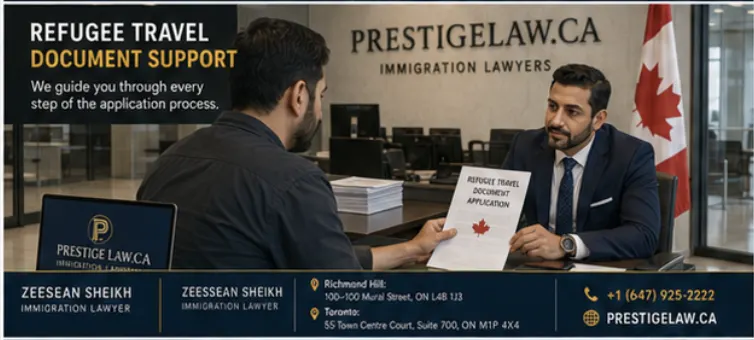
Canada’s Commitment to Refugee Protection Is Evolving — So Should Your Legal Strategy
Canada’s decision to increase flexibility for refugees facing exit barriers is a landmark development that reflects the country’s ongoing commitment to fair, humane, and legally sound refugee protection. But knowing that these policies exist is only half the battle — knowing how to use them strategically in your specific case is where legal expertise becomes invaluable.
The refugee and immigration process is rarely simple. Exit barriers add additional layers of complexity that require careful navigation. Whether you are at the beginning of your refugee claim, preparing for an IRB hearing, gathering documents for your permanent residence application, or responding to a procedural fairness letter, having Zeesean Sheikh and the Prestige Law team in your corner means having an advocate who knows the law, understands your circumstances, and is fully committed to protecting your future in Canada.
Do not face these challenges alone. Contact Prestige Law today and take the first step toward securing the protection and the future you deserve.
This article is intended for general informational purposes only and does not constitute legal advice. Immigration law is highly fact-specific. Please consult a qualified immigration lawyer for advice tailored to your individual circumstances.
© Prestige Law | prestigelaw.ca | All Rights Reserved