





IRCC updates wait times for temporary residence applicants
IRCC wait times for temporary residence applications are among the most closely watched numbers in Canadian immigration, and the department’s latest update, released on November 4, 2026, gives workers, students, visitors, and families a fresh look at how long decisions may take. Immigration, Refugees and Citizenship Canada now estimates a much shorter wait for work permit applicants in the United States, a longer wait for study permit applicants inside Canada and in Nigeria, and slightly shorter estimates for work permit extensions and visitor records. Super visa estimates edged higher in every country tracked, while visitor visa estimates barely moved.
This guide from Prestige Law walks through each category in plain language, explains how IRCC calculates its estimates, compares processing times with official service standards, answers the questions people search for most often, and outlines practical steps that can help your application move forward without avoidable delays. If you are planning a job start, a school intake, or a family visit, these numbers can help you choose the right moment to apply and prepare a backup plan in case timelines change.
IRCC Wait Times for Temporary Residence: The Latest Update at a Glance
IRCC refreshes its temporary residence estimates every week, while permanent residence and citizenship estimates are revised about once a month. This steady rhythm matters because temporary residence files usually come with a clock attached: a job start date, a school intake, an expiring status, or a booked flight. A shift of even one or two weeks can change when you should apply and how much time you should leave before a deadline.
The November 4 release compared the department’s new estimates with the figures posted on October 29. As reported by CIC News, the most notable movements were these:
- Work permits: the estimate for applicants applying from the United States dropped by three weeks.
- Study permits: the estimate rose by two weeks for applicants inside Canada and by one week for applicants in Nigeria, but fell by one week for applicants in Pakistan.
- Work permit extensions: the estimate fell by one week.
- Visitor records: the estimate fell by 11 days.
The department’s inventory of extension files also shrank. IRCC lists 191,100 work permit extension applications in progress, which is 4,800 fewer than in the previous report, and 25,500 study permit extension applications, which is 400 fewer.
Keep in mind that IRCC revises these figures every week, and the next update was expected on or around November 11. Before you rely on any number in this article, confirm the current estimate with IRCC’s official processing times tool.
Work Permit Processing Times: U.S. Applicants See the Biggest Drop
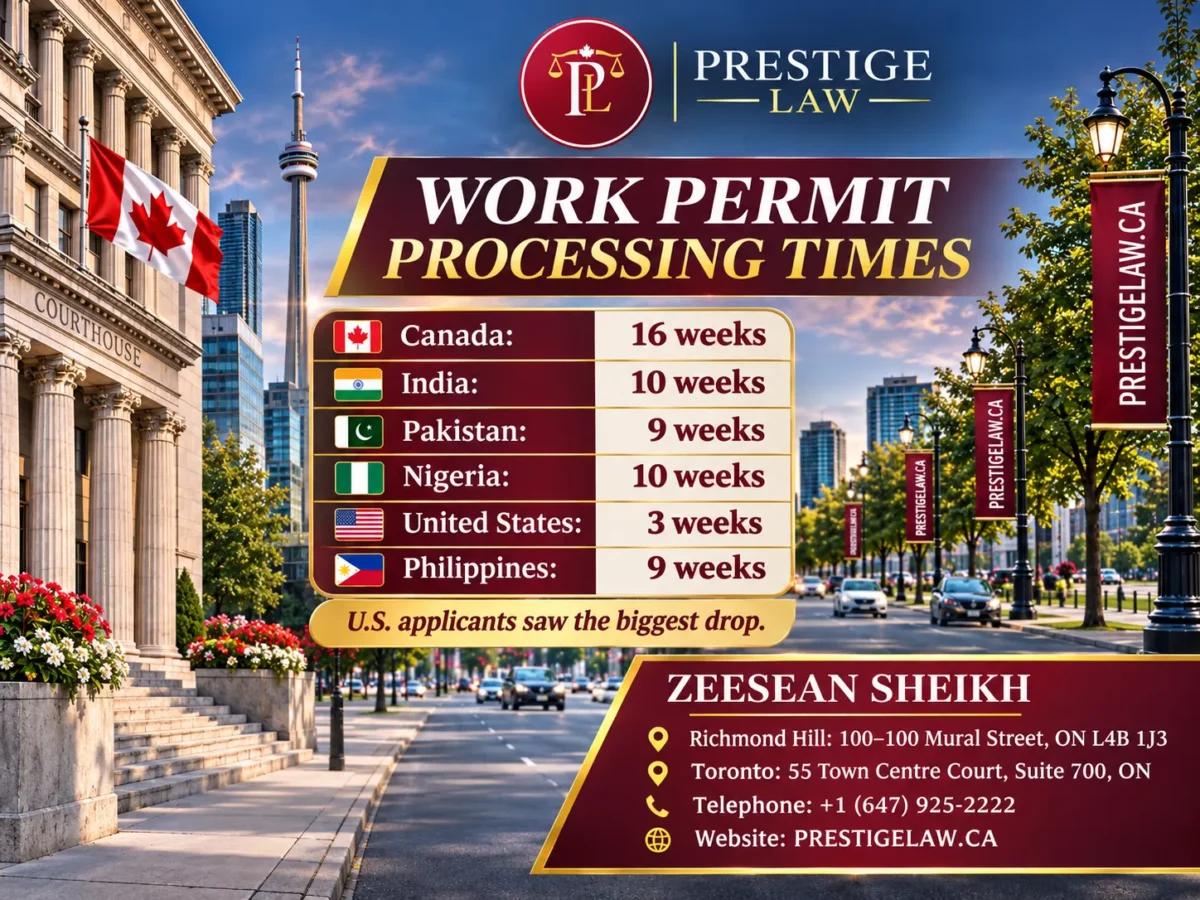
Among the six places that IRCC highlights, only one saw a change in its work permit estimate. Applicants in the United States now face an estimated wait of three weeks, which is half of the six weeks listed the week before.
Applying from
November 4
October 29
Canada 16 weeks 16 weeks
India 10 weeks 10 weeks
Pakistan 9 weeks 9 weeks
Nigeria 10 weeks 10 weeks
United States 3 weeks 6 weeks
Philippines 9 weeks 9 weeks
Two lessons stand out. First, the place where you apply from still shapes the wait. A file submitted from the United States is expected to move far faster than one submitted from inside Canada, where the estimate remains the longest on the list at 16 weeks. Second, the gap between locations is not fixed. A three-week improvement in a single week shows how quickly IRCC workloads can shift, and the same swing can happen in the opposite direction.
IRCC’s service standard for work permits is 120 days for applications submitted from inside Canada and 60 days for those submitted from outside Canada. A 16-week estimate equals 112 days, which sits inside the 120-day target, while the three-week estimate for U.S. applicants falls well below the 60-day mark.
These figures are estimates, not promises. An individual file can take longer if IRCC asks for more documents, schedules extra screening, or finds gaps in the application. Employers and foreign workers who are timing a start date should therefore build a buffer on top of the posted number.
Study Permit Processing Times: Mixed Results Across Countries
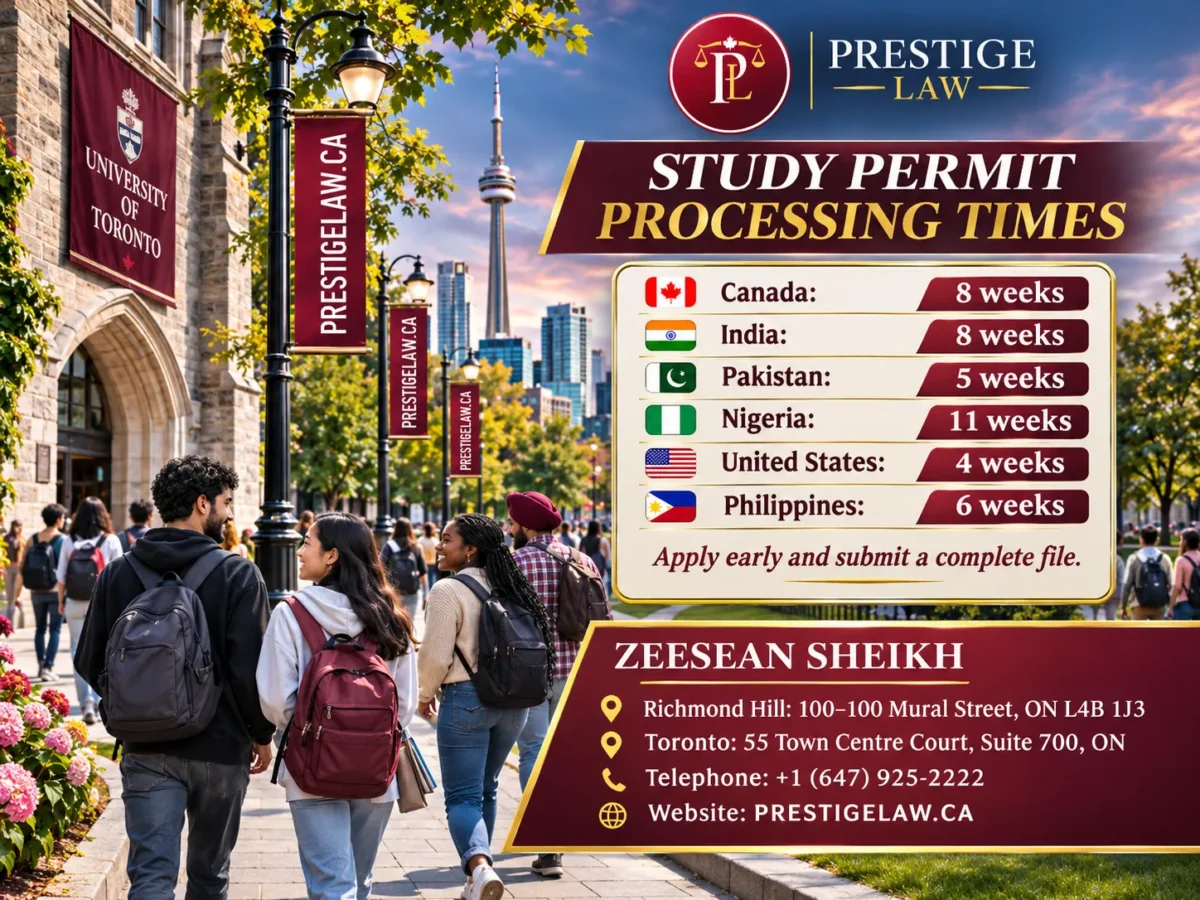
Study permit estimates moved in different directions this week. The wait for applicants inside Canada rose from six weeks to eight, Nigeria moved from ten weeks to eleven, and Pakistan improved from six weeks to five.
Applying from
November 4
October 29
Canada 8 weeks 6 weeks
India 8 weeks 8 weeks
Pakistan 5 weeks 6 weeks
Nigeria 11 weeks 10 weeks
United States 4 weeks 4 weeks
Philippines 6 weeks 6 weeks
The reporting on this update notes that Pakistan’s five-week estimate is its lowest since at least June, while Nigeria’s eleven-week estimate is its highest over the same period. That contrast shows how uneven study permit processing can be from one country to another.
The service standard for study permits is also 120 days inside Canada and 60 days outside Canada. Eleven weeks equals 77 days, so the Nigerian estimate now sits above the 60-day target for applications from outside Canada. India’s eight weeks, which equals 56 days, sits just inside it.
For students, the practical message is simple: apply as early as possible after receiving a letter of acceptance. Submit a complete application with proof of funds, identity documents, and any required medical or biometric steps, because missing items can add weeks that no processing time estimate accounts for. Students who already hold a permit and plan to extend it should note that the in-Canada estimate has grown, so there is less room for last-minute filing.
Visitor Visa Processing Times: Small Changes, Large Differences
Visitor visa estimates barely moved. India rose by one day, while Pakistan, Nigeria, and the Philippines each fell by one or two days. The estimates for applicants in Canada and the United States stayed the same.
Applying from
November 4
October 29
Canada 12 days 12 days
India 32 days 31 days
Pakistan 58 days 59 days
Nigeria 103 days 105 days
United States 18 days 18 days
Philippines 24 days 25 days
The service standard for visitor visas submitted from outside Canada is 14 days, and there is no standard for applications submitted inside Canada. Not one of the five outside-Canada estimates on this list meets the 14-day target, and the Nigerian estimate of 103 days is more than seven times longer. Families who plan to host relatives, and travellers who need a visa for business or tourism, should apply well before their travel dates and should avoid buying non-refundable tickets until a decision arrives.
Super Visa Processing Times Edge Higher
Super visa estimates, which apply to parents and grandparents who want to stay in Canada for extended visits, rose by one to three days in every country tracked. Super Visa applications can only be submitted from outside Canada.
Applying from
November 4
October 29
India 85 days 82 days
Pakistan 101 days 99 days
Nigeria 33 days 30 days
United States 75 days 74 days
Philippines 109 days 106 days
The service standard for super visas is 112 days, and every estimate in the table remains within it. The Philippines, at 109 days, is the closest to the limit, while Nigeria, at 33 days, has the shortest wait. Families who sponsor a parent or grandparent should prepare the invitation letter, proof of the host’s financial support, and Canadian medical insurance coverage before they submit, since a complete file is the best protection against avoidable delays.
Extensions and Visitor Records: Waits Are Shrinking
Applicants who are already in Canada and need to extend their stay saw a welcome improvement. The estimate for work permit extensions fell from 11 weeks to 10, the estimate for study permit extensions held at six weeks, and the estimate for visitor records dropped from 321 days to 310.
Application type
Current (October 31)
Previous (October 29)
Work permit extension 10 weeks 11 weeks
Study permit extension 6 weeks 6 weeks
Visitor record 310 days 321 days
The work permit extension estimate also covers post-graduation work permits, bridging open work permits, and requests to change work permit conditions. That makes it especially relevant for recent graduates and for workers who are waiting on a permanent residence decision.
In many cases, a person who applies to extend a work permit before the current one expires can keep working under the same conditions while the decision is pending. This is often called maintained status. Because the rules depend on your situation, confirm your eligibility before you rely on it, and never wait until the last week to submit.
Application Inventory and Finalisations
Processing times are closely linked to how many applications sit in the queue. IRCC finalised 2,076,745 temporary residence applications between January and August 2026, and another 365,425 were still waiting for decisions as of August 31. That means the pending pile equals roughly 18 per cent of the volume completed over the same eight months.
The weekly drop of 4,800 work permit extension files and 400 study permit extension files suggests the department is working through its extension caseload. A shrinking inventory often leads to shorter estimates later, although there is no guarantee, because new applications arrive every day and seasonal surges can erase progress quickly.
Processing Times vs Service Standards: What Is the Difference?
IRCC uses two benchmarks to describe timelines, and applicants often confuse them.
Processing times are estimates of how long it may take to decide on a newly submitted application. They are not guarantees, and they are not maximum limits. IRCC calculates them in one of two ways. A historical estimate reflects the time it took to finalise 80 per cent of applications completed in the past. A forward-looking estimate reflects the current inventory and the staff available to process it.
Service standards are operational targets. They state how long the department aims to take to finalise 80 per cent of applications under normal conditions. For temporary residence categories, the last major revisions date back to 2018 and 2019, so some targets no longer match the realities of today’s volumes.
The key point for applicants is that both numbers describe the typical file, not your file. Your own wait can be shorter or longer depending on how complete your application is, whether IRCC requests additional documents, how complex your history is, and what verification steps apply to your case.
Why IRCC Wait Times Change From Week to Week
If you track IRCC wait times for a few weeks, you will notice that some estimates jump while others stay flat for a month. Several factors explain the movement.
- Application volume: a rush of study permit filings before a school intake or a wave of visitor visa requests before a holiday season can lengthen queues quickly.
- Staffing and workload allocation: IRCC moves files between offices and processing teams, so a country-specific estimate can improve when more officers are assigned to it.
- Application quality: incomplete files require follow-up requests, and each request pauses the clock for that file.
- Screening and verification: security checks, medical reviews, and document verification take longer for some files than for others.
- Policy changes: new rules, new forms, or new eligibility criteria can change both the number of applications and the effort needed to review each one.
Because the estimate for a newly submitted application depends on the department’s recent history, a single week of data should be read as a signal, not a trend. The most reliable way to follow progress is to watch several consecutive updates, as the drop for U.S. work permit applicants will only matter if it holds in the weeks ahead.
What Applicants Should Do Now
Posted estimates are useful only when you turn them into a plan. The following steps can help you make the most of the latest IRCC wait times.
- Check the right category and country. Estimates differ by permit type and by where you apply from, so use IRCC’s official tool and select the exact combination that matches your application.
- Apply early. Add a buffer of several weeks to the posted estimate, particularly if you have a fixed start date, a school intake, or an expiring status.
- Submit a complete file. Include every required form, supporting document, translation, and fee receipt. Missing items are one of the most common reasons for delays.
- Complete biometrics and medical steps quickly. When IRCC asks for biometrics or a medical examination, book the appointment right away, because the file usually cannot move forward until those steps are done.
- Protect your status. If you are already in Canada, file extension applications before your current permit expires and keep proof of the submission.
- Track your account. Respond to messages from IRCC within the deadline, and keep your contact details and passport information up to date.
- Be careful with promises. No consultant, agent, or website can guarantee a decision date or an approval. Use a licensed lawyer or a regulated immigration consultant if you want professional guidance.
Employers should also review their hiring calendars. A worker who is approved a few weeks later than expected can leave a project understaffed, so planning around conservative timelines is wiser than counting on the shortest estimate.
How Prestige Law Can Help With Your Temporary Residence Application
A fast estimate does not help if the application is refused, and a slow estimate is easier to handle when the file is strong from the start. Prestige Law assists individuals, families, students, and employers with work permits, study permits, visitor visas, super visas, extensions, and related immigration matters. Lawyer Zeesean Sheikh and the firm’s team can review your documents, identify risks before you file, prepare a clear application, and respond to IRCC requests on your behalf. If your application has been delayed well beyond the posted time, or if you received a refusal or a procedural fairness letter, early legal advice can protect your options.
Prestige Law serves clients across Ontario and beyond from two convenient offices. Contact the team today to discuss your situation.
📍 Richmond Hill: 100–100 Mural Street, ON.
📍 Toronto: 55 Town Centre Court, Suite 700, ON.
📞 Telephone: +1 (647) 925-2222
🌐 Website: prestigelaw.ca
Most-Searched Questions About IRCC Wait Times
How long does IRCC take to process a work permit right now?
In the November 4 update, the estimate was 16 weeks for applications from inside Canada, 10 weeks for India and Nigeria, 9 weeks for Pakistan and the Philippines, and 3 weeks for the United States. Work permit extensions were estimated at 10 weeks.
How long does a study permit take?
The latest estimates ranged from 4 weeks for applicants in the United States to 11 weeks for applicants in Nigeria. Inside Canada, the estimate was 8 weeks, and the estimate for a study permit extension was 6 weeks.
What is the difference between a processing time and a service standard?
A processing time is an estimate for a newly submitted application, based on past results or on the current workload. A service standard is a target that IRCC sets for itself, usually for finalising 80 per cent of applications within a stated period. Neither is a guarantee for an individual file.
How often does IRCC update its processing times?
Temporary residence estimates are generally updated weekly, while permanent residence and citizenship estimates are updated roughly monthly. At the time of the November 4 update, the next revision was expected on or around November 11.
Why is my application taking longer than the posted time?
Common reasons include requests for extra documents, pending biometrics or medical results, additional security screening, and the complexity of your history. The posted figure is an estimate for the typical file, so some applications will always take longer.
Can I keep working while my work permit extension is processed?
In many cases, yes, if you applied before your permit expired and you continue to follow the same conditions. This situation is often called maintained status. Because eligibility depends on your circumstances, confirm it with a lawyer before you assume it applies.
What can I do if my application passes the service standard?
First, check your online account and confirm that no request from IRCC has been missed. You can then contact IRCC through its web form to ask for an update. If the delay continues for an unusual period, a lawyer can explain whether further steps are available.
How long do visitor visas and super visas take?
On November 4, visitor visa estimates ranged from 12 days for applicants in Canada to 103 days for applicants in Nigeria. Super visa estimates ranged from 33 days for Nigeria to 109 days for the Philippines.
Does a short wait time mean my application will be approved?
No. A processing time describes how long a decision may take, not whether the decision will be positive. Approval depends on whether you meet the requirements and whether your documents are complete and credible.
Related Searches on IRCC Processing Times
People who look up these IRCC wait times often search for the following topics as well:
- IRCC processing times for work permits in 2026
- Study permit processing time by country
- Visitor visa processing time from India, Pakistan, and Nigeria
- Super visa processing time for parents and grandparents
- Work permit extension processing time and maintained status
- IRCC service standards for temporary residence applications

Latest IRCC Wait Times
The November 4 update shows a temporary residence system that is improving in some areas and tightening in others. Work permit applicants in the United States gained the most, extension waits for workers and visitors moved lower, and study permit estimates grew for applicants inside Canada and in Nigeria. Visitor visa estimates stayed close to their previous levels, and super visa estimates moved up slightly. The lesson for every applicant is the same: use the posted numbers as a guide, add a safety margin, and focus on filing a complete, accurate application.
If you want help preparing a work permit, study permit, visitor visa, super visa, or extension, Prestige Law is ready to guide you through each step. Reach out to Zeesean Sheikh and the team at prestigelaw.ca to book a consultation and move your plans forward with confidence.
This article is general information and not legal advice. Processing times change every week, so always confirm the current figures on the official IRCC website.