



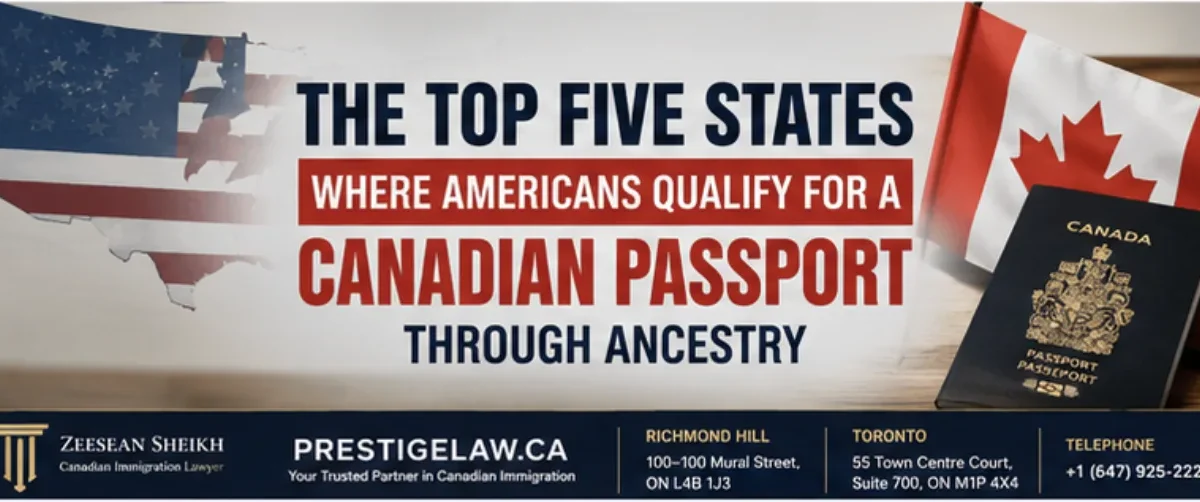
The Top Five States Where Americans Qualify for a Canadian Passport Through Ancestry
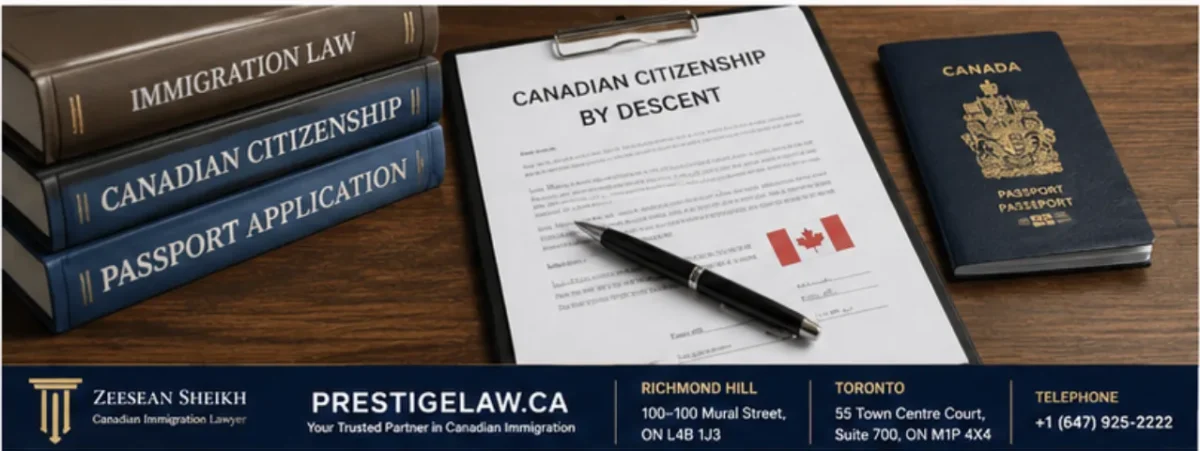
If you were born in the United States but carry Canadian roots through a parent or grandparent, you may already be entitled to Canadian citizenship — and a Canadian passport — without ever having lived a single day in Canada. This guide breaks down the top five U.S. states where ancestry-based Canadian passport eligibility is most commonly found, what the process involves, and how an experienced Canadian immigration lawyer can help you secure what is rightfully yours.
Why Canadian Citizenship by Descent Is More Common Than You Think
Canada has one of the most straightforward citizenship-by-descent frameworks among developed nations. Under the Citizenship Act, individuals born abroad to at least one Canadian parent may be entitled to Canadian citizenship — and therefore a Canadian passport — without being required to naturalise. This right is referred to as citizenship by descent, and it extends to the first generation born outside of Canada. Top 5 U.S. States to Qualify for a Canadian Passport
What makes this particularly relevant to Americans is the shared border history between the two countries. For over two centuries, Canadians and Americans have crossed the border freely to work, settle, and build families. As a result, millions of Americans living across the United States today have at least one Canadian-born parent or grandparent — and many of them are entirely unaware that they may hold a legal claim to Canadian citizenship.
A Canadian passport opens the door to visa-free or visa-on-arrival access to over 185 countries, provides the right to live and work anywhere in Canada, and offers access to Canada’s world-class healthcare, education, and social systems. For Americans looking to expand their global mobility or hedge against political and economic uncertainty, a Canadian passport is one of the most valuable documents in the world — and for those who qualify through ancestry, obtaining it is a matter of legal right, not immigration luck.
The key lies in understanding where the largest concentrations of Canadian-descended Americans reside, and how the application process works from a legal standpoint. This article covers the top five U.S. states where this eligibility is most commonly seen, and explains what you need to do if you believe you may qualify.
Understanding Canadian Citizenship by Descent: The Legal Foundation
Before diving into the state-by-state breakdown, it is important to understand the legal framework that governs ancestry-based Canadian citizenship.
The First-Generation Limitation
Under the current Citizenship Act (as amended by Bill C-37 in 2009), Canadian citizenship by descent is limited to the first generation born outside of Canada. This means:
- If your parent was born in Canada, you may be entitled to Canadian citizenship regardless of where you were born.
- If your grandparent was born in Canada but your parent was not born in Canada and was not a Canadian citizen at the time of your birth, you do not automatically qualify under the current rules.
This is a nuanced area of immigration law, and there are exceptions, edge cases, and historical provisions that may apply depending on your family’s specific circumstances. Consulting with a qualified Canadian immigration lawyer is critical to accurately determining your eligibility.
Lost Citizenship and Historical Claims
Under older versions of the Citizenship Act, some individuals lost Canadian citizenship automatically — for example, by taking citizenship in another country. If a parent lost their Canadian citizenship under historical rules, this may affect your ability to claim citizenship by descent. Again, these are complex legal questions that require professional legal analysis.
The Proof You Will Need
To apply for a Canadian passport or certificate of citizenship based on ancestry, you will generally need to provide:
- Your birth certificate
- Your parent’s birth certificate (showing they were born in Canada, or documentation of their Canadian citizenship)
- Evidence of your parent’s Canadian citizenship at the time of your birth
- Your parent’s marriage certificate (if applicable)
- Any other documents that establish the chain of citizenship
These documents may need to be obtained from Canadian provincial vital statistics offices, Library and Archives Canada, or other government bodies — a process that can be lengthy and complex without proper legal support.
The Top Five U.S. States Where Americans Most Commonly Qualify for a Canadian Passport Through Ancestry
The geographic proximity between the United States and Canada has created dense pockets of Canadian-descended Americans in specific regions of the country. The following five states consistently produce the highest volume of ancestry-based Canadian citizenship applications among American residents.
1. Michigan
Michigan is, by virtually every measure, the top U.S. state for Americans with Canadian ancestry. The two regions are so geographically intertwined that the city of Windsor, Ontario, sits directly south of Detroit — one of the few places in the world where you drive south to reach Canada from the United States.
Michigan shares water borders with Ontario across the Detroit River, Lake Erie, Lake Huron, and the St. Clair River. This meant that throughout the 19th and early 20th centuries, cross-border movement between Michigan and Ontario was commonplace. Automotive industry workers, farmers, tradespeople, and entire families moved regularly between both sides of the border — often within the same generation.
The historical migration patterns are reflected in the numbers. According to U.S. Census data, Michigan is consistently ranked among the top states for residents who report Canadian ancestry. Communities across Detroit, Flint, Dearborn, and the Upper Peninsula trace their lineage back to Ontario, Quebec, and the Maritime provinces.
For Michigan residents, this means that a significant portion of the population may have a parent or grandparent who was born in Canada. If your family has roots in Detroit, if your grandmother grew up in Windsor before moving to Michigan, or if your father was born in Ontario before your family relocated — you may have a legal claim to Canadian citizenship and a Canadian passport.
The cultural connections are deep as well. French-Canadian communities established in Michigan centuries ago continue to maintain strong ties to Quebec. These historical migrations were not just economic — they were cultural, familial, and generational. For many Michigan families, a Canadian passport is not just a travel document; it is a recognition of heritage.
What to do if you are in Michigan: Gather your family documents, particularly birth certificates and any records showing your parents’ birth in Canada. Consult a Canadian immigration lawyer to assess whether you qualify under the Citizenship Act’s first-generation limitation.
2. New York
New York’s long land and water border with the Canadian provinces of Ontario and Quebec has made it one of the most significant corridors for Canadian-American migration in history. The Niagara Falls border crossing — one of the busiest international crossings in the world — sits between Niagara Falls, Ontario and Niagara Falls, New York. The entire northern border of New York State runs adjacent to Ontario and Quebec for hundreds of miles.
Throughout the 1800s and into the 20th century, French-Canadian workers flooded into upstate New York and New York City to work in textile mills, factories, and the service industry. Quebec’s economic conditions during various periods drove large-scale migration southward into Vermont, New Hampshire, and particularly into New York, where industrial opportunities were plentiful.
The descendants of these migrants are now spread throughout New York — from the North Country communities near Plattsburgh and Watertown, where Canadian ancestry is extremely concentrated, to the boroughs of New York City, where French-Canadian immigrants settled in the 19th and early 20th centuries.
Additionally, many Canadians who worked in the financial, media, and professional services sectors moved to New York City during the latter half of the 20th century. Their American-born children often qualify for Canadian citizenship by descent but may never have considered applying.
In New York, both the French-Canadian and English-Canadian ancestry streams are heavily represented. Whether your family came from Montreal, Ottawa, or Toronto, the chances of qualifying for a Canadian passport through ancestry are statistically higher in New York than in almost any other state outside of New England.
What to do if you are in New York: Explore your family history carefully. Birth records, census records, and church records from the late 19th and early 20th centuries can be invaluable in tracing a Canadian parent. Seek legal counsel to navigate the citizenship application process.
3. Maine
Maine is arguably the most Canadian-influenced state in the continental United States. Sharing a long border with New Brunswick and Quebec, and with a history of French-Canadian migration that transformed its demographics in the 19th century, Maine has one of the highest concentrations of residents with Canadian ancestry of any state in the nation.
The story of French-Canadian migration to Maine is particularly compelling. Beginning in the 1840s and accelerating through the end of the 19th century, tens of thousands of Québécois families crossed the border into Maine to work in lumber camps, textile mills, and factories. Cities like Lewiston, Biddeford, and Waterville became so heavily French-Canadian that they were known as “Little Canadas.” The French language was spoken in homes, churches, and shops across Maine for generations.
Today, the descendants of these families fill Maine’s communities — and many of them qualify for Canadian citizenship through ancestry. If your parent was born in Quebec or New Brunswick before emigrating to Maine, you may have a direct legal claim to Canadian citizenship.
Beyond the French-Canadian wave, Maine also sees cross-border movement with New Brunswick’s Anglophone communities. The border between Aroostook County, Maine, and New Brunswick is one of the most porous in North America, and families on both sides have intermarried and relocated for generations.
The practical result: Maine has a disproportionately high number of residents who are either Canadian-born or who have a Canadian-born parent — making it one of the premier states for ancestry-based Canadian passport eligibility.
What to do if you are in Maine: French-Canadian genealogical research is often well-documented. Parish records, Quebec vital statistics archives, and Library and Archives Canada are excellent resources. A Canadian immigration lawyer can help you determine eligibility and compile the necessary documentation.
4. Vermont
Vermont shares a significant border with the Canadian province of Quebec, and the cultural, familial, and economic ties between the two regions run extremely deep. Vermont’s border communities have been exchanging residents with Quebec for over two centuries, creating a rich tapestry of Canadian-descended Vermonters who may be eligible for Canadian citizenship through ancestry.
Like Maine, Vermont saw major French-Canadian immigration beginning in the mid-19th century. Granite quarry workers, dairy farmers, and mill workers moved from Quebec into Vermont’s Northeast Kingdom and border communities, establishing French-speaking enclaves that persisted well into the 20th century. Cities like Burlington, St. Albans, and Newport became home to large French-Canadian communities.
Vermont is also notable for its proximity to Montreal, one of Canada’s largest cities. The ease of travel between Montreal and Vermont — it is less than two hours by car from Burlington to Montreal — made cross-border movement particularly common. Many Canadian families who chose to settle permanently in Vermont maintained Canadian citizenship in the first generation while raising American-born children who, under the Citizenship Act, may be entitled to Canadian citizenship by descent.
Vermont’s Canadian heritage is not merely historical. The state continues to attract Canadian professionals, retirees, and families who have been drawn south by Vermont’s quality of life. The result is a continuous renewal of Canadian ancestry in Vermont’s population — meaning that eligibility for Canadian citizenship through ancestry remains highly relevant for Vermont residents today.
What to do if you are in Vermont: Vermont genealogical records and Quebec church records are often well-preserved. Organisations like the Vermont French-Canadian Genealogical Society can assist with research. Following that, legal consultation is essential to evaluate your citizenship claim.
5. Washington State
Washington State represents the Pacific Northwest counterpart to the New England and Great Lakes patterns described above. Sharing a long border with British Columbia — one of Canada’s most populous and prosperous provinces — Washington State has historically been a magnet for Canadian immigration and cross-border movement on the Pacific Coast.
The shared border between Washington and British Columbia stretches across diverse terrain — from the Pacific Coast, through the fertile farmland of the Okanagan region, to the forested mountains of the interior. Cities like Seattle, Bellingham, and Spokane have long-standing communities with strong ties to British Columbia.
The relationship between Vancouver, British Columbia and Seattle, Washington, is particularly significant. The two cities are roughly three hours apart by car and have long been linked by economic and cultural ties. Canadian professionals who relocated to Seattle for work in the technology, aerospace, and financial sectors during the 20th century produced American-born children who may qualify for Canadian citizenship by descent. Similarly, the agricultural communities of the Fraser Valley and the Okanagan have historical ties to Washington’s farming communities.
Washington State also has a notable community of descendants from the Hudson’s Bay Company era, when British colonial presence in the Pacific Northwest produced Canadian settlers who eventually became permanent residents of what is now Washington State. While these historical ties are more remote, they underscore the depth of Canadian-American ancestry connections in the region.
British Columbia is one of the most desirable provinces in Canada, and a Canadian passport gives its holder the right to live, work, and study anywhere in Canada — including Vancouver, consistently ranked among the world’s most livable cities.
What to do if you are in Washington: British Columbia vital statistics records are well-organised and accessible. Library and Archives Canada also holds significant records from the region. Consult a Canadian immigration lawyer familiar with British Columbia ancestry cases to evaluate your eligibility.
Beyond the Top Five: Honourable Mentions
While Michigan, New York, Maine, Vermont, and Washington represent the states with the highest concentrations of ancestry-based eligibility, several other states also have significant populations that may qualify:
- New Hampshire — Heavy French-Canadian immigration in the 19th century created large communities in cities like Manchester and Nashua.
- Minnesota — Proximity to Ontario and a history of cross-border logging and farming created Canadian ancestry connections in the northern part of the state.
- North Dakota and Montana — These states share borders with Saskatchewan, Manitoba, and Alberta, and have historical Francophone and Anglophone Canadian communities.
- Massachusetts — The destination of many French-Canadian textile workers in the 19th century, particularly in cities like Lowell, Lawrence, and Fall River.
Regardless of the state you are in, the critical question is not your state of residence — it is whether you have a Canadian-born parent and whether that parent held Canadian citizenship at the time of your birth.
The Application Process: What to Expect
If you believe you qualify for Canadian citizenship by descent, the process involves several distinct steps:
Step 1: Legal Consultation
Before you spend time and money gathering documents, consult a qualified Canadian immigration lawyer. They will assess your specific situation, identify potential obstacles, and advise you on the most efficient path forward. This step can save significant time and prevent costly mistakes.
Step 2: Gathering Documents
You will need to compile documentation proving your lineage. This typically includes your birth certificate, your parent’s birth certificate or proof of Canadian citizenship, your parent’s marriage certificates, and any additional supporting documents. Some records may need to be obtained from Canadian archives.
Step 3: Applying for a Citizenship Certificate
If you have never formally established your Canadian citizenship, the first step is typically applying to Immigration, Refugees and Citizenship Canada (IRCC) for a Canadian citizenship certificate. This formally recognises your citizenship status.
Step 4: Applying for a Canadian Passport
Once your citizenship is formally established, you can apply for a Canadian passport through Passport Canada. The passport is valid for five or ten years, depending on the option selected.
Step 5: Maintaining Your Status
Once you hold a Canadian passport, you can travel freely and take advantage of the rights it confers. There are no residency requirements to maintain Canadian citizenship once it is established through descent.
Why Work With Prestige Law?
Navigating the intersection of Canadian immigration law, citizenship documentation, and genealogical research requires specialised legal expertise. Zeesean Sheikh and the team at Prestige Law bring years of experience in Canadian immigration law, helping Americans with Canadian ancestry successfully assert their citizenship rights and obtain their Canadian passports.
Prestige Law takes a personalised, document-driven approach to ancestry-based citizenship applications. From the initial assessment of your eligibility to the compilation of your application package and follow-up with Canadian government authorities, the firm guides you through every step of the process with precision and care.
Whether you are in Michigan, New York, Maine, Vermont, Washington, or anywhere else in the United States, Prestige Law is equipped to handle your case with the professionalism and attention to detail it deserves.
Contact Prestige Law Today
If you believe you may qualify for a Canadian passport through ancestry, do not wait. The sooner you begin the process, the sooner you can access the rights and opportunities that come with Canadian citizenship.
Zeesean Sheikh Immigration Lawyer | Prestige Law
📍 Richmond Hill: 100–100 Mural Street, ON 📍 Toronto: 55 Town Centre Court, Suite 700, ON 📞 Telephone: +1 (647) 925-2222 🌐 Website: prestigelaw.ca
Frequently Asked Questions (FAQs)
Can I get a Canadian passport if my parent was born in Canada?
Yes, in most cases. If one of your parents was born in Canada and was a Canadian citizen at the time of your birth, you likely qualify for Canadian citizenship by descent — and therefore a Canadian passport. The application process requires documentation proving the parental connection and citizenship status. A Canadian immigration lawyer can evaluate your specific circumstances.
Does it matter which U.S. state I live in when applying for a Canadian passport through ancestry?
No. Your state of residence does not affect your eligibility for Canadian citizenship by descent. Eligibility is determined by the birthplace and citizenship status of your parent, not where you currently live. However, certain states have higher concentrations of eligible individuals due to historical migration patterns with Canada.
What is the first-generation limit for Canadian citizenship by descent?
Under the current Citizenship Act, Canadian citizenship by descent is limited to the first generation born outside of Canada. This means if your parent was born in Canada, you may qualify. If your grandparent was born in Canada but your parent was not, you generally do not qualify under the current rules — though historical provisions and exceptions may apply in certain cases.
How long does it take to get a Canadian citizenship certificate?
Processing times for Canadian citizenship certificates vary depending on the complexity of the application and the volume of applications being processed by IRCC. It can range from several months to over a year. Working with an experienced immigration lawyer helps ensure your application is complete and accurate, avoiding unnecessary delays.
Can I hold dual citizenship with both the U.S. and Canada?
Yes. Both the United States and Canada permit dual citizenship. Obtaining a Canadian passport does not require you to renounce your American citizenship. You would simply hold both citizenships simultaneously.
What documents do I need to apply for Canadian citizenship by descent?
Typically, you will need your birth certificate, your Canadian parent’s birth certificate or proof of Canadian citizenship, marriage certificates where applicable, and any additional genealogical documentation establishing the parental link. A Canadian immigration lawyer can provide a comprehensive document checklist tailored to your situation.
What if my Canadian parent naturalised as an American citizen before I was born?
This is a nuanced question. If your parent naturalised as an American citizen before your birth, they may have lost Canadian citizenship under the laws in effect at the time, depending on when the naturalisation occurred. Canada’s citizenship laws have changed significantly over the decades, and historical provisions may affect the outcome. This is precisely the type of question that requires professional legal analysis.
Is a Canadian passport worth getting for an American citizen?
For most Americans with Canadian ancestry, yes — a Canadian passport provides significant value. It offers visa-free or visa-on-arrival access to more than 185 countries, the right to live and work anywhere in Canada, access to Canadian social programs, and a meaningful form of international mobility and security. For those who qualify by right of descent, obtaining one is a matter of claiming what is legally yours.
Can children born in the U.S. to a Canadian parent apply for a Canadian passport?
Yes. Children born in the United States to a Canadian parent who held Canadian citizenship at the time of the child’s birth are generally entitled to Canadian citizenship by descent. Parents can apply on behalf of minor children for both the citizenship certificate and the Canadian passport.
Do I need to visit Canada to apply for a Canadian passport?
You do not generally need to be in Canada to apply for a Canadian citizenship certificate, as applications can be submitted from abroad. However, Canadian passport applications for residents outside Canada have specific procedures. An immigration lawyer familiar with overseas Canadian passport applications can guide you through the correct process.
How can Prestige Law help me with my Canadian passport application?
Prestige Law provides end-to-end legal support for ancestry-based Canadian citizenship and passport applications. Lawyer Zeesean Sheikh and the team assess your eligibility, identify the documents required, assist with obtaining records from Canadian archives, prepare your application package, and liaise with Canadian government authorities on your behalf. With offices in Richmond Hill and Toronto, and serving clients throughout North America, Prestige Law is a trusted authority in Canadian immigration law.
Millions of Americans carry Canadian blood — and millions more are entitled to Canadian citizenship by descent without knowing it. Whether your family roots trace back to Ontario, Quebec, British Columbia, New Brunswick, or any other Canadian province, the right to a Canadian passport may be yours by law.
The top five states where this eligibility is most commonly found — Michigan, New York, Maine, Vermont, and Washington — reflect centuries of cross-border movement, shared economies, and intertwined families. But no matter where you live in the United States, if you have a Canadian-born parent who held Canadian citizenship at the time of your birth, your claim to a Canadian passport is a legal right you can pursue.
Do not let paperwork or unfamiliarity with Canadian immigration law stand between you and one of the world’s most powerful passports. The team at Prestige Law — led by experienced immigration lawyer Zeesean Sheikh — is ready to help you every step of the way.
Reach out today and find out if a Canadian passport is waiting for you.
📍 Richmond Hill: 100–100 Mural Street, ON
📍 Toronto: 55 Town Centre Court, Suite 700, ON
📞 Telephone: +1 (647) 925-2222
🌐 Website: prestigelaw.ca
This article is intended for informational purposes only and does not constitute legal advice. For advice specific to your situation, consult a qualified Canadian immigration lawyer.