




Canada Changes Visa Requirements for Malaysia and Indonesia
What You Need to Know Starting May 26, 2025, Canada eTA for Malaysia & Indonesia
Understanding the New Canadian Visa Rules for Malaysia and Indonesia
This is a landmark shift in Canada’s immigration and travel policy toward the Indo-Pacific region. For years, citizens of Malaysia and Indonesia were required to obtain a Canadian Temporary Resident Visa (TRV) before boarding a flight to Canada or transiting through a Canadian airport. That requirement has now changed — but only for those who meet specific eligibility criteria.
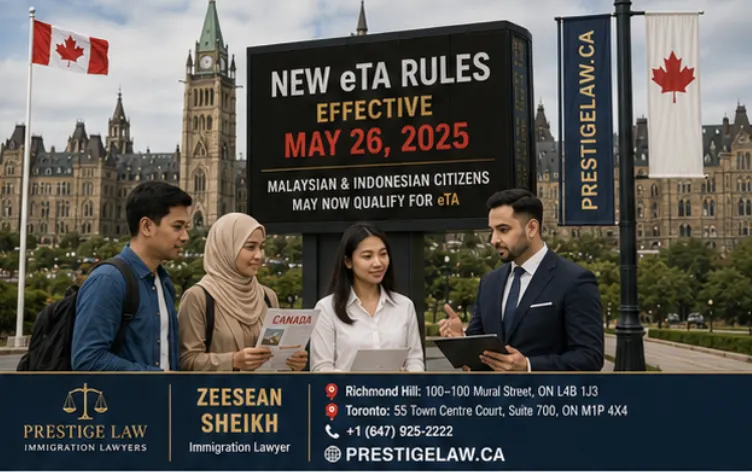
Starting May 26, 2025, Indonesian and Malaysian citizens will no longer need a Canadian TRV to fly to or transit through Canada if they meet either of the following conditions:
- They have held a valid Canadian TRV at any point within the past 10 years, or
- They currently hold a valid United States non-immigrant visa.
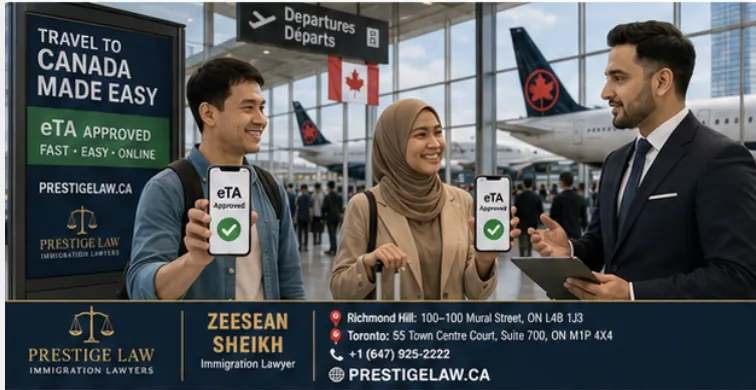
If eligible, these travellers can instead apply for a Canadian Electronic Travel Authorisation (eTA) — a simpler, faster, and more affordable process completed entirely online before departure.
This change reflects Canada’s growing commitment to strengthening relationships across the Indo-Pacific, facilitating easier movement for business travellers, investors, tourists, and trade representatives from two of Southeast Asia’s most dynamic economies.
What is an Electronic Travel Authorisation (eTA)?
An Electronic Travel Authorisation (eTA) is an entry requirement for visa-exempt foreign nationals travelling to Canada by air. It is electronically linked to the traveller’s passport and is typically approved within minutes, though it can sometimes take several days.
Key facts about the Canadian eTA:
- It costs CAD $7 per application
- It is valid for up to five years or until the passport it is linked to expires, whichever comes first
- It allows for multiple entries into Canada
- Each stay in Canada can be up to six months
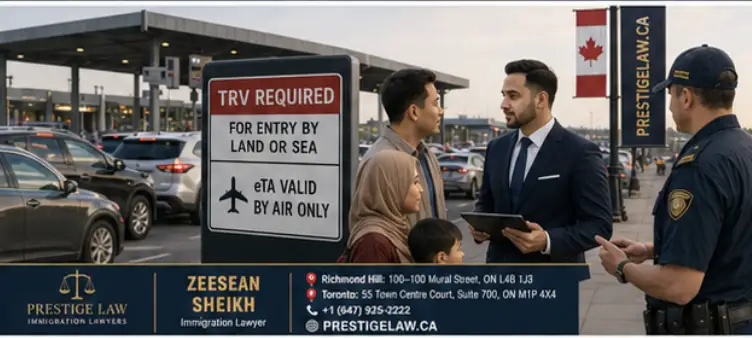
- It is only required for air travel — not for entry by land or sea
The eTA is a streamlined alternative to a full TRV and signals a significant relaxation of entry requirements for qualifying Malaysian and Indonesian passport holders.
Who Qualifies for the eTA Under the New Rules?
Not every Malaysian or Indonesian citizen will automatically qualify for the eTA. The new rules apply specifically to those travelling by air who meet one of two eligibility requirements:
Eligibility Condition 1 — Prior Canadian TRV Holder: If you have held a valid Canadian Temporary Resident Visa at any point during the last 10 years, you are now eligible to apply for an eTA instead of a new TRV for air travel to or through Canada.
Eligibility Condition 2 — Valid US Non-Immigrant Visa Holder: If you currently hold a valid United States non-immigrant visa, you are also now eligible to apply for a Canadian eTA for air travel purposes.
This mirrors a similar policy Canada introduced for other nationalities in previous years and reflects Canada’s strategic alignment with US immigration frameworks to facilitate smoother travel across North America.
Who Still Needs a Canadian Visitor Visa (TRV)?
Despite the new eTA pathway, many Malaysian and Indonesian citizens will still be required to obtain a full Canadian Temporary Resident Visa. You will still need a TRV if:
- You do not meet either of the eTA eligibility conditions described above, or
- You are planning to enter Canada by land (e.g., crossing from the United States), or
- You are planning to arrive in Canada by sea
It is critical to understand that the eTA applies exclusively to air travel. If you plan to drive across the US-Canada border or arrive by boat or cruise ship, you will still be required to obtain a Canadian TRV regardless of your prior travel history or current US visa status.
What Happens If You Already Have a Valid Canadian Visa?
If you already hold a valid Canadian Temporary Resident Visa that has not yet expired, you do not need to do anything. You can continue using your existing visa for travel to Canada until its expiry date. There is no need to cancel your current visa or apply for an eTA before it expires.
However, once your existing TRV expires, you will need to assess whether you qualify for an eTA under the new rules or whether you must apply for a new TRV.
Why Is Canada Making This Change?
Canada’s decision to expand eTA eligibility to qualifying citizens of Malaysia and Indonesia is rooted in its broader Indo-Pacific Strategy. Canada has been actively working to deepen political, economic, and cultural ties with nations across the Asia-Pacific region, and easing travel requirements is one of the most direct ways to support that vision.
By reducing the barriers to air travel for eligible Malaysian and Indonesian citizens, Canada aims to:
- Encourage greater business travel and investment flows between Canada and Southeast Asia
- Facilitate easier attendance at trade missions, conferences, and business negotiations
- Support tourism growth from two major source markets in the region
- Strengthen people-to-people ties that underpin deeper diplomatic and economic relationships
- Align Canada’s entry requirements more closely with the streamlined systems used by other developed nations
Malaysia and Indonesia are among the most populous and economically significant nations in Southeast Asia. Together, they represent a combined population of over 600 million people and rapidly growing middle classes with increasing international travel capacity. Canada’s decision to ease entry requirements recognises this reality and positions Canada as a more accessible and welcoming destination.
How to Apply for a Canadian eTA as a Malaysian or Indonesian Citizen
If you believe you meet the eligibility criteria under the new rules, applying for a Canadian eTA is straightforward. Here is a step-by-step overview:
Step 1 — Confirm Your Eligibility Before applying, confirm that you either held a valid Canadian TRV within the past 10 years or that you currently hold a valid US non-immigrant visa. Having documentation of your past Canadian visa or your current US visa readily available will assist your application.
Step 2 — Visit the Official Canadian Government Website. All eTA applications must be submitted through the official Government of Canada immigration website at canada.ca. Be cautious of third-party websites that charge inflated fees for the same process.
Step 3 — Complete the Online Application. The eTA application form is short and requires basic personal details, passport information, and answers to a set of eligibility and background questions.
Step 4 — Pay the Application Fee The government fee for a Canadian eTA is CAD $7. Payment is made by credit or debit card at the time of application.
Step 5 — Receive Your eTA Most applicants receive a decision within minutes. In some cases, Immigration, Refugees and Citizenship Canada (IRCC) may request additional documents or take several days to process the application. Your eTA will be electronically linked to your passport.
Step 6 — Travel to Canada Once approved, you may board your flight to Canada. Ensure you travel with the same passport that was used for your eTA application.
Common Mistakes to Avoid When Applying
Despite the simplicity of the eTA process, applicants sometimes encounter issues that delay or jeopardise their travel plans. Common mistakes include:
- Applying with the wrong passport — ensure you use the passport you will travel with
- Failing to disclose past immigration or criminal history accurately
- Assuming the eTA permits entry, border officers retain authority to deny entry at the port of arrival
- Leaving the application to the last minute — while most approvals are fast, some cases take longer
- Using unofficial or third-party websites that charge inflated fees
If you are uncertain about your eligibility or have a complex immigration history, consulting a licensed Canadian immigration lawyer before applying is strongly recommended.
The Bigger Picture: Canada’s Indo-Pacific Strategy and Southeast Asia
Canada’s Indo-Pacific Strategy, launched in 2022, outlined a comprehensive and ambitious roadmap for deeper engagement with Asia. The strategy allocated over CAD $2.3 billion in funding to support Canadian objectives across the region, including trade, security, and people-to-people connections.
Easing travel requirements for citizens of key Indo-Pacific nations such as Malaysia and Indonesia is a direct expression of this strategy in action. When people can travel more freely, business deals get done, investments are made, students pursue education opportunities, and cultural exchanges flourish.
Malaysia and Indonesia are important trading partners for Canada. Trade between Canada and the Association of Southeast Asian Nations (ASEAN) — of which both nations are founding members — has been steadily growing. Canada has also been pursuing a Canada-ASEAN Free Trade Agreement, negotiations for which are ongoing. Facilitating easier travel for business people and investors from these countries supports these broader trade and economic objectives.
Do You Need a Canadian Immigration Lawyer?
While the eTA application process is designed to be simple and self-serve, there are many situations in which professional immigration legal advice is essential:
- If you have been previously refused a Canadian visa or eTA
- If you have a criminal record of any kind, anywhere in the world
- If you have been deported or removed from Canada or any other country previously
- If you have overstayed a visa in Canada or another country
- If your citizenship or travel document situation is complex
- If you are applying as part of a broader immigration or residency plan
- If you are a business person or investor seeking to understand the broader pathway to Canadian permanent residency
In any of these situations, working with a qualified and experienced Canadian immigration lawyer can make the difference between a successful outcome and an unnecessary refusal that complicates your future applications.
About Zeesean Sheikh — Canadian Immigration Lawyer at Prestige Law
Zeesean Sheikh is an experienced Canadian immigration lawyer practising at Prestige Law, with offices in Richmond Hill and Toronto, Ontario. He provides professional legal guidance on all aspects of Canadian immigration law, including visitor visas, eTAs, study permits, work permits, permanent residency, and citizenship applications.
Whether you are a Malaysian or Indonesian citizen looking to understand how these new eTA rules affect your travel plans, a business professional seeking to explore investment pathways to Canada, or a family looking to reunite in Canada, Zeesean Sheikh and the team at Prestige Law are ready to assist you with clear, practical, and results-oriented legal advice.
📍 Richmond Hill: 100–100 Mural Street, Richmond Hill, ON 📍 Toronto: 55 Town Centre Court, Suite 700, Toronto, ON 📞 Telephone: +1 (647) 925-2222 🌐 Website: prestigelaw.ca
Frequently Asked Questions (FAQs)
Q1. From what date does the new eTA rule apply to Malaysian and Indonesian citizens? The new eTA eligibility rules came into effect on May 26, 2025, at 5:30 a.m. Eastern Time.
Q2. Do all Malaysian and Indonesian citizens now qualify for a Canadian eTA? No. Only those who have held a valid Canadian TRV within the past 10 years, or who currently hold a valid US non-immigrant visa, are eligible to apply for an eTA under the new rules.
Q3. Can I use the eTA to enter Canada by land or sea? No. The eTA is only valid for air travel to or through Canada. If you are entering Canada by land or sea, you will still need a Canadian Temporary Resident Visa (TRV).
Q4. What if I already have a valid Canadian TRV? You can continue to use your existing valid TRV until it expires. You do not need to apply for an eTA until your TRV expires.
Q5. How long does the Canadian eTA last? A Canadian eTA is valid for up to five years, or until your passport expires, whichever comes first. It allows multiple visits of up to six months each.
Q6. How much does it cost to apply for a Canadian eTA? The Government of Canada charges CAD $7 for an eTA application. Be wary of unofficial websites that charge more.
Q7. Can I be denied entry to Canada even with a valid eTA? Yes. An approved eTA does not guarantee entry. Canadian Border Services Agency (CBSA) officers retain the authority to deny entry at the port of arrival.
Q8. Do I need a lawyer to apply for an eTA? Most straightforward eTA applications do not require a lawyer. However, if you have a complex immigration history, past refusals, or a criminal record, consulting an immigration lawyer such as Zeesean Sheikh at Prestige Law is strongly advised.
Q9. Does holding a US tourist visa (B-1/B-2) qualify me for the Canadian eTA? Yes. A valid US non-immigrant visa, including a B-1/B-2 visitor visa, qualifies eligible Malaysian and Indonesian citizens to apply for a Canadian eTA for air travel.
Q10. How do I know if my previous Canadian TRV was within the last 10 years? Check the expiry date on your old Canadian visa sticker in your passport or in your immigration records. If the visa was issued or valid at any point within the 10 years before your application date, you qualify.
Final Thoughts
Canada’s decision to expand the eTA pathway to eligible citizens of Malaysia and Indonesia is a welcome and strategically significant step. It reduces bureaucratic friction, supports stronger Indo-Pacific ties, and makes Canada a more accessible destination for the millions of Malaysian and Indonesian travellers who meet the eligibility criteria.
However, as with all immigration matters, the details are important. Not everyone qualifies; the eTA does not apply to all modes of entry, and those with complex backgrounds should always seek professional legal guidance before making travel or immigration plans.
If you have questions about whether you qualify, how to apply, or how this change might affect your broader Canadian immigration goals, contact Zeesean Sheikh at Prestige Law today.
📍 Richmond Hill: 100–100 Mural Street, Richmond Hill, ON
📍 Toronto: 55 Town Centre Court, Suite 700, Toronto, ON
📞 Telephone: +1 (647) 925-2222
🌐 Website: prestigelaw.ca