



British Columbia immigration selects workers in construction, health care, and child care.
The latest BC PNP draw has sent a clear message to skilled workers around the world: British Columbia needs builders, carers and educators, and it is ready to invite them to apply for provincial nomination in meaningful numbers. On October 8, 2026, the British Columbia Provincial Nominee Program (BC PNP) invited candidates in construction trades, health care, child care and veterinary care to apply through its Skills Immigration category. Construction trades received 115 invitations, early childhood educators received 86, health care workers received 82, and veterinary care received fewer than five. For candidates who hold a job offer from a British Columbia employer, this BC PNP draw offers a realistic path toward Canadian permanent residence, but only when the registration is accurate, the job offer matches a targeted occupation, and the supporting documents are complete. In this guide, Prestige Law explains what the October 8 draw means, who was invited, how the minimum scores compare with earlier 2026 rounds, and which steps to take next if you want to build your future in Canada.
Key Takeaways From the October 8, 2026 BC PNP Draw
- British Columbia published 283 invitations across construction trades, health care and child care, plus fewer than five invitations in veterinary care.
- The minimum scores were 94 for construction trades, 99 for early childhood educators, 86 for veterinary care and 76 for health care.
- Health care had the lowest minimum score, which means candidates with more modest registration scores still had a real chance of receiving an invitation.
- Construction trades received the largest share of invitations, with 115 issued, up from 104 in the September 10 round.
- This was the seventh occupation-specific draw of 2026, and by October 8 the province had issued at least 6,301 invitations through its Skills Immigration category.
- An invitation to apply is not a nomination, and a nomination is not permanent residence. Each stage has its own requirements and deadlines.
What Is the BC PNP and How Does Skills Immigration Work?
The British Columbia Provincial Nominee Program is the province’s economic immigration program. It allows British Columbia to nominate foreign workers, international graduates and entrepreneurs who can fill real gaps in the provincial economy and who intend to settle in the province. Once a candidate is nominated, the candidate can apply to Immigration, Refugees and Citizenship Canada (IRCC) for permanent residence. The province decides who it wants to nominate, while the federal government makes the final decision on permanent residence, including medical, security and admissibility checks.
The Skills Immigration category is designed for workers who have a job offer from a British Columbia employer. The process begins with an online registration. The system assigns each registrant a score based on factors such as the job offer, the wage, work experience, education, language ability and the region where the job is located. The province then holds periodic selection rounds, often called a BC PNP draw, and invites the highest-scoring registrants in a chosen group to submit a full application. Candidates who are invited have a limited time to submit a complete application, so preparation before the invitation arrives is essential.
In 2026, British Columbia reorganised its provincial nomination priorities around three goals: Care, Build and Innovate. Care and Build rounds target named occupations in health care, child care, veterinary care and construction. Innovate rounds focus more on the economic impact of the job, such as wage levels and registration scores. The October 8 BC PNP draw belonged to the Care and Build group, which explains why the invitations were so closely tied to specific occupations.
For candidates in the Express Entry stream, a provincial nomination carries an additional 600 points under the Comprehensive Ranking System. In practice, that boost places a nominated candidate far ahead of almost every other profile in the pool. Candidates outside Express Entry follow the base stream, where IRCC reviews the permanent residence application on paper.
BC PNP Draw on October 8, 2026: Invitations, Scores and Occupations
The October 8 round targeted four occupational groups. The table below summarises the published results.
Occupational group
Invitations issued
Minimum score
Build: Construction trades 115 94
Care: Child care (early childhood educators) 86 99
Care: Health care 82 76
Care: Veterinary care Fewer than 5 86
Adding the three published counts gives 283 invitations, with a few more issued in veterinary care. The distribution matters as much as the total. Construction trades led the round, health care followed with the lowest threshold, and child care again required a very high score because the group is limited to a single occupation. Each group is ranked separately, so a score that earns an invitation in one group may not earn one in another. A candidate should always compare a score against the group that matches the job offer, not against the overall pool.
Because every BC PNP draw is a snapshot, the figures above should be read as a guide to the market rather than a promise. The province can change the groups, the occupations and the number of invitations from one round to the next, and the cut-off score depends on how many registrants in each group are competing at that moment.
Why Construction Trades Led This BC PNP Draw
Construction trades received 115 invitations at a minimum score of 94, making it the largest group in the round. Nine occupation codes were targeted in this group. One example is construction millwrights and industrial mechanics (NOC 72400). While health care and child care invitations fell compared with September, construction trades rose from 104 to 115, which suggests that the province continues to treat skilled trades as a priority.
The demand is easy to understand. British Columbia has large housing, infrastructure and commercial projects that depend on certified tradespeople. Governments at every level continue to emphasise building more homes, and that goal cannot be reached without carpenters, electricians, plumbers, millwrights and other qualified workers. Employers across the province have reported difficulty filling skilled positions, and the BC PNP is one of the tools the province uses to help them.
In earlier 2026 construction rounds, candidates needed to show a valid trade certificate from SkilledTradesBC or to be registered in a SkilledTradesBC apprenticeship that aligned with the job offer. Candidates should confirm the current requirement before relying on it, but the pattern is clear: the province wants workers whose credentials are recognised in British Columbia and whose jobs are verified. A tradesperson who has completed foreign training should therefore ask early how that training will be assessed and whether the employer is willing to support certification.
Several practical points can strengthen a construction application:
- Make sure the job title and duties on the offer match the targeted occupation, not just a similar job.
- Confirm that the employer is operating a genuine business in British Columbia and can document the position.
- Keep proof of trade qualifications, apprenticeship hours and work experience organised and consistent.
- Check that the wage is in line with the market for the region and the occupation.
Health Care Posts the Lowest Minimum Score
Health care received 82 invitations at a minimum score of 76. This was the lowest threshold in the round and, based on recent 2026 results, among the lowest the group has recorded this year. The Care: Health group covers 31 occupation codes, including managers in health care (NOC 30010), other professional occupations in health diagnosing and treating (NOC 31209), and physician assistants, midwives and allied health professionals (NOC 31303).
Candidates with a job offer in the care aide occupation (NOC 33102) face an additional requirement. They must be registered with the BC Care Aide and Community Health Worker Registry to be considered for a targeted health care invitation. This is a good example of how a BC PNP draw can include conditions that sit outside the immigration system. A candidate who ignores the registry requirement may meet every other rule and still be passed over.
The score history shows how quickly the market can move. The health care minimum score was 96 in the July 9 round, 84 on August 6, and 76 on September 10. It stayed at 76 on October 8. Invitations, however, dropped from 143 in September to 82 in October. A lower cut-off paired with fewer invitations means the group is easier to enter in terms of score but smaller in size, so candidates should not assume future rounds will repeat the same pattern.
It is also important to separate immigration from professional licensing. A BC PNP nomination does not give a nurse, therapist or allied health professional the right to practise in British Columbia. Most regulated health professions require registration with a provincial regulatory college, and the licensing process often takes months. Candidates should start credential recognition at the same time as the immigration process, because delays in licensing can affect employment and the job offer itself.
Child Care: Early Childhood Educators Still Face a High Score
The child care group invited 86 early childhood educators (NOC 42202) at a minimum score of 99. Only this occupation is targeted in the group, which makes it the narrowest selection in the round and explains why the cut-off remains high. The score was the same as on September 10, although invitations fell from 182 to 86. Earlier in the year, the group invited 91 candidates at a score of 108 on July 9 and 183 candidates at a score of 102 on August 6.
The province has made child care a visible priority because families need more licensed spaces and employers need qualified educators. For a candidate, the main challenge is the competition within a single occupation. Because everyone in the group is ranked together, small differences in score can decide the result. A higher language result, a better wage, or a job in a region that earns additional points can move a profile ahead.
Candidates should also confirm that they hold, or are eligible to obtain, the early childhood educator certification required to work in British Columbia. A job offer from a licensed child care facility, supported by accurate documents, is a core part of a strong application. The employer’s role is significant: the province may review the employer’s history, and weak documentation can slow down or damage a file.
Veterinary Care: A Small but Meaningful Group
Veterinary care received fewer than five invitations at a minimum score of 86. The group targets animal health technologists and veterinary technicians (NOC 32104) who hold a valid professional designation. The number is small, but the group matters to employers in clinics, hospitals and animal care facilities that struggle to hire. Candidates in this field should keep their registration and professional designation current so that they are ready if another round is announced.
How This BC PNP Draw Compares With Earlier 2026 Rounds
Looking at several rounds side by side shows how British Columbia adjusts its selections. The table below compares the minimum score and the number of invitations in the main groups.
Round
Construction trades
Health care
Child care
July 9 136 invitations, score 97 116 invitations, score 96 91 invitations, score 108
August 6 187 invitations, score 88 124 invitations, score 84 183 invitations, score 102
September 10 104 invitations, score 94 143 invitations, score 76 182 invitations, score 99
October 8 115 invitations, score 94 82 invitations, score 76 86 invitations, score 99
The total number of published invitations fell from 429 on September 10 to 283 on October 8. Child care invitations dropped by more than half, health care invitations fell by about 43 per cent, and construction trades rose slightly. Minimum scores did not change from September for the three main groups, which suggests that the province was comfortable with the quality of the registrants it selected, even with a smaller number of invitations.
Three lessons stand out from the 2026 pattern. First, the cut-off score is not fixed, and a candidate who misses one BC PNP draw may succeed in the next. Second, the number of invitations can swing widely from month to month, so a candidate should prepare for both busy and quiet periods. Third, the groups behave differently. Health care scores have moved sharply, child care scores have stayed high, and construction trades have remained steady in the nineties apart from August.

What This BC PNP Draw Says About British Columbia’s Immigration Priorities
By October 8, British Columbia had issued at least 6,301 invitations through Skills Immigration and at least 120 through Entrepreneur Immigration in 2026. Those figures show that the province continues to rely heavily on workers who already have a job offer. Care and Build selections now form a regular part of the calendar, and the October round was the seventh occupation-specific draw of the year.
The selections also show that the province is matching immigration to labour shortages rather than to a general pool of skilled workers. Health care and child care respond to pressure on public services and family needs. Construction responds to housing and infrastructure demand. Candidates who understand this logic can plan better. A worker in a targeted occupation should focus on a strong job offer, a competitive score and complete credentials. A worker outside those occupations may look at other pathways, including Express Entry, other provincial programs or employer-driven options.
Because the province can change its priorities, candidates should treat official sources as the final authority. WelcomeBC publishes invitation results and program updates, and checking that site before making decisions is a good habit.
How to Improve Your BC PNP Registration Score
A higher score increases the chance of being invited in the next BC PNP draw. Scoring rules can change, so confirm the current criteria before acting, but the following areas usually offer the greatest room for improvement.
- Language ability. Strong results in an approved English test can add valuable points. If your result is close to the next band, consider retaking the test before it expires.
- Education and credentials. Completing an educational credential assessment and recognising Canadian or foreign qualifications can support your profile.
- Work experience. Experience in the same occupation as the job offer is more valuable than unrelated experience. Keep reference letters detailed, with duties, hours, dates and pay.
- Wage on the job offer. A wage that meets or exceeds the market rate for the occupation and region can improve the score. The wage must also be realistic and consistent with employer records.
- Region of employment. Jobs outside the largest urban centres may earn additional regional points and can make a profile more competitive.
- Accurate registration. Mistakes in occupation codes, job details or personal information can lead to a refusal even if the score is high.
Candidates should update their registration as soon as something changes, such as a new language result, a wage increase or additional experience. Waiting until after an invitation arrives is too late to change the score.
Step-by-Step: From BC PNP Registration to Permanent Residence
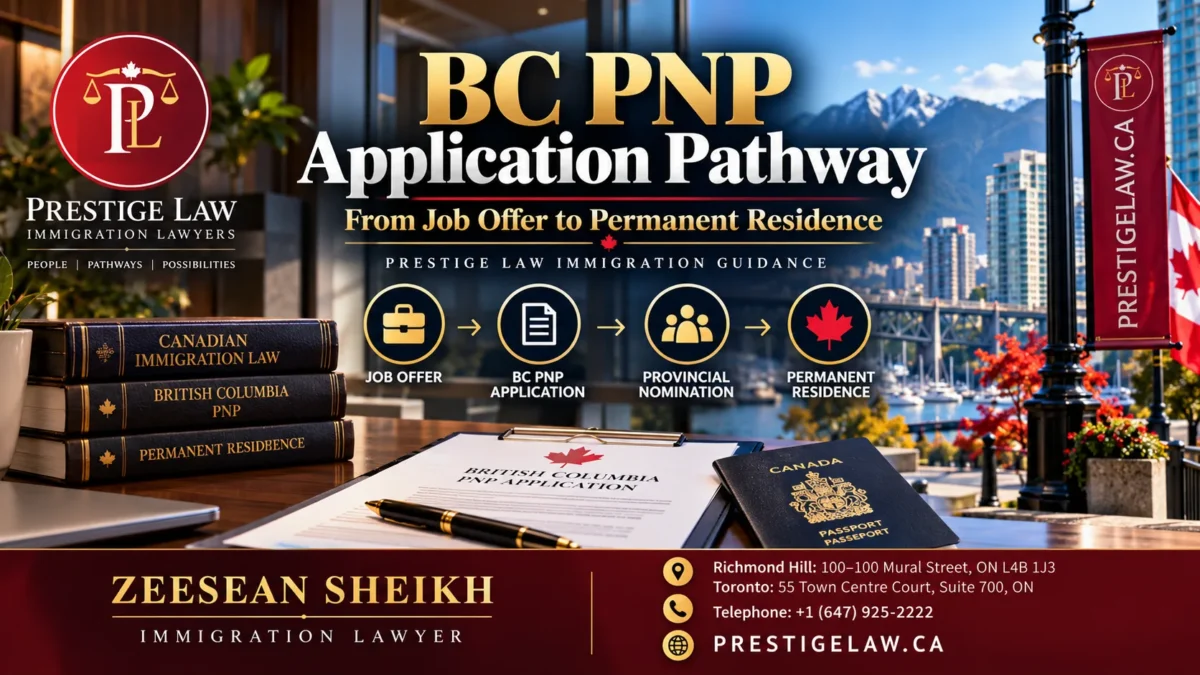
The journey from registration to permanent residence has several stages. Understanding them in order helps candidates avoid delays.
- Check your occupation and eligibility. Confirm that your job offer matches a targeted occupation and that you meet the minimum requirements for the stream.
- Secure a qualifying job offer. The offer should come from a British Columbia employer and clearly describe the position, wage, hours and location.
- Register online. Submit your registration with accurate information and keep supporting documents ready.
- Wait for a BC PNP draw. The province selects the highest-scoring registrants in targeted groups and issues invitations to apply.
- Submit a complete application. Once invited, submit the application and documents within the deadline. Incomplete files can be refused.
- Receive the nomination. If the province approves the application, it issues a nomination certificate or, for Express Entry candidates, a nomination in the Express Entry profile.
- Apply to IRCC for permanent residence. The federal government reviews health, security and admissibility, and then decides on permanent residence.
- Plan for work authorisation. Some nominees may qualify for a work permit support letter while the federal application is in process. Eligibility depends on individual circumstances.
Processing times vary and change often, so avoid relying on informal estimates. The official websites of the province and IRCC are the best sources for current timelines.
Common Mistakes That Cost BC PNP Candidates an Invitation
A strong score is only one part of success. The following errors are common, and each one is avoidable.
- Choosing the wrong occupation code. The job duties must match the occupation, not just the job title. A mismatch can lead to refusal.
- Ignoring registry or licensing rules. Care aides must register with the BC Care Aide and Community Health Worker Registry, and many health professionals need approval from a regulatory college.
- Using expired or weak language results. Check the validity date and the score band before registering.
- Inconsistent documents. Differences between the resume, reference letters and job offer raise concerns about credibility.
- Missing deadlines. After an invitation, the time to apply is limited. Preparing documents in advance makes the deadline manageable.
- Relying on unreliable advice. Social media posts and informal groups often spread outdated information. A review by a qualified professional can prevent costly errors.
How Prestige Law Can Help With the BC PNP and Other Canadian Pathways
Immigration decisions affect your family, your career and your future, so accuracy matters at every stage. Prestige Law, led by lawyer Zeesean Sheikh, helps clients understand their options and prepare strong applications for Canadian immigration programs. The firm can review a job offer, assess a registration, identify risks in the documents and explain how a provincial nomination fits with the federal permanent residence process. Where the BC PNP is not the best route, the team can also look at other pathways that may suit the client’s profile.
A careful review before registration or before an invitation arrives can save time and reduce stress. If you work in construction, health care or child care and want to know whether your profile fits the latest BC PNP draw, contact Prestige Law to discuss your situation.
Prestige Law
📍 Richmond Hill: 100–100 Mural Street, ON.
📍 Toronto: 55 Town Centre Court, Suite 700, ON.
📞 Telephone: +1 (647) 925-2222
🌐 Website: prestigelaw.ca
Frequently Asked Questions About the BC PNP Draw
What is a BC PNP draw?
A BC PNP draw is a selection round in which British Columbia invites registered candidates to submit a full application for provincial nomination. The province ranks registrants by score within a chosen group, such as construction trades or health care, and invites the highest-scoring candidates. An invitation allows the candidate to apply, but it does not guarantee approval.
How many candidates were invited in the October 8, 2026 BC PNP draw?
British Columbia published 283 invitations for construction trades, health care and child care, plus fewer than five invitations for veterinary care. Construction trades received 115, child care received 86, and health care received 82.
What was the minimum score for health care in the October 8 draw?
The minimum score for the health care group was 76. This matched the September 10 cut-off and was well below the 96 recorded in July.
Does an invitation guarantee permanent residence?
No. An invitation lets you apply for provincial nomination. If the province nominates you, you must still apply to IRCC for permanent residence, and the federal government makes the final decision after reviewing admissibility, health and security.
Do I need a job offer to be invited?
For the Skills Immigration groups described in this article, a valid job offer from a British Columbia employer in a targeted occupation is a central requirement. Specific conditions, such as certification or registry membership, can also apply.
What is a good BC PNP score?
There is no single good score. The cut-off changes by group and by round. In the October 8 draw, the minimum scores ranged from 76 for health care to 99 for child care. The best approach is to compare your score with recent results for your own occupational group.
How often does British Columbia hold a draw?
The schedule is not fixed. October 8 was the seventh occupation-specific draw of 2026, and the province also holds other rounds. Candidates should watch the official WelcomeBC website for updates.
Can I register if I live outside Canada?
Candidates who live abroad may be able to register if they meet the requirements, including a valid job offer from a British Columbia employer. Eligibility depends on the stream and on the facts of each case.
How long does BC PNP processing take?
Processing times change from month to month and depend on the stream, the volume of applications and the completeness of the file. Check the official provincial and federal websites for current estimates.
Can my spouse and children come with me?
A nominated candidate can usually include a spouse or common-law partner and dependent children in the permanent residence application to IRCC. Each family member must meet admissibility requirements.
Can I work in British Columbia while my application is in process?
It depends on your situation. Some nominees can obtain a work permit support letter that helps them apply for or extend a work permit. Candidates should confirm eligibility before making employment plans.
Most Searched Questions and Related Topics
Candidates who follow the latest BC PNP draw often search for related information. These are some of the most common topics, and each is worth understanding before you register or accept a job offer:
- BC PNP draw results today and the latest minimum scores.
- BC PNP construction trades eligibility and SkilledTradesBC requirements
- BC PNP health care draw and care aide registry rules.
- BC PNP child care draw for early childhood educators.
- How to register for the BC PNP Skills Immigration category
- BC PNP processing time and nomination timelines
- BC PNP versus Express Entry: which route is better?
- How to get a BC PNP work permit support letter
Each of these topics deserves a careful look, because small details in your own file can change the answer. A profile that looks strong on paper may still face problems if the job offer, credentials or documents do not line up.

Final Thoughts on the October 2026 BC PNP Draw
The October 8 BC PNP draw confirms that British Columbia is actively seeking workers in construction, health care and child care. Construction trades led the round, health care offered the lowest cut-off, and child care remained competitive because of its narrow focus. For workers in these fields, the message is encouraging, but it comes with a clear warning: success depends on preparation, accuracy and timing.
If you have a job offer in British Columbia, now is a smart time to review your registration, confirm your credentials and organise your documents. If you do not yet have an offer, you can still use the latest results to understand which occupations the province values and to plan your next steps. Rules and scores can change quickly, so check WelcomeBC for official information and speak with a qualified professional about your own case.
This article is for general information only and does not constitute legal advice. Immigration rules, scores, and draw results can change without notice, so always confirm the details with official sources before acting. To discuss your own situation, contact Prestige Law today.