




Canada reports longer wait times for temporary residence applicants.
Published by Prestige Law | Legal guidance from lawyer Zeesean Sheikh
Canada’s immigration department has released fresh numbers showing that temporary residence wait times are moving in the wrong direction for many people. In its October 14 update, Immigration, Refugees and Citizenship Canada (IRCC) reported one-week increases in work permit estimates for applicants in Canada, Pakistan and the Philippines, one-week increases in study permit estimates for applicants in India, Pakistan and the Philippines, and a jump of almost two weeks for super visa applicants in the Philippines.
A few categories improved, including study permits for applicants in Canada and the United States, yet the overall picture is one of slower decisions for workers, students, visitors and families who depend on timely answers. If you are planning a job start, a school term, a family reunion or an extension of your stay, these temporary residence wait times can shape every decision you make. This guide from Prestige Law explains what changed, what the figures mean, why estimates keep shifting, and how you can protect your application while you wait. Temporary Residence Wait Times Rise
Key Takeaways
- IRCC’s October 14 update showed longer estimates for several work permit, study permit and super visa applicant groups.
- Work permit estimates rose by one week for applicants in Canada (15 weeks), Pakistan (9 weeks) and the Philippines (8 weeks).
- Study permit estimates rose by one week for applicants in India, Pakistan and the Philippines, while Canada and the United States each improved by one week.
- Super visa estimates for the Philippines climbed from 90 to 103 days, the largest single increase in the update.
- Every featured visitor visa estimate for applicants outside Canada sits above IRCC’s 14-day service standard, and Nigeria stands at 103 days.
- Processing times are estimates, not promises, so smart planning means building in extra time and filing a complete, accurate application.
What IRCC Reported in Its October 14 Update
IRCC publishes new temporary residence estimates every week. The figures released on October 14 can be compared with those from October 7, and three groups of applicants saw the sharpest increases:
- Work permits: one-week increases for applicants in Canada, Pakistan and the Philippines.
- Study permits: one-week increases for applicants in India, Pakistan and the Philippines.
- Super visas: an increase of almost two weeks, or 13 days, for applicants in the Philippines.
Not every number moved in the wrong direction. Study permit estimates fell by one week for applicants in Canada and in the United States. Visitor visa estimates dropped for applicants in India, Pakistan and the Philippines, and super visa estimates improved slightly for Nigeria. Even so, the net direction in October was longer temporary residence wait times for a large share of the people the department tracks.
The update also arrives against a backdrop of heavy volume. IRCC completed 1,832,065 temporary residence applications between January and July 2026, while more than 394,000 were still waiting for a final decision on July 31. Those figures describe a department that decides an enormous number of files and still carries a sizeable queue at any moment. When new applications keep arriving on top of that queue, estimates for a specific country or category can easily shift by a week or more.
A one-week change may look small on paper. For a worker whose current permit is about to expire, a student racing an intake deadline, or a grandparent waiting to visit a newborn, one week can decide whether a plan holds together or falls apart.
Temporary Residence Wait Times by Application Type
The tables below show the latest IRCC estimates for the countries featured in the update, alongside the figures from a week earlier. Remember that these are estimates for newly submitted applications, and IRCC refreshes them weekly, so the numbers may have moved again since this article was written.
Work Permit Wait Times
Applying from
October 14
October 7
Change
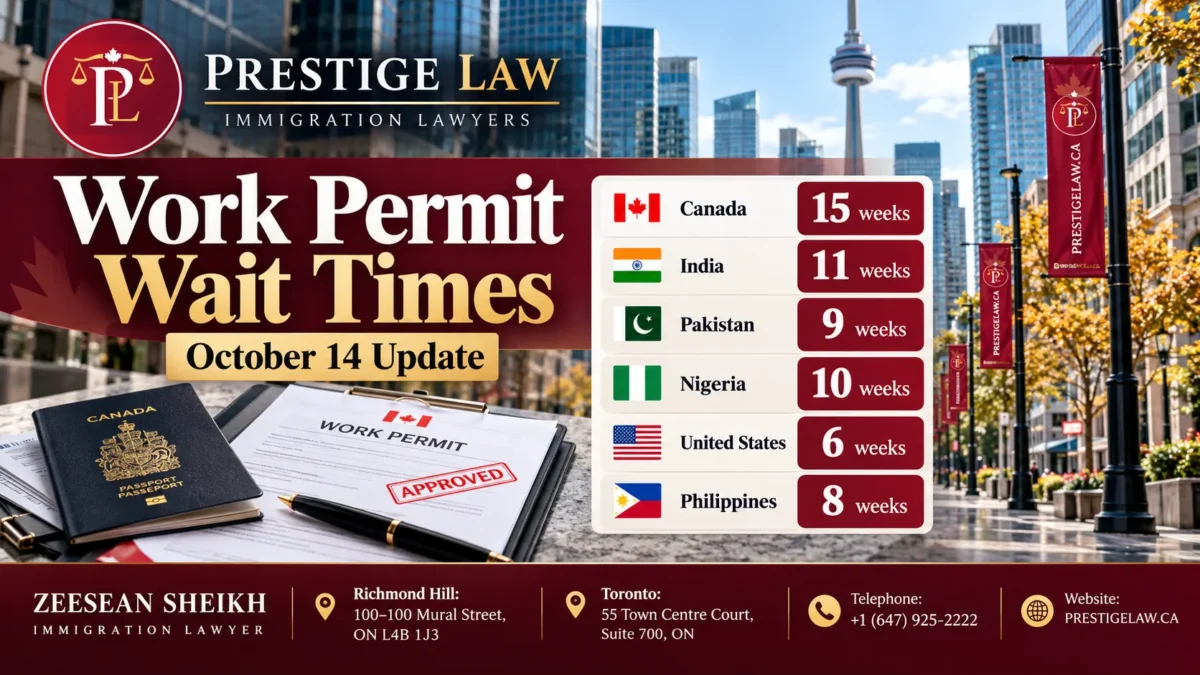
Canada 15 weeks 14 weeks +1 week
India 11 weeks 11 weeks No change
Pakistan 9 weeks 8 weeks +1 week
Nigeria 10 weeks 10 weeks No change
United States 6 weeks 6 weeks No change
Philippines 8 weeks 7 weeks +1 week
Work permit estimates tell a mixed story. Applicants submitting from inside Canada now face an estimate of 15 weeks, or about 105 days. That is still inside IRCC’s 120-day service standard for in-Canada submissions, but it is moving closer to the limit.
For applicants outside Canada, the service standard is 60 days. Estimates for India (11 weeks, or 77 days), Nigeria (10 weeks, or 70 days) and Pakistan (9 weeks, or 63 days) now sit above that goal, while the Philippines (8 weeks, or 56 days) and the United States (6 weeks, or 42 days) remain within it. Employers who plan hiring dates around foreign workers should treat these work permit wait times as a rough guide and add a generous cushion.
Study Permit Wait Times Temporary Residence Wait Times Rise
Applying from
October 14
October 7
Change
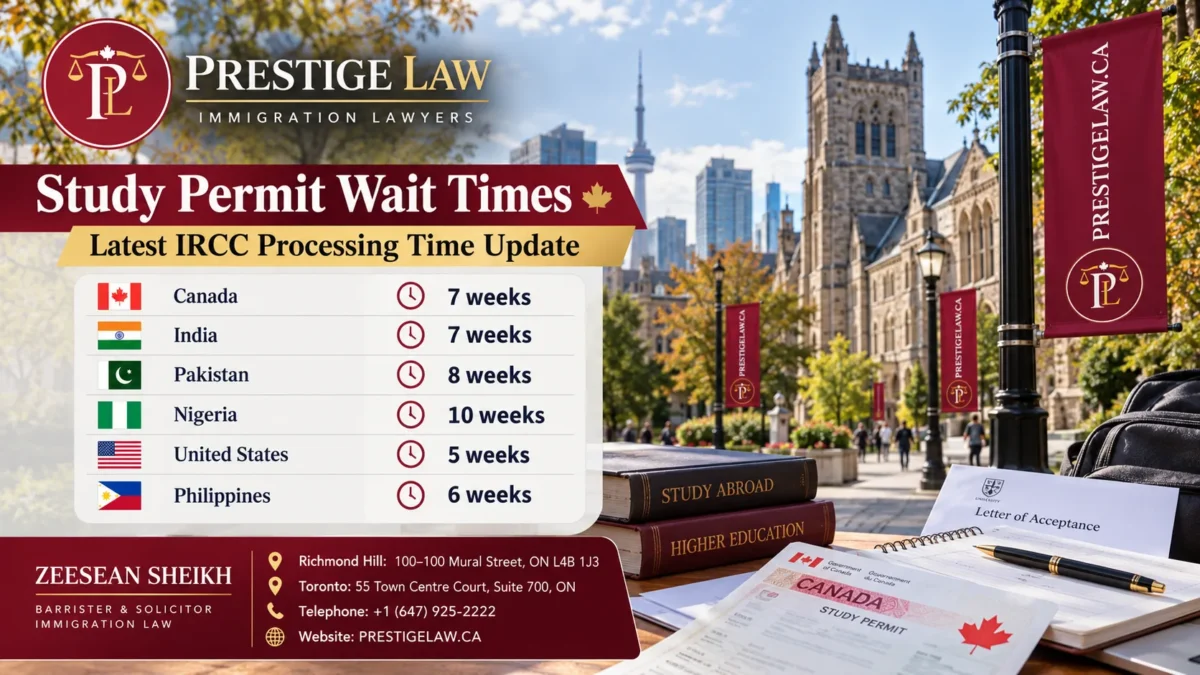
Canada 7 weeks 8 weeks -1 week
India 7 weeks 6 weeks +1 week
Pakistan 8 weeks 7 weeks +1 week
Nigeria 10 weeks 10 weeks No change
United States 5 weeks 6 weeks -1 week
Philippines 6 weeks 5 weeks +1 week
Study permit estimates improved for applicants in Canada and the United States but lengthened for applicants in India, Pakistan and the Philippines. Pakistan’s eight-week estimate is its longest in more than four months. Nigeria holds at ten weeks, or 70 days, which is above the 60-day service standard for applications submitted from outside Canada.
Students face a particularly tight calendar because schools set firm intake dates. A late study permit decision can mean a deferred start, a lost deposit or a missed semester. Applying as soon as your acceptance letter and supporting documents are ready is the best protection against rising study permit wait times.
Visitor Visa Wait Times
Applying from
October 14
October 7
Change
Canada 12 days 11 days +1 day
India 29 days 30 days -1 day
Pakistan 65 days 71 days -6 days
Nigeria 103 days 100 days +3 days
United States 18 days 18 days No change
Philippines 24 days 25 days -1 day
Visitor visa estimates lengthened for applicants in Canada and Nigeria, shortened for India, Pakistan and the Philippines, and stayed level for the United States. Pakistan’s six-day improvement was the largest drop in this category.
The gap between estimates and the service standard is striking here. IRCC’s goal for visitor visas submitted from outside Canada is 14 days, yet every featured country sits above it, from 18 days in the United States to 103 days in Nigeria. Families inviting relatives for weddings, graduations, medical visits or holidays should apply far earlier than the travel date suggests.
Super Visa Wait Times
Applying from
October 14
October 7
Change
India 77 days 74 days +3 days
Pakistan 105 days 101 days +4 days
Nigeria 35 days 37 days -2 days
United States 68 days 66 days +2 days
Philippines 103 days 90 days +13 days
The super visa lets parents and grandparents of Canadian citizens and permanent residents stay for extended visits, and it can only be submitted from outside Canada. Nigeria was the only featured country where estimates shortened. Every other country recorded an increase, and the 13-day rise for the Philippines was the largest movement in the entire update.
All five estimates remain below IRCC’s 112-day service standard, but the upward trend matters for families coordinating medical insurance, travel bookings and childcare. When temporary residence wait times lengthen this quickly, a plan built around last month’s estimate can fail.
Extensions and In-Canada Queues
People already living in Canada have their own set of figures. IRCC’s latest update lists the following for applications submitted from within the country:
- Visitor record: 357 days.
- Study permit extension: eight weeks, with 27,700 applications in the queue.
- Work permit extension: 13 weeks, with 205,400 applications in the queue.
The work permit extension category is broad. It includes new post-graduation work permits, bridging open work permits and changes to work permit conditions. A queue above 205,000 files shows why even routine extensions require patience, and why filing before your current permit expires is so important.
Processing Times vs. Service Standards: What Is the Difference?
Many applicants confuse two measures that IRCC publishes, so it helps to separate them.
Processing times are estimates of how long a newly submitted application may take to reach a decision. IRCC produces them in two ways. Historical processing times reflect how long the department took to finalise 80% of applications in the past. Forward-looking processing times use the number of applications currently waiting and the resources IRCC has available to handle them. Either way, the figure is a general guide rather than a deadline, a maximum or a promise.
Service standards describe an operational goal: how long IRCC aims to take to finalise 80% of applications in a given category under normal circumstances. For temporary residence, these standards were last updated in 2018 and 2019, so they reflect a much earlier period than today’s conditions.
A file can finish sooner or later than either measure. Complexity, the size of the pending inventory, processing capacity, requests for additional documents and extra verification steps all play a part. IRCC refreshes temporary residence estimates weekly, while permanent residence and citizenship figures usually change monthly. That weekly rhythm explains why temporary residence wait times can look different from one Wednesday to the next.
Why Temporary Residence Wait Times Keep Changing
No single factor explains the movement. Several forces work together, and understanding them helps you plan more realistically.
- The size of the queue. Forward-looking estimates depend on how many applications are waiting. A rise in the inventory pushes estimates up, and a drop pulls them down.
- The mix of applications. A surge in one category, such as study permits before an intake period, can pull resources away from others.
- Country-level differences. The number of applications from a given country, and the checks required for that group of applicants, can affect how fast files move.
- Policy and program changes. New rules, caps and eligibility criteria alter both the number and the complexity of applications that arrive.
- Security and background screening. Some files need extra verification, which adds time that a simple estimate cannot predict.
- Incomplete or unclear applications. Missing documents lead to requests for more information, and every request restarts part of the clock.
- Seasonal demand. Holidays, summer travel and academic calendars create predictable peaks in visitor visas and study permits.
Because estimates reflect a moving target, one week of change does not necessarily signal a long-term trend. A pattern that repeats across several weeks, however, deserves attention.
How Longer Wait Times Affect Workers, Students and Families
Workers and Employers
A delayed work permit can postpone a start date, strain a project schedule and leave a business short-staffed. Workers already in Canada face a different risk: if an extension is still pending when the current permit expires, the worker must understand what they can and cannot do in the meantime. Employers should also keep records of job offers, labour market documents and any communication with the worker so the file stays consistent if IRCC asks questions.
International Students
Students carry the heaviest calendar pressure. A late decision may push an arrival into the next intake, and a pending extension can affect study plans, part-time work and travel. Students nearing graduation who intend to apply for a post-graduation work permit should plan well ahead, since that category sits inside the large work permit extension queue.
Visitors and Families
Longer visitor visa and super visa waits affect weddings, births, graduations and medical appointments. Families often buy flights before a decision arrives, which can turn a delay into a financial loss. As a rule, avoid non-refundable bookings until you hold an approval.
Practical Steps to Protect Your Application
- Apply as early as the rules allow. Submitting well before your travel date, start date, or permit expiry gives you room to absorb a few extra weeks.
- Check the current estimate before you plan. Use IRCC’s official processing times tool and look at your country and category, not an average.
- File a complete application. Include every required form, supporting document and fee, and make sure names, dates and passport details match across all documents.
- Respond to requests quickly. If IRCC asks for biometrics, a medical exam or extra documents, meet the deadline in the request.
- Apply for extensions before your status expires. If you apply to extend your work or study permit before the current one expires, you may be able to remain in Canada under maintained status while IRCC decides, subject to the conditions of your existing permit.
- Keep your contact details current. Use your IRCC online account to track updates and watch your email, including spam folders.
- Avoid non-refundable commitments. Do not sign long leases, book flights or resign from a job until you have a decision, unless your lawyer confirms your status is secure.
- Keep copies of everything. Save receipts, confirmation numbers and every message you send or receive.
Common Mistakes That Add Delay
Some delays come from the system, and others come from avoidable errors. The most frequent problems include:
- Submitting an application with missing signatures, unreadable scans or expired documents.
- Giving inconsistent information about employment history, travel history or family members.
- Choosing the wrong application category or program.
- Waiting until the last minute to apply for an extension.
- Missing a biometrics or medical exam deadline.
- Relying on outdated processing time figures found on third-party websites.
A careful review before filing costs far less than months of delay or a refusal that could affect future applications.
When to Speak With an Immigration Lawyer
No lawyer can control how quickly IRCC processes a file, and anyone who promises a faster decision is not being honest with you. What a lawyer can do is reduce avoidable risk. That includes choosing the right category, preparing a complete and consistent application, explaining your status while a decision is pending, and advising on options if a file has stayed far beyond the posted estimate.
You should consider professional advice if your permit will expire soon, your application has passed the normal range for your category, you received a request for more information you do not fully understand, or you have a complicated history such as previous refusals, gaps in status or inadmissibility concerns. In a small number of cases involving extreme and unexplained delay, other legal options may exist, and a lawyer can tell you whether they apply to your situation.
How Prestige Law Can Help
Prestige Law serves clients across Ontario from offices in Richmond Hill and Toronto. Lawyer Zeesean Sheikh and the team help workers, students, visitors and families prepare clear, well-organised temporary residence applications and respond to IRCC with confidence. Whether you are filing a first application, extending your stay or trying to understand what a delay means for your status, you can get practical, honest guidance based on your own documents and goals. Visit the Prestige Law website to learn more about the firm and its services.
Most-Searched Questions About Temporary Residence Wait Times
Why are temporary residence wait times getting longer?
Estimates rise when the number of waiting applications grows faster than IRCC can decide them. Seasonal demand, policy changes, extra security screening and incomplete applications can all add to the queue. The October 14 update showed increases for some work permit, study permit and super visa applicants, even though other categories improved.
How long does a work permit take in Canada right now?
Based on the October 14 figures, estimates ranged from 6 weeks for applicants in the United States to 15 weeks for applicants submitting from inside Canada. India sits at 11 weeks, Nigeria at 10, Pakistan at 9 and the Philippines at 8. These estimates change weekly, so always check the official tool before you plan.
How long does a study permit take?
The October 14 estimates ranged from 5 weeks for the United States to 10 weeks for Nigeria. Canada and India stood at 7 weeks, Pakistan at 8 and the Philippines at 6. Students should apply as early as possible because intake dates are rarely flexible.
How long does a visitor visa take?
Estimates in the update ranged from 12 days for applicants in Canada to 103 days for applicants in Nigeria. India stood at 29 days, the Philippines at 24, the United States at 18, and Pakistan at 65. IRCC’s service standard for visitor visas submitted outside Canada is 14 days.
How long does a super visa take?
Estimates ranged from 35 days for Nigeria to 105 days for Pakistan, with India at 77, the United States at 68 and the Philippines at 103. The service standard is 112 days, and a super visa application can only be submitted from outside Canada.
Are IRCC processing times guaranteed?
No. They are general estimates of how long a new application may take, not deadlines or maximums. A file can finish earlier or later depending on its complexity, the size of the queue, IRCC’s capacity and any additional verification.
What is the difference between a processing time and a service standard?
A processing time estimates how long a new application may take based on past performance or current workload. A service standard is a goal for how long IRCC aims to take to finalise 80% of applications in a category under normal circumstances.
How often does IRCC update temporary residence processing times?
IRCC generally updates temporary residence estimates once a week. Permanent residence and citizenship estimates are usually revised monthly, and service standards change much less often.
Can I stay in Canada while my extension is pending?
If you apply to extend your status before your current permit expires, you may be able to remain in Canada under maintained status while IRCC makes a decision, subject to the conditions of your existing permit. Your exact rights depend on your situation, so confirm them before making plans.
What should I do if my application takes longer than the estimate?
First, check your IRCC online account for messages or requests. Then compare your timeline with the current estimate for your category and country. If your file has gone well beyond that range, speak with an immigration lawyer about whether a status inquiry or another step makes sense.
Can a lawyer make IRCC process my application faster?
No lawyer can guarantee faster processing. A lawyer can help you avoid mistakes that cause delay, prepare a complete application and advise you on options if your file is stuck.
Where can I check the latest IRCC processing times?
Use the processing times tool on the official IRCC website. Choose your application type and country for the most accurate estimate.
Popular Related Searches
People who read about temporary residence wait times often search for these topics next:
- IRCC processing times today
- Work permit processing time in Canada
- Study permit processing time in 2026
- Visitor visa processing time from India, Pakistan and Nigeria
- Super visa processing time and requirements
- Work permit extension processing time
- Maintained status in Canada explained.
- How to check IRCC application status
- IRCC service standards explained
- Post-graduation work permit timelines
Final Thoughts
The latest IRCC figures confirm what many applicants already sense: temporary residence wait times are not shrinking evenly, and for several groups they are growing. Work permit, study permit and super visa estimates rose for specific countries in October; visitor visa estimates remain far above the service standard, and extension queues are large. At the same time, the numbers will keep moving, and a week of increases does not predict the next month.
The best response is preparation. Apply early, file a complete application, respond to requests quickly, protect your status and avoid commitments that depend on a decision you do not yet have. If you want a clear view of your own timeline, a conversation with an experienced lawyer can replace guesswork with a plan.
This article provides general information only and is not legal advice. Processing times and immigration rules change often, so confirm current details with IRCC or a qualified lawyer before you act.

Contact Prestige Law
📍 Richmond Hill: 100–100 Mural Street, ON.
📍 Toronto: 55 Town Centre Court, Suite 700, ON.
📞 Telephone: +1 (647) 925-2222
🌐 Website: prestigelaw.ca