




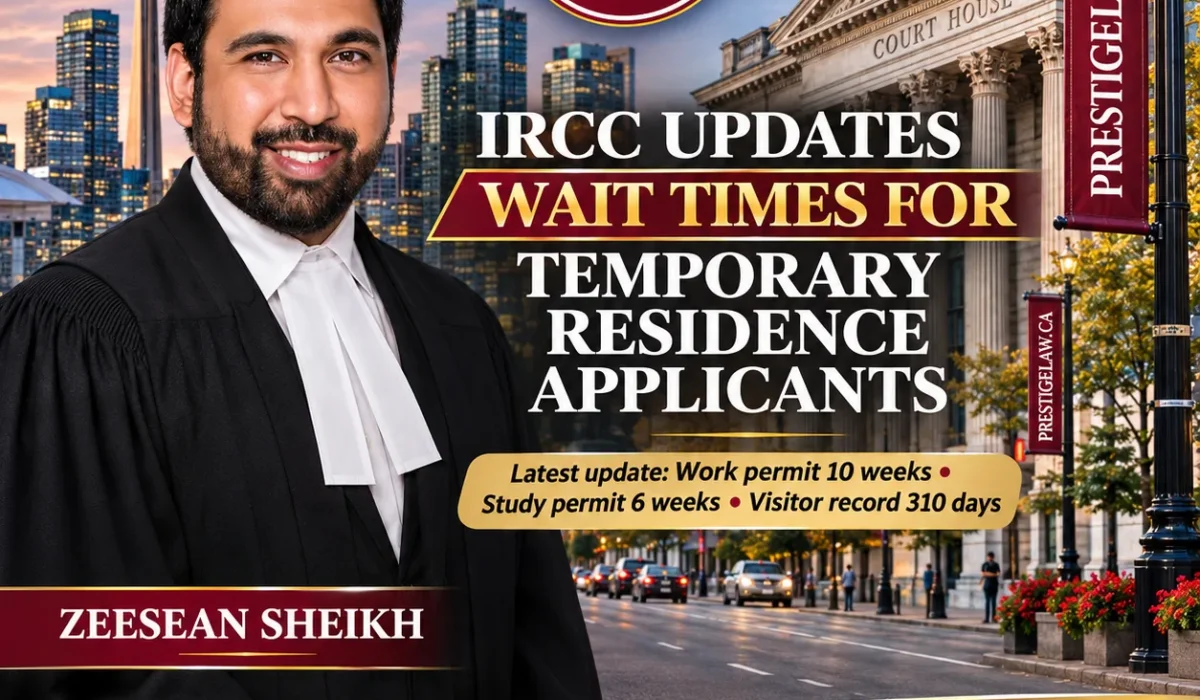
IRCC updates wait times for temporary residence applicants
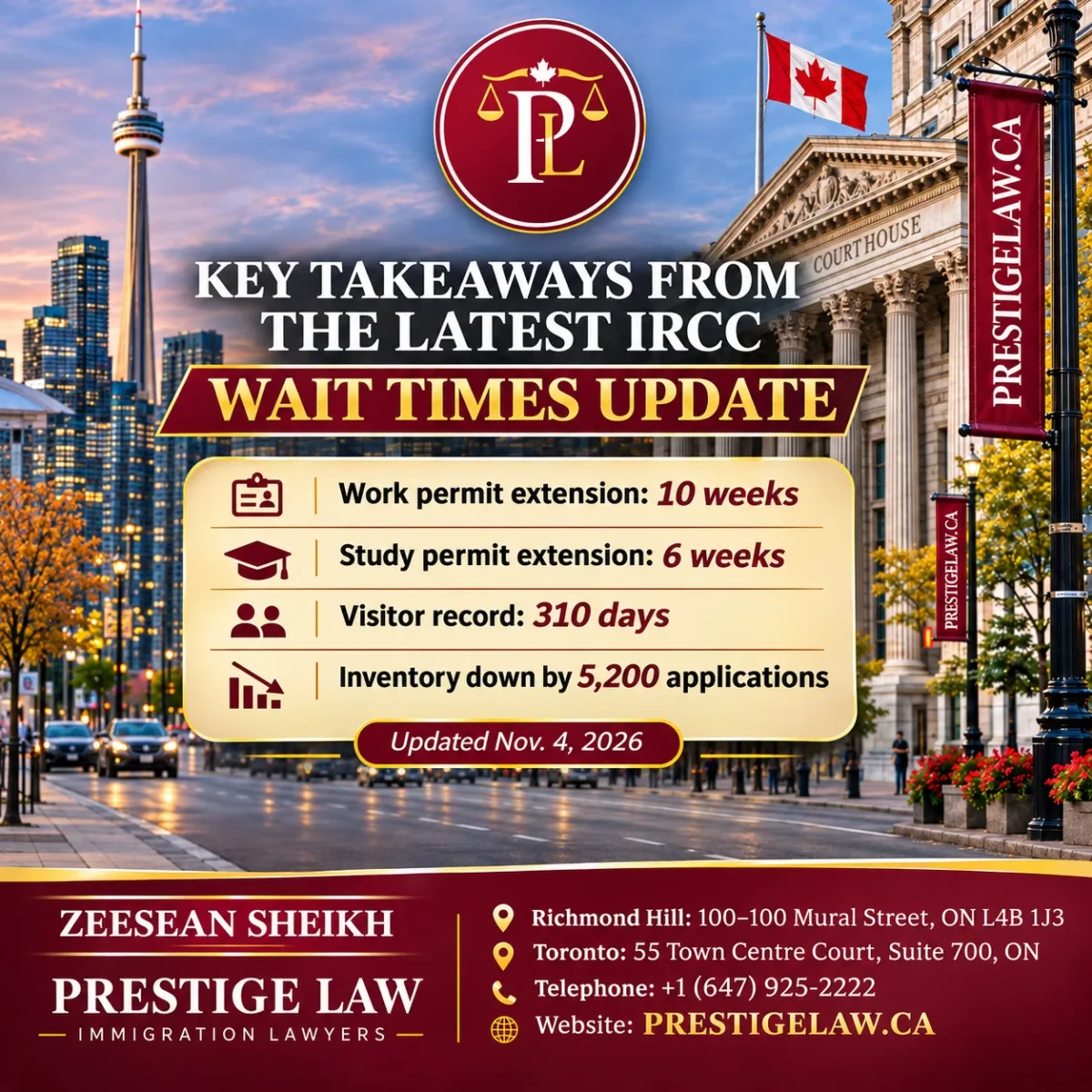
Immigration, Refugees and Citizenship Canada (IRCC) released a fresh set of IRCC wait times for temporary residence applicants on November 4, 2026, and the update brings welcome news for people waiting on in-Canada extensions. The estimate for work permit extensions improved from 11 weeks to 10 weeks, the study permit extension estimate held steady at 6 weeks, and the wait for a visitor record fell by 11 days, from 321 days to 310 days.
IRCC also reported thousands fewer applications in its inventory compared with its previous update. In this guide, Prestige Law explains what changed, why the numbers matter, how IRCC calculates them, and what workers, students, and visitors in Canada can do right now to protect their status while a decision is pending.
Key takeaways from the latest IRCC wait times update.
- IRCC published its latest temporary residence processing times on November 4, 2026.
- Work permit extensions submitted from within Canada now show an estimated wait of 10 weeks, down from 11 weeks.
- Study permit extensions submitted from within Canada remain at 6 weeks.
- Visitor records now show an estimated wait of 310 days, down from 321 days.
- IRCC reported 5,200 fewer work permit and study permit extension applications in its inventory, including 4,800 fewer work permit applications and 400 fewer study permit applications.
- IRCC is expected to publish revised estimates on or around November 11, 2026.
These figures are encouraging, but they are estimates and not promises. Every file is different, and a small mistake in an application can add weeks or months to a decision. The sections below explain how to read the numbers and how to prepare.
What changed in the IRCC wait times on November 4, 2026
IRCC refreshes its temporary residence processing times on a regular basis, and the most recent refresh compares the figures published on October 29 with those that apply as of October 31. The movement is modest, but it is in the right direction for two of the three categories that matter most to people already living in Canada.
Application type (submitted from within Canada)
Current (Oct. 31)
Previous (Oct. 29)
Change
Work permit extension 10 weeks 11 weeks 1 week shorter
Study permit extension 6 weeks 6 weeks No change
Visitor record 310 days 321 days 11 days longer
A one-week improvement for work permit extensions may look small, yet it matters for the large number of workers who depend on a continuous paycheque. The 11-day improvement for visitor records is also meaningful, because a visitor record is the document that lets a person extend their stay as a visitor, and those waits have been long for some time.
The study permit extension estimate did not move. A steady figure is still useful information, because it tells students that the six-week estimate has been reliable across the last two updates.
Why IRCC wait times matter for temporary residents
For many people, the IRCC wait times are not just a statistic. They shape real decisions about work, school, travel, housing, and family life. A worker whose permit is about to expire needs to know whether a replacement is likely to arrive before the current one ends. A student needs to plan a semester around a study permit extension. A parent hosting a visiting relative needs to know how long the visitor can remain in Canada.
Employers also pay attention. A business that relies on foreign workers must plan staffing, schedules, and training around permit dates. When estimates improve, hiring managers can plan with more confidence. When estimates worsen, they may need backup plans.
Processing times also affect people who are outside Canada, but this update focuses on in-Canada extensions and visitor records. These categories are especially important because they involve people who are already living, working, or studying in the country and who may be relying on a legal rule known as maintained status while they wait.
Work permit extensions: what a 10-week estimate means
The estimated wait for a work permit extension submitted from within Canada is now 10 weeks. IRCC also reported 191,100 work permit extension applications in its inventory as of October 31, which is 4,800 fewer than in the earlier update.
What does this mean in practice? First, a shorter estimate suggests that IRCC is finalising these applications at a healthy pace. Second, a smaller inventory suggests that the backlog in this category is shrinking. Both signals are positive for workers.
Still, a 10-week estimate does not guarantee a 10-week decision. The figure reflects how long recent applications took, and it does not predict the outcome for a particular file. Applications that are complete, accurate, and well supported tend to move more smoothly than applications that need follow-up. If IRCC requests more documents, asks for clarification, or needs to verify an employer, the timeline can stretch.
Workers should also keep their own dates in mind. If a permit expires in six weeks, a 10-week estimate means the decision may arrive after the current permit ends. That is exactly why it is wise to apply early and to understand how maintained status works, which we cover below.
Study permit extensions: why the 6-week estimate is steady
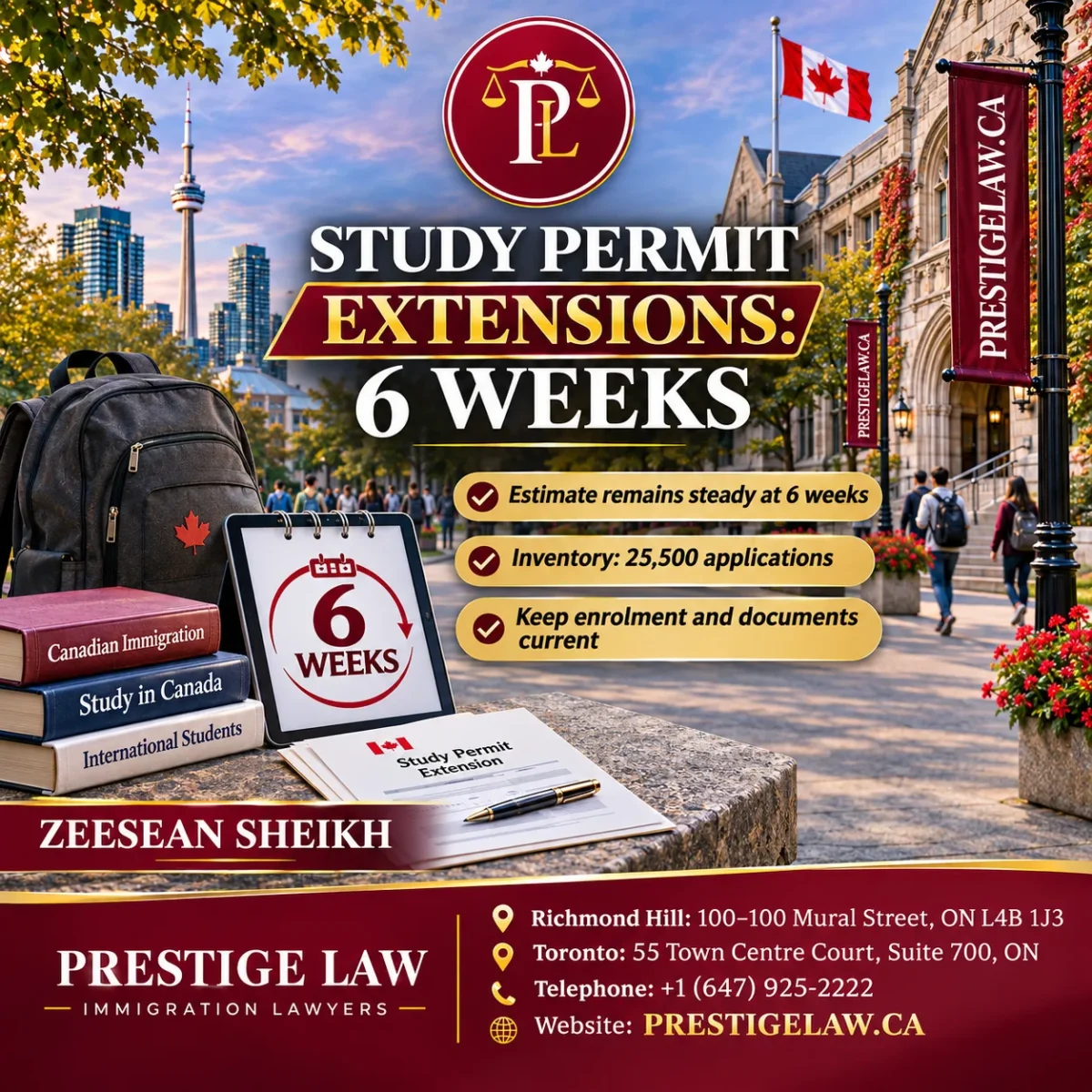
The estimate for study permit extensions held at six weeks. IRCC reported 25,500 study permit extension applications in its inventory as of October 31, down 400 from the previous figure.
For students, stability is a good sign. A consistent estimate makes it easier to plan around enrolment dates, work-integrated learning, and travel. Students who keep their documents current can usually avoid avoidable delays.
Even with a shorter estimate, students should remember that a study permit extension depends on several things working together. The student must remain enrolled at a designated learning institution, show progress in their program, and hold a valid permit when they apply. A student who submits an application close to the expiry date has less room for error than one who applies early.
Students who also work off campus should be careful about the conditions on their permit. If a student is unsure whether a work condition still applies while an extension is pending, it is worth getting advice before acting, because a mistake can affect future applications.
Visitor records: the wait drops to 310 days IRCC Wait Times for Temporary Residence Applicants
The estimate for a visitor record fell from 321 days to 310 days. A visitor record is the document issued when a person applies to extend their stay in Canada as a visitor, and it confirms the new date by which the person must leave or change status.
A wait close to ten months is long, and an 11-day improvement does not change that fact for most families. It does show movement, and it gives applicants one more reason to plan carefully.
People who want to stay longer in Canada as visitors should apply well before their authorised stay ends. Applying early gives IRCC time to process the request, and it gives the applicant time to fix any problem. If the stay is likely to end before a decision is made, it may be wise to explore other options, such as changing status or planning a departure and a new entry.
Visitors should also remember that a visitor record does not allow a person to work or study unless they hold the proper permit. Anyone unsure about these limits should seek legal advice before taking action.
The inventory shrinks: what 5,200 fewer applications tells us.
IRCC reported 5,200 fewer work permit and study permit extension applications in its inventory since its previous update. The drop includes 4,800 fewer work permit extension applications and 400 fewer study permit extension applications.
Inventory means the number of applications that IRCC has received and not yet finalised. When the inventory falls, it usually means that IRCC is finalising more files than it receives, or that fewer new files are arriving. A shrinking inventory is one of the clearest signs that wait times may continue to improve.
The broader picture also looks active. IRCC finalised 2,076,745 temporary residence applications between January and August 2026, and another 365,425 temporary residence applications were awaiting decisions as of August 31. Those figures show how large the system is and why even small changes in processing speed can affect thousands of people.
It is worth remembering that inventory numbers and processing times measure different things. Inventory counts files waiting in line. Processing time estimates how long a new file may take. The two figures usually move in the same direction, but not always at the same pace.
How IRCC calculates processing times, and what the estimates can and cannot tell you
For temporary residence applications, IRCC relies on historical data. In plain terms, the estimate reflects how long it took to finalise recent applications of the same type, and it is not a forecast made for each file.
This approach has two important consequences. First, the estimates lag behind reality. If IRCC speeds up today, the published figure may take a few updates to catch up. If IRCC slows down, the same lag applies in the other direction. Second, the estimate describes a typical file. A file with missing documents, background checks, medical issues, or inconsistent information may take longer than the published figure.
Applicants can check the official tool on the IRCC website before they file. The official page is available here: IRCC check processing times. Because IRCC updates these figures regularly, it is a good habit to check again before you apply and again while you wait.
A service standard is different from a processing time. A service standard is a target that IRCC sets for how quickly it aims to process a type of application, while a processing time describes what has actually happened. When the two differ, the processing time is the better guide to what you can expect.
Maintained status: how it protects people waiting on an extension
Many people worry about what happens if their permit expires before IRCC makes a decision. In many cases, a rule known as maintained status can help. If a person applies to extend their stay or renew their permit before the current one expires, they may be allowed to remain in Canada under the same conditions while the application is processed.
For a worker, this can mean that they may continue working under the conditions of their previous permit while they wait, as long as they applied on time and remain eligible. For a student, it can mean that they may continue studying under the conditions of their earlier permit. For a visitor, it can mean remaining in Canada while the extension request is pending.
Maintained status is not automatic for every situation, and it does not guarantee approval. It depends on applying before the expiry date, submitting a complete application, and following the conditions that apply to the person. Leaving Canada while an application is pending can also change a person’s position, so anyone who plans to travel should get advice first.
Because the rules can be technical, a short consultation can prevent a costly mistake. A person who loses status may face limits on working, studying, and applying for other programs in the future.
Practical steps to protect your status while you wait
The updated IRCC wait times are helpful, but good preparation is what protects you. Consider the following steps.
1. Apply early. Do not wait until the last week. Submitting well ahead of your expiry date gives you a buffer if IRCC asks for more information.
2. Check every form and document. Names, dates, passport numbers, and employer details should match across all documents. Even small differences can trigger requests for clarification.
3. Keep your documents current. Passports, proof of enrolment, employment letters, and proof of funds should be valid and recent when you apply.
4. Respond quickly to IRCC. If IRCC asks for additional documents, respond within the deadline. A late response can slow the file or lead to a refusal.
5. Track your dates. Keep a calendar with your permit expiry date, application date, and any biometrics appointments. If your biometrics are still valid, which is typically the case for ten years, you may not need to give them again.
6. Understand your conditions. Know what your permit allows and what it does not, especially if you plan to change employers, change schools, or travel.
7. Get advice when the situation is complicated. A past refusal, a gap in status, a job change, or a criminal or medical concern are all good reasons to speak with a lawyer before you file.
Common mistakes that can lengthen your wait
Some delays are caused by IRCC volume, but many are caused by avoidable errors. The most common problems include the following.
Applicants sometimes submit incomplete forms, leave questions blank, or forget to sign. Others upload unclear scans, outdated documents, or files in the wrong format. Some people apply for the wrong permit type or choose the wrong application stream, which can lead to a refusal or a return of the application.
Another common issue is waiting too long to apply. Someone who files only days before a permit expires may have little protection if the application is returned as incomplete. A third issue is inconsistent information. If a work history on one form does not match the history in a resume or a reference letter, IRCC may ask for an explanation.
Finally, some applicants rely on unofficial advice from social media or from friends who went through a different process. Immigration rules change, and each case depends on its own facts. Official sources and qualified legal advice are the safest guides.
Who is most affected by the latest IRCC wait times
The update is relevant to several groups.
Foreign workers with permits that are close to expiry are the group most likely to feel the effect of the improved work permit extension estimate. A shorter wait can reduce stress, although workers should still apply early.
International students who need to extend their studies will find the stable six-week estimate reassuring. Students who are changing programs or schools should be especially careful about timing.
Visitors and their families may find that the improved visitor record estimate offers some relief, although a 310-day estimate remains long. Families who invite relatives to Canada should plan the visit with realistic dates.
Employers benefit from better predictability. When extension estimates fall, employers can plan staffing with more confidence, and they can help employees prepare their applications on time.
Spouses and dependants often have permits that depend on the main applicant’s status. If the main applicant’s extension is delayed, the family may need to plan together.
What to expect next from IRCC
IRCC is expected to publish revised estimates on or around November 11, 2026. Updates for temporary residence are issued frequently, so the figures can change from one release to the next. Over the past year, estimates have moved up and down in different categories, and recent releases have shown that the direction can change quickly.
For that reason, applicants should avoid making big decisions based only on one week of data. A better approach is to watch the trend over several updates, and to combine that trend with your own deadline and your own risk tolerance. If your permit is about to expire, plan for the possibility that the decision takes longer than the estimate.
We will continue to monitor IRCC wait times and explain what the changes mean for people in Canada.
How Prestige Law can help with temporary residence applications
A well-prepared application can make a real difference, and that is where legal guidance adds value. Lawyer Zeesean Sheikh and the team at Prestige Law help clients across Ontario and beyond with work permits, study permits, visitor records, and other immigration matters.
The firm can review your documents, confirm that you are applying under the right category, explain your options if your permit is close to expiry, and help you respond to requests from IRCC. For clients with more complex situations, such as a prior refusal, a status gap, or a change of employer, early advice can protect both the application and the long-term immigration plan.
Prestige Law serves clients from its Richmond Hill and Toronto offices, and it is committed to clear communication and careful preparation. If you are planning an extension and want to understand how the latest IRCC wait times apply to your situation, reach out before you file.

Frequently asked questions about IRCC wait times.
How long does a work permit extension take in Canada right now?
As of the November 4, 2026 update, IRCC estimates 10 weeks for work permit extensions submitted from within Canada. The estimate was 11 weeks in the previous update. Your own file may take more or less time.
How long does a study permit extension take?
The current estimate is 6 weeks for study permit extensions submitted from within Canada, unchanged from the previous update. Students should still apply early and keep their documents current.
How long does a visitor record take?
The latest estimate is 310 days, down from 321 days. Because this wait is long, visitors who want to extend their stay should apply well before their authorised stay ends.
What is a visitor record?
A visitor record is the document issued when IRCC approves a request to extend a person’s stay in Canada as a visitor. It confirms the new date by which the person must leave or change status.
Can I keep working while my work permit extension is processing?
In many cases, a person who applies before their permit expires may keep working under the same conditions through maintained status. This depends on applying on time and meeting the conditions of the earlier permit, so it is wise to confirm your situation with a lawyer.
What happens if my permit expires before IRCC decides?
If you applied on time, maintained status may allow you to stay in Canada under the same conditions while you wait. If you did not apply before the expiry date, you may lose status and face serious limits. Get advice quickly if this applies to you.
Are IRCC wait times guaranteed?
No. Processing times are estimates based on recent finalised applications. They are not promises, and a particular file can take longer if it is incomplete, needs verification, or raises questions.
How often does IRCC update processing times?
IRCC updates temporary residence processing times on a regular basis, often weekly. The next update is expected on or around November 11, 2026. Permanent residence and citizenship estimates are updated on a different schedule.
Why did IRCC wait times go down?
A smaller inventory and strong finalisation numbers usually help reduce wait times. In the latest update, IRCC reported 5,200 fewer work permit and study permit extension applications in its inventory, which is consistent with improving timelines.
Do I need to give my biometrics again?
Biometrics are typically valid for 10 years from the date they were given. If yours are still valid, you may not need to give them again for a new temporary residence application. Check your instructions from IRCC to be sure.
Should I hire a lawyer for a work permit or study permit extension?
It is not required, but it can help, especially when your case is complex. A lawyer can review your documents, identify risks, and help you respond to IRCC. Early advice is more useful than advice after a refusal.
Most searched topics related to IRCC wait times.
People who look for information about the latest IRCC wait times also search for the following topics.
- IRCC processing times for work permit extensions in 2026
- How long does a study permit extension take in Canada
- Visitor record processing time in Canada
- What is maintained status in Canada
- Can I work while waiting for a work permit extension
- How to check IRCC application status
- IRCC processing times for visitor visas and super visas
- How to extend a work permit before it expires
- How to extend a stay in Canada as a visitor
- What to do if your permit expires while your application is pending
- IRCC backlog and application inventory 2026
- Canadian immigration lawyer for work permit extensions in Ontario
Conclusion: use the improved IRCC wait times to plan, not to delay
The November 4, 2026 update is good news for many people in Canada. Work permit extensions improved to 10 weeks, study permit extensions held at 6 weeks, and visitor records fell to 310 days. IRCC also reported thousands fewer applications in its inventory, which supports the idea that the system is moving in a positive direction.
Still, the best use of this news is to plan early. Apply well before your permit or stay expires, review every document carefully, and keep track of your dates. If your situation is complicated, speak with a lawyer before you file. Good preparation protects your status, and it gives you the best chance of a smooth result.
This article is for general information only and is not legal advice. Immigration rules and processing times change often, so please confirm current details with IRCC or a qualified lawyer.
Contact Prestige Law
Lawyer Zeesean Sheikh and the team at Prestige Law are ready to help.
📍 Richmond Hill: 100–100 Mural Street, ON.
📍 Toronto: 55 Town Centre Court, Suite 700, ON.
📞 Telephone: +1 (647) 925-2222
🌐 Website: prestigelaw.ca