




Canadian Citizenship Processing Time Hits 35 Months in 2026: What Applicants Need to Know
Canadian citizenship applicants are facing a significant new challenge. Immigration, Refugees and Citizenship Canada (IRCC) has increased its estimated processing time for proof-of-citizenship applications to 35 months, while about 139,200 people are still waiting for decisions.
The latest figures, updated on November 17, 2026, highlight growing pressure on Canada’s citizenship certificate processing system.
For people claiming Canadian Citizenship Processing through parents, grandparents, or other qualifying ancestors, these delays could affect plans for passports, employment, education, and international travel.
Understanding the new processing times, eligibility requirements, and available options is essential for anyone preparing to apply.
Canadian Citizenship Processing Time in November 2026
According to the latest IRCC figures, the estimated processing time for a proof of Canadian citizenship application has increased from 34 months in October to 35 months in November 2026.
The number of people awaiting a decision has also increased from approximately 130,700 to 139,200, representing an additional 8,500 applicants in just one month.
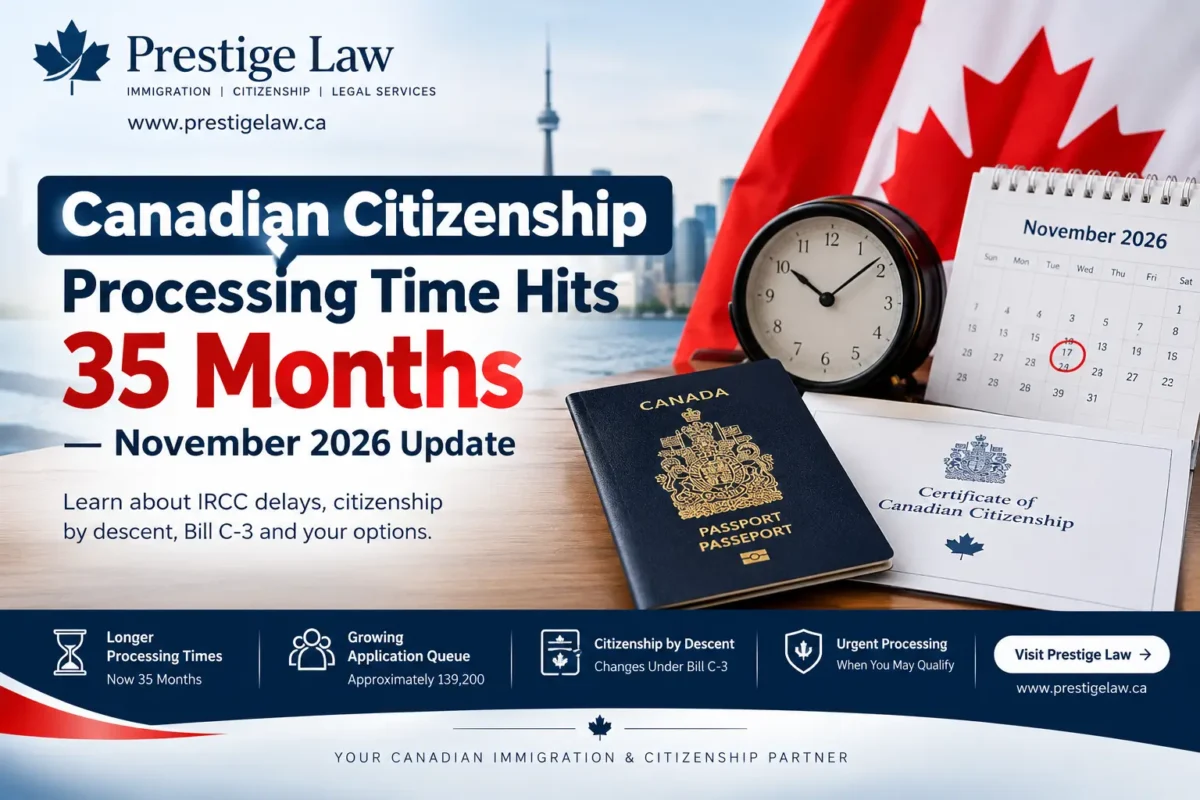
This is the largest reported queue since Canada’s citizenship legislation changed in December 2025.
How Processing Times Have Changed in 2026
Month Estimated Processing Time
May 2026 12 months
June 2026 15 months
July 2026 19 months
August 2026 25 months
September 2026 33 months
October 2026 34 months
November 2026 35 months
These figures demonstrate how rapidly processing expectations have changed throughout the year.
An applicant submitting a new application in November 2026 could potentially wait until approximately October 2029 for a decision if the current estimate applies.
However, IRCC processing times are estimates rather than guaranteed completion dates. Individual applications may be finalised sooner or later.
Why Are Canadian Citizenship Applications Taking So Long?
Several factors may be contributing to the growing processing delays.
1. Increased Demand Following Changes to Citizenship Law
One of the most important developments affecting citizenship certificate applications is Bill C-3, which came into effect on December 15, 2025.
The legislation changed Canada’s citizenship-by-descent rules, expanding eligibility for certain individuals born outside Canada.
As a result, more people with Canadian ancestry may now qualify to have their citizenship recognised.
This has increased interest in obtaining citizenship certificates, particularly among individuals who previously believed they were ineligible.
2. A Growing Application Backlog
In December 2025, approximately 40,400 people were waiting for proof of citizenship decisions.
By November 2026, that figure had increased to approximately 139,200.
The substantial growth in pending applications creates additional pressure on IRCC’s processing system.
3. Application Complexity and Document Verification
Some citizenship-by-descent applications require detailed family records covering multiple generations.
IRCC may need to examine birth certificates, marriage certificates, legal name changes, and other evidence to establish the applicant’s citizenship status.
Incomplete records, inconsistent personal information, or questions about eligibility can result in additional review.
Although IRCC finalised approximately 5,705 proof of citizenship applications in September 2026, processing capacity and demand remain important considerations.
What Is Proof of Canadian Citizenship?
A Canadian citizenship certificate is an official document confirming that an individual is already a Canadian citizen.
It is different from an application to become a Canadian citizen through naturalisation.
For example, a permanent resident applying for citizenship generally follows a process involving eligibility requirements, an application, and potentially a citizenship test and oath.
By contrast, an eligible citizen by descent may already possess Canadian citizenship under the law and need a certificate to establish that status.
A citizenship certificate can be particularly important when applying for a Canadian passport or establishing citizenship for administrative purposes.
Important: A citizenship certificate confirms citizenship; it does not itself grant citizenship to someone who is not already entitled to it.
Canadian Citizenship by Descent: Who May Qualify in 2026?
Canada’s citizenship-by-descent rules changed significantly when Bill C-3 came into force.
For certain individuals born outside Canada before December 15, 2025, the legislation removed the previous first-generation limit on citizenship by descent.
This means that some people with Canadian grandparents, great-grandparents, or more distant Canadian ancestors may qualify for recognition as Canadian citizens.
However, eligibility is not automatic simply because someone has a Canadian ancestor.
A proper assessment must consider the family’s citizenship history, the relevant birth dates, the applicable legislation, and whether citizenship was transmitted or retained through each generation.
Different rules may apply to individuals born or adopted outside Canada on or after December 15, 2025.
Anyone uncertain about their status should obtain an individualised assessment before relying on an assumption of citizenship.
Does the 35-Month Processing Time Apply to Applicants Outside Canada?
The published 35-month estimate applies to proof of citizenship applications submitted from Canada and the United States.
Applicants applying from other countries may experience additional delays.
IRCC advises allowing approximately three to four additional months for mailing in certain overseas cases.
Applicants should therefore consider their location, document delivery arrangements, and any upcoming deadlines when preparing an application.
Can You Request Urgent Processing of a Canadian Citizenship Certificate?
In certain circumstances, IRCC may consider urgent processing requests.
Situations that may support a request include:
- An employment opportunity requiring proof of Canadian citizenship.
- Admission to a school, college, or university.
- Urgent travel involving a death or serious illness in the family.
- An urgent need to access certain government benefits, healthcare, or a Social Insurance Number.
Applicants generally need to provide a written explanation and supporting documentation demonstrating why urgent processing is necessary.
For example, an applicant may submit an employer’s letter confirming a job-related deadline or medical documentation supporting an urgent family situation.
Urgent processing is discretionary. Even where an applicant provides supporting evidence, IRCC does not guarantee expedited treatment.
Should You Apply Now or Wait for Processing Times to Improve?
With processing times reaching nearly three years, some individuals may consider delaying their applications until the backlog decreases.
However, waiting does not guarantee a shorter overall processing period.
Processing estimates can change as application volumes, staffing, and operational priorities evolve.
For individuals who appear eligible and have the necessary documentation, preparing a complete application promptly may be preferable to waiting without a clear reason.
Before submitting, applicants should carefully verify their eligibility and supporting evidence.
How to Avoid Unnecessary Citizenship Application Delays
Although applicants cannot control IRCC’s overall processing times, they can take practical steps to reduce avoidable problems.
Verify Your Citizenship Eligibility
Determine whether you qualify under the citizenship legislation applicable to your circumstances.
Citizenship-by-descent cases may require careful examination of multiple generations.
Gather Complete Supporting Documents
Depending on the case, relevant evidence may include birth certificates, marriage certificates, citizenship records, and legal name-change documents.
Check Names and Dates for Consistency
Differences in spelling, dates of birth, or family relationships across official documents may require clarification.
Follow the Latest IRCC Instructions
Use the current application forms, document checklists, and submission requirements published by IRCC.
Respond Promptly to IRCC Requests
If IRCC requests additional information, respond within the specified deadline and retain copies of your correspondence.
Seek Legal Guidance When Necessary
Applications involving complex family histories, missing documents, or uncertainty about citizenship status may benefit from professional legal review.
How Can Prestige Law Help With Canadian Citizenship Matters?
Navigating Canadian citizenship legislation can be challenging, particularly when an application involves citizenship by descent, multiple generations of family records, or questions about eligibility.
At Prestige Law, we understand the importance of clear legal guidance when individuals and families are making decisions about their immigration and citizenship matters.
An individualised legal assessment can help clarify applicable requirements, identify potential documentation issues, and determine whether additional legal assistance may be appropriate.
For information about our legal services, visit www.prestigelaw.ca.
Frequently Asked Questions About Canadian Citizenship Processing Times
1. How long does proof of Canadian citizenship take in November 2026?
As of November 17, 2026, IRCC’s estimated processing time for proof of Canadian citizenship applications is approximately 35 months for applications submitted from Canada and the United States.
2. Why has the citizenship certificate processing time increased?
The increase coincides with substantial growth in applications, including demand associated with changes to Canadian citizenship-by-descent legislation.
3. Can I apply for Canadian citizenship through my grandparents?
Some individuals may qualify for citizenship by descent through a Canadian grandparent or more distant ancestor. Eligibility depends on the applicable legal requirements and individual family circumstances.
4. Does a citizenship certificate make me a Canadian citizen?
No. A citizenship certificate provides official proof of citizenship that a person already holds under Canadian law.
5. Can I request urgent citizenship certificate processing?
Yes. IRCC may consider urgent processing requests supported by compelling circumstances and appropriate documentation. Approval is not guaranteed.
6. Is the 35-month processing time guaranteed?
No. IRCC’s published processing times are estimates and may change. Individual applications can take more or less time.
7. Should I apply for proof of citizenship now?
The appropriate timing depends on your eligibility, available documentation, and personal circumstances. Delaying an application does not guarantee faster processing later.
Final Thoughts: Understanding Canada’s Citizenship Delays in 2026
The increase in proof of Canadian citizenship processing times to 35 months represents a significant development for individuals seeking official confirmation of their citizenship status.
With approximately 139,200 people waiting for decisions, applicants should prepare for potentially lengthy processing periods while taking reasonable steps to ensure their submissions are accurate and complete.
For people exploring Canadian citizenship by descent, understanding the legal changes introduced by Bill C-3 is particularly important.
Need guidance on a Canadian citizenship matter?
Visit Prestige Law at www.prestigelaw.ca to learn more about the firm and its legal services.
Legal Disclaimer: This article provides general information about Canadian citizenship law and IRCC processing times as of November 20, 2026. It does not constitute legal advice. Eligibility and processing outcomes depend on individual circumstances, and government requirements may change.